6 minBusiness
Huawei convicted in US of bank fraud and trade secret theft
A Brooklyn jury convicted Huawei on 10 of 12 counts, including bank and wire fraud, trade secret theft and sanctions violations, while acquitting it of racketeering conspiracy. Huawei says it will appeal.
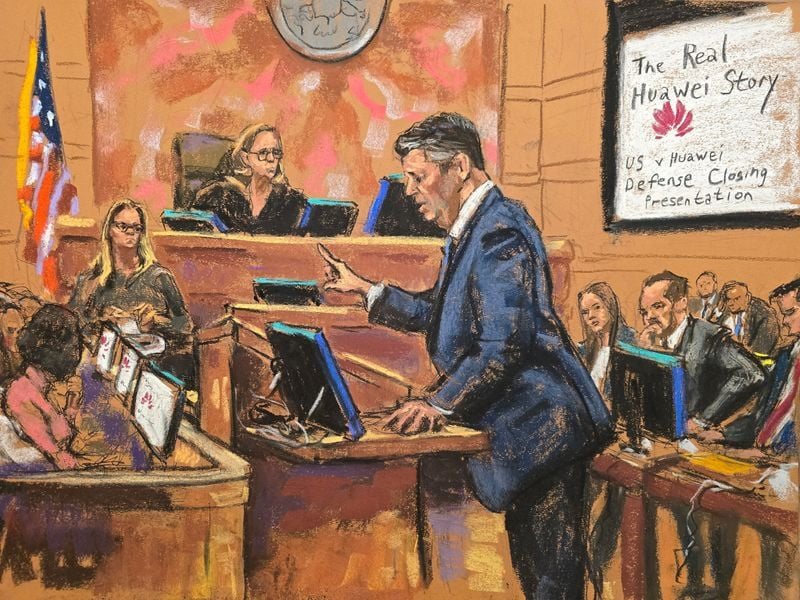
A federal jury in Brooklyn has convicted Huawei, China's largest technology firm and the world's biggest maker of telecommunications equipment, on 10 of 12 counts, including bank and wire fraud, conspiracy to steal trade secrets and violations of U.S. sanctions. The verdict, delivered Tuesday, brings a near eight-year criminal case against the Shenzhen-based company and three of its subsidiaries close to its conclusion, and it could carry significant consequences for Huawei and for U.S.-China relations.
The jury acquitted Huawei of the most serious charge it faced, racketeering conspiracy under the Racketeer Influenced and Corrupt Organizations Act, known as RICO. Had the company been convicted on that count, it could have faced forfeiture of parts of its enterprise. The jury also acquitted the company of conspiring to obstruct a federal grand jury investigation. Huawei faces potential penalties that include fines, forfeiture and restitution, and sentencing is set for September 2027, with pretrial motions expected to begin in the third week of January.
The Justice Department first announced charges against Huawei in January 2019, as part of the first Trump administration's “China Initiative,” a program aimed at investigating and prosecuting Chinese influence and espionage in the United States. The sprawling case spanned a 12-week trial, dozens of witnesses and hundreds of motions and filings. It was also delayed for years before the trial began. Prosecutors described it as a rare instance of U.S. authorities securing a conviction against a foreign corporation.
Prosecutors said Huawei conspired over two decades to steal trade secrets from U.S. companies. The alleged thefts include router source code from Cisco Systems, semiconductor equipment from CNEX Labs, robotic phone testing equipment from T-Mobile, antenna technology from Quintel and networking equipment information from Fujitsu Network Communications. The jury also found Huawei and its subsidiaries guilty of violating the International Emergency Economic Powers Act and of money laundering.
During the trial, jurors watched a video that prosecutors said showed a Huawei engineer unbolting the arm of a high-speed T-Mobile testing robot and slipping it into his backpack. The engineer said he had found the piece in his bag, calling the incident a “mistake,” and returned it the next day after T-Mobile reported it missing. Prosecutors said a visiting engineer from China had already measured and photographed the robotic arm before it was returned. Huawei later fired the employee. Prosecutors also argued that the company had hired a professor to gain access to a circuit board developed by CNEX.
Prosecutors further alleged that Huawei deceived global banks, including HSBC, BNP Paribas and Standard Chartered, about its business in Iran and North Korea, both of which are subject to U.S. sanctions. According to the government, Huawei presented its Iran subsidiary, Skycom Tech, as an independent entity in order to skirt those sanctions. In his opening statement, prosecutor Taylor Stout said, “Huawei cultivated a culture of crime and corruption, and that crime was an important business strategy.”
Huawei's legal team rejected that portrayal. Its attorneys called 15 witnesses to argue that the company's success came from its own innovation, pointing to a research and development team of about 110,000 people and more than 165,000 patents. Lawyer Brian Heberlig said prosecutors had “began with guilt and worked backwards,” and that they had “cherry-picked” instances of employee misconduct that did not reflect the company's culture. He told reporters the company's growth was “about competition, not conspiracy,” and that the verdict left him with “profoundly mixed emotions.”
In a statement, Huawei said, “We believe the government's remaining charges are equally without legal or factual merit. We will thoroughly review the relevant verdicts and take all necessary legal actions to defend our rights and interests.” Heberlig said the company will appeal.
U.S. Attorney Joseph Nocella Jr. said, “Few crimes are as serious as Huawei's decades-long pattern of endangering U.S. national security, violating the sanctity of U.S. commerce, and impeding the enforcement of U.S. laws.” James Barnacle Jr., assistant director in charge of the FBI's New York office, added that “Huawei's success was built on deception and theft.” U.S. District Judge Ann Donnelly, who presided over the case, noted that jurors had devoted an unusual amount of personal time to the trial, which included five days of deliberation beginning Nov. 18.
Source: time.com
5