6 minBusiness
Firma Power Aims to Make Clean Energy the Default Choice for Data Centers
A San Francisco and Princeton startup called Firma Power has built software that assembles portfolios of wind, solar, and battery projects to power large data centers, aiming to overcome the market frictions that push developers toward gas plants.
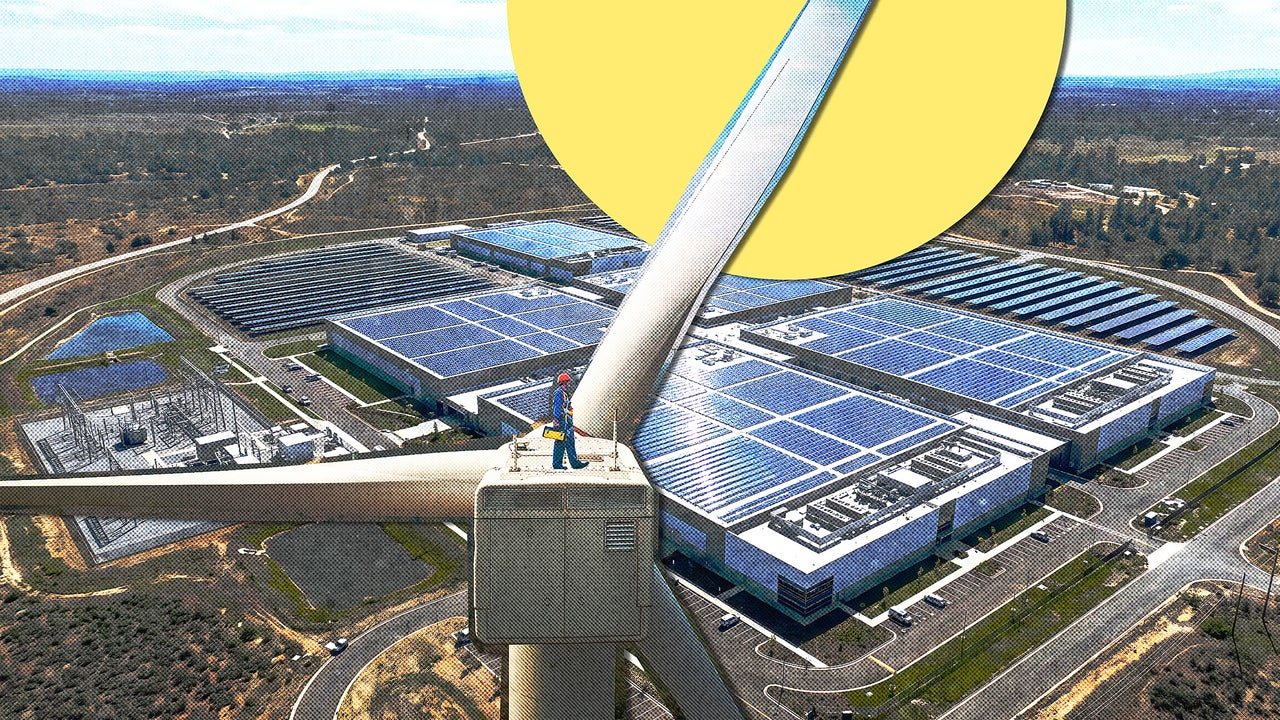
A startup called Firma Power is betting that the main obstacle keeping data centers from running on clean energy is not cost, speed, or reliability, but the sheer difficulty of assembling enough renewable power from a patchwork of projects. The company, based in San Francisco and Princeton, New Jersey, has built software that calculates what a proposed data center needs and then automatically searches through proposed clean energy projects to suggest a portfolio capable of supporting it.
The pitch arrives at a moment of surging electricity demand from artificial intelligence and cloud computing. The United States is on track to add a record 86 gigawatts of new wind, solar, and battery storage capacity this year, roughly the size of the United Kingdom's entire grid. Yet data centers are increasingly turning to polluting gas plants instead of tapping that pipeline of low-cost clean projects.
Firma's founders say the problem is structural. Jesse Jenkins, an energy systems engineer and associate professor at Princeton University who cofounded the company and serves as chief technology officer, said the team started with the hypothesis that despite the fact that 98 percent of what is in the queue is wind, solar, and storage, that is not getting tapped as the default path to power for large loads. The question, he said, was what market frictions and barriers exist and whether a platform could overcome them.
Firma cofounder and president Scott Burger, who previously worked at the battery company Form Energy, reached out to Jenkins, a former MIT classmate, as the data center boom grew in 2024. Burger's modeling showed that clean energy should be economic and scalable for data centers, and Jenkins said he saw the same result. They partnered with a third cofounder and chief executive, wind and solar developer Brent Alderfer, to launch the startup. Drawing on more than a decade of their own research modeling the power system, they built custom software called FirmaOS. The company raised around $1.4 million in a seed round in February 2026.
The founders argue that the way tech companies buy clean energy has changed. In the past, firms typically signed contracts for renewable energy credits. Power from a wind or solar farm helped offset emissions from a data center, but was not expected to be available around the clock. In some cases, companies paid for clean energy projects on a completely different grid. Securing reliable clean power to actually run a data center at all hours is a far more complex challenge, one that has required large teams at companies such as Google and has not been easily replicated across the industry.
The scale of demand has also shifted. A large data center once might have needed 50 megawatts. A single AI data center today might require 500 megawatts or even a gigawatt, roughly as much as the entire city of San Francisco. Meeting that load with clean energy means working with multiple projects and developers rather than a single solar farm.
When customers come to Firma, they typically have a site in mind and share its size. A project might need 300 megawatts in 2028, scaling to a gigawatt by 2030. Firma reviews the local utility's requirements for bringing a large customer online, runs its software to calculate the generating capacity needed and which clean energy projects could supply it while optimizing for cost, then contacts each renewable developer to confirm schedules and begins signing contracts. In some cases, Firma may buy and complete projects itself. Over the length of a contract, it manages the portfolio and adds capacity if needed.
Burger said the company's model allows it to deliver executable load-enabling strategies in days. Data centers come online between 2028 and 2029, while the usual alternatives, waiting for a utility's planning and procurement cycle or buying project by project, can take years. He said customers often report that their utility told them to wait until 2032 for a new gas power plant.
Firma is now working on around a dozen projects with customers including hyperscalers, AI cloud companies, and data center developers. The company declined to publicly share details of specific projects, but it says it is already assembling portfolios of solar, wind, and batteries on grids where customers would have had to wait much longer to access gas power. In cases where data centers were considering behind-the-meter gas plants, meaning they would manage their own power plants, Firma's approach also offers an alternative.
The company's bet is that cleaner power can also make projects more feasible politically. Americans have grown increasingly skeptical of data centers, and using clean energy could help some projects win approval from local communities. For Firma, the goal is to turn a complex, months-long process into a single contract that makes renewable power the default choice rather than the exception.
10