6 minBusiness
AI in Enterprise Software Exposes Gaps in Content Design and Knowledge Management
As AI becomes embedded in enterprise applications, a finance manager's experience with an AI assistant that misstates payment eligibility illustrates a growing challenge: organizations manage content, knowledge, and model behavior separately, but users experience them as one broken interaction. The article argues that companies need new ways of working that treat these domains as interdependent, not isolated.
A finance manager asks an AI assistant when a supplier will be paid. The enterprise application shows the invoice has been approved, and the assistant confirms it is ready for payment. But the invoice is blocked by a discrepancy between the invoiced amount and the purchase order. Approval and payment eligibility are different concepts, governed by different parts of the business process. The assistant may have retrieved approval documentation without payment-block information, or the underlying business concepts may not be represented consistently across systems. From the user's perspective, the experience is simply broken.
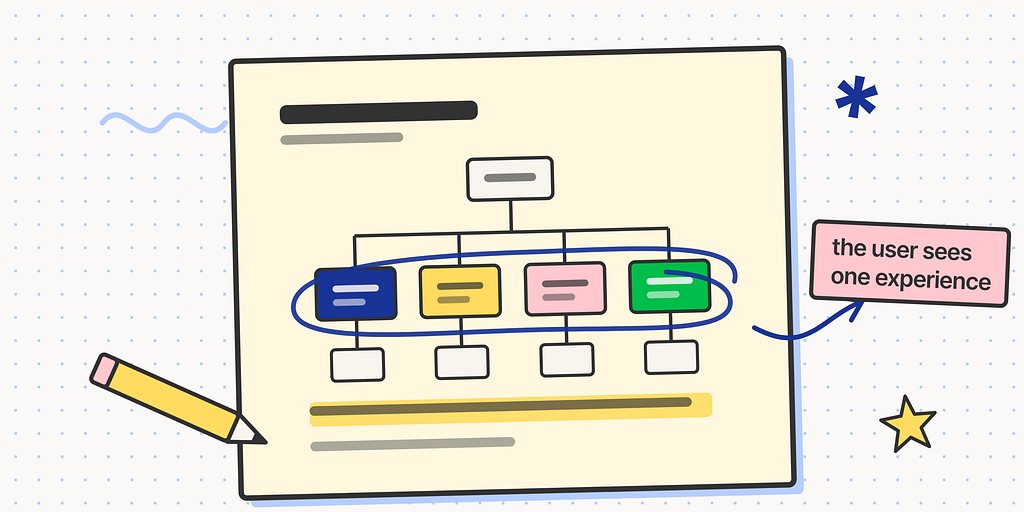
That scenario, described in a recent analysis of enterprise AI, captures one of the most consequential challenges emerging as AI becomes part of enterprise software. Organizations are bringing together content and knowledge ecosystems they have historically managed separately, but they have not yet developed the ways of working to manage their interdependence. Better AI models, better content systems, or better design guidelines alone will not solve the problem. Companies need to rethink how these elements work together.
Part of the difficulty is that AI and content are often discussed as a single change. They are not. A 2026 article for Nielsen Norman Group by Sarah Gibbons articulated four different meanings of AI design: designing with AI, designing AI products, designing for AI agents, and designing the AI itself. The implications for content work differ dramatically depending on which kind of AI design is involved.
In one scenario, a product team uses AI to accelerate its existing design process. The team has a content design system with established terminology, voice and tone guidelines, and interaction patterns. Designers use AI to generate candidate UI copy, and content designers review and refine it before shipping. AI changes how efficiently the team produces content, but the fundamental model remains familiar: people design and approve a defined set of content before it ships, and the product displays that content according to established rules.
In a second scenario, the product generates content dynamically for each user, drawing on information about their task, context, the state of the system, and relevant enterprise knowledge. The content designer cannot anticipate or approve every possible sentence. Instead, they help design the system that determines what the experience should communicate, under what conditions, with which constraints, and how to evaluate whether it is working. That is a fundamentally different design challenge.
A third dimension involves an AI agent that needs to understand the same product well enough to take action on behalf of a user. The information and structures that make sense to humans may not be sufficient for an agent. The system needs reliable representations of concepts, relationships, actions, constraints, and permissions.
These scenarios do not replace one another. They increasingly coexist, sometimes within the same product. That coexistence is only beginning to be understood in terms of what it means for content work. Specialization is increasing, and so is interdependence.
There has been considerable discussion about whether content design is splitting into different specializations. One direction moves deeper into content systems: structured content, reusable patterns, guidelines, standards, and the infrastructure that allows content design decisions to scale. Another moves toward model behavior design: shaping how AI systems communicate, interpret intent, manage ambiguity, explain their decisions, and respond in different situations.
Both areas involve different technical knowledge, methods, and deliverables. But content designers also need greater expertise in the semantic and context architecture that allows systems to work with meaning. Taxonomies, ontologies, and knowledge graphs are becoming increasingly relevant to the experiences being designed. These are not interchangeable technologies. Taxonomies help organize and classify concepts. Ontologies define concepts and relationships within a domain. Knowledge graphs can represent interconnected information in ways that systems can query and use. Together, such structures can help establish shared meaning across systems.
A broader context architecture also needs to account for information about the user's task, the current state of the product, relevant business rules, permissions, and other conditions that determine what information is appropriate at a particular moment. For content designers, learning these concepts is becoming part of the job.
4