5 minBusiness
Date Lady Expands Into Erewhon and Sprouts as Revenue Nears $10 Million
The Missouri-based date syrup maker is pushing into upscale and mainstream grocery chains, projecting $1 million in new sales as it scales production and distribution.
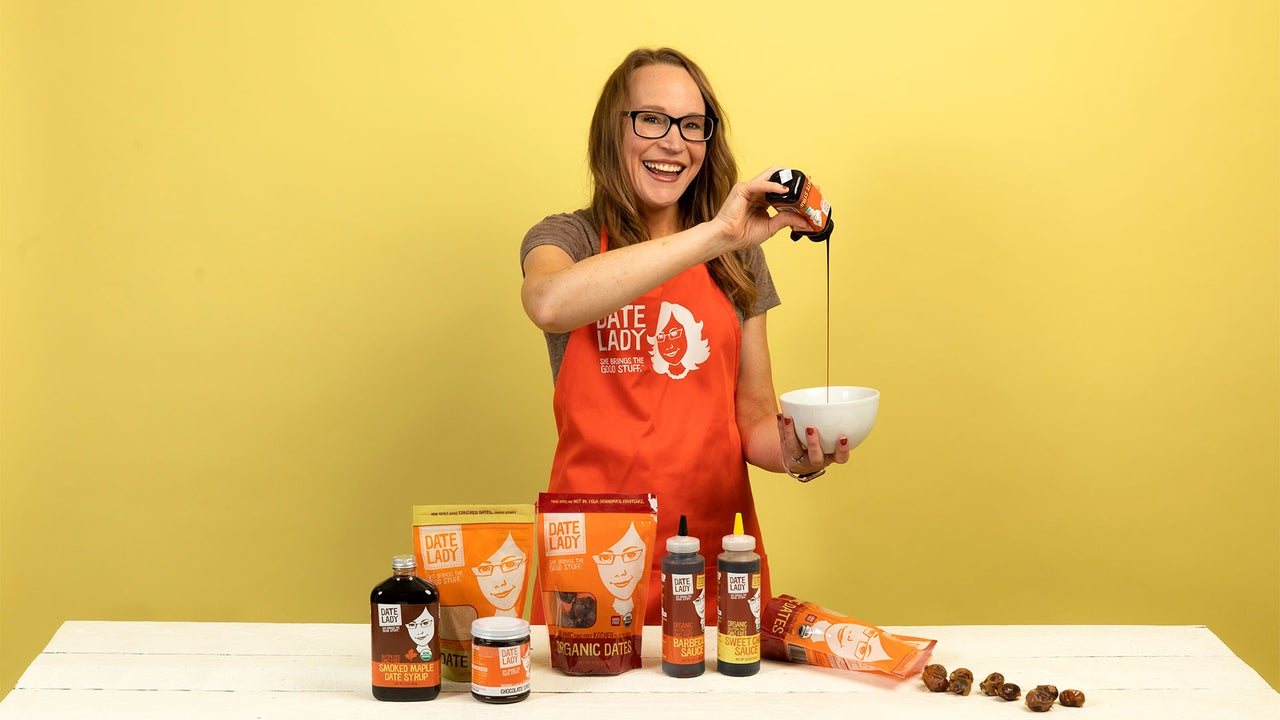
Date Lady, the Springfield, Missouri-based maker of date syrup and related products, is accelerating its retail expansion with new placements at two prominent grocery chains. Its Original Date Syrup, Chocolate Spread, and Sweet Chili Sauce debuted at upscale retailer Erewhon in September, while an exclusive 11-ounce Chocolate Syrup bottle landed on Sprouts Farmers Market shelves earlier this month.
The company expects the new retail channels to add roughly $1 million in sales by the end of next year, according to founder Colleen Sundlie. The expansion also strengthens Date Lady's distribution infrastructure, allowing it to open warehouses in regions where it previously had no presence. That footprint, in turn, makes it easier to approach additional brick-and-mortar stores. Sundlie said the strategy has already produced new accounts even without a dedicated salesperson.
«This is a huge feat for a consumer packaged good to get into different distribution regions,» Sundlie said. «You've got to get that one big chain in order to make that happen.»
The path to those shelves was neither linear nor quick. Sundlie never set out to build a food brand. While living in Al Ain, United Arab Emirates, in 2005 for her husband's job, she encountered pure date syrup at a local market and later brought the idea back to the United States. She and her husband, Ryan, founded Date Lady in 2012 with $120,000 in seed money and an additional loan from the Small Business Administration. Early sales came through farmers' markets.
A partnership with distributor United Natural Foods eventually placed Date Lady products in Whole Foods Market, but the economics proved difficult. Sundlie said the upfront costs demanded by brick-and-mortar retailers exceeded what the company could sustain relative to returns. Date Lady ended its relationship with UNFI and withdrew from Whole Foods at that time.
Amazon became a more practical route to consumers. Selling directly from its own warehouse through the fulfilled-by-merchant program, alongside partnerships with Vitacost, drove early growth. Sundlie credits the e-commerce platform with putting the brand in front of thousands of households at a fraction of the cost of traditional retail advertising. Date Lady has also been sold at Target and Walmart, though it pulled out of Target after products performed better at Walmart.
Today, e-commerce accounts for 52.4% of the brand's sales, ingredient manufacturer sales make up 29.3%, and brick-and-mortar represents 17.3%. The company now employs 25 full-time workers out of 40 total staff. Annual revenue surpassed $2 million in 2021 and grew to roughly $6.8 million over the following four years. Date Lady has set a $10 million goal for this year and appears on track after a record-breaking September that brought in nearly $1 million in a single month.
Sundlie attributes much of the momentum to growing American familiarity with dates as an ingredient. She said dates are «hot right now» and are not merely a passing trend. Early demonstrations were harder, with some consumers mistaking dates for prunes and rejecting them. Sundlie said the company deserves credit less for creating the trend than for keeping pace with it and being ready when demand arrived.
Beyond the Erewhon and Sprouts launches, Date Lady is moving into a larger facility expected to increase production eightfold to tenfold. The brand is also preparing to roll out chocolate chips and a new baked product that has not yet been announced. Its chocolate syrup, which uses date syrup and date sugar as ingredients, saw demand grow 111% this year even before the latest retail launches. Sundlie said the company has learned that products built around date ingredients, rather than pure sweeteners that require consumer education, represent the clearest path forward.
4