5 minBusiness
Accell enters insolvency after sale talks fail, putting major European bike brands in play
The owner of Raleigh, Lapierre, Winora and Ghost has entered court-supervised proceedings after debt restructurings and a failed sale process. German and French subsidiaries are now seeking ways to continue outside the old group structure.
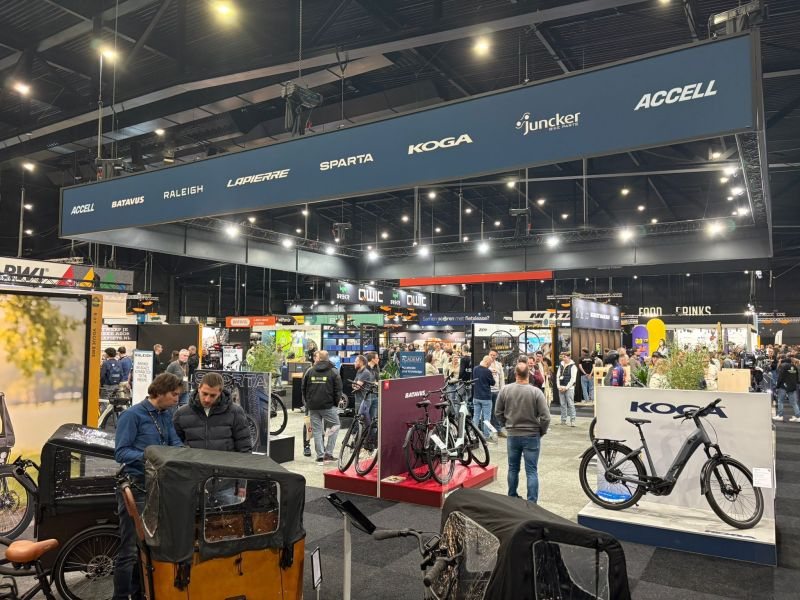
Accell Group, the European bicycle company behind brands including Raleigh, Lapierre, Winora, Haibike and Ghost, has moved into insolvency proceedings after a prospective sale failed. The Dutch parent said on August 5 that its Dutch entities had been granted a provisional suspension of payments, a court-supervised process used when a company cannot meet obligations normally.
The development follows years of financial restructuring and marks a shift from trying to preserve Accell as a single group to protecting individual businesses. That shift is already visible in Germany and France, where local companies have begun separate legal processes intended to keep operations running while investors are sought.
In Germany, a court in Schweinfurt ordered self-administration proceedings for Accell Germany, Winora Staiger GmbH, Ghost Bikes GmbH and Engelbert Wiener Bike-Parts GmbH. The companies employ about 370 people at Sennfeld and Waldsassen and generated approximately €340 million in revenue in 2025.
Business operations are continuing. Employee pay is initially covered through Germany’s insolvency-pay mechanism, and management remains in control under court supervision. The stated goal is to find an investor and separate the German companies from the Dutch group.
The German operations include brands with deep local roots. Winora traces its history to 1914, when cyclist Engelbert Wiener founded E. Wiener GmbH in Schweinfurt. Haibike is linked to the same Sennfeld operation, while Ghost is based in Waldsassen. Those brands could therefore continue under a new owner even if Accell’s parent structure is dismantled.
France faces a parallel issue. Cycles Lapierre filed on August 5 for judicial restructuring in Dijon. The company said the instability of its parent had made it impossible to finance short-term obligations under normal conditions. Lapierre reported €99.1 million in 2025 revenue and narrowed its operating loss to €27.2 million from €46.3 million in 2024.
The French company has already reduced inventory and staffing, with headcount falling to 106 by mid-2026 from 130. CEO William Perrier has said the aim is to preserve the historic manufacturer and regain independence and autonomy. The Dijon commercial court is scheduled to rule on opening the process at an August 25 hearing.
Industry conditions have made the rescue more difficult. France’s bicycle market declined 4.8% in value in 2025 to €3.11 billion, according to Union Sport & Cycle. Unit sales fell 6% to 1.836 million bikes. Repair activity rose 10.5%, suggesting that consumers are still cycling but are replacing equipment less frequently.
Accell’s financial difficulties emerged after the pandemic-era boom. A consortium led by KKR acquired the company in 2022 in a transaction the Financial Times values at €1.8 billion. Expectations for sustained bicycle and e-bike demand were followed instead by weaker sales, excess inventory and cash-flow pressure after supply-chain disruptions.
The company underwent repeated debt restructurings. Accell said a 2025 recapitalization reduced debt in the operating group to roughly €800 million. In February 2026 it announced additional funding and another significant reduction in debt. Ownership then shifted to lenders, ending KKR’s control.
Those lenders attempted to sell the company to Singapore-based Dutech Group. The prospective transaction advanced far enough to reach merger reviews in Germany and Poland. German competition authorities cleared the combination, but the parties did not complete a deal. Talks collapsed in early August.
The British dimension centers on Raleigh. Founded in Nottingham in 1887, Raleigh remains based in its home city. Accell acquired the brand in 2012, a decade after bicycle production in England ended. Its history and market recognition make Raleigh one of the assets that could attract a separate buyer during a breakup.
Accell’s own public messaging underscores how quickly the situation changed. In April the company said it had completed a transformation and was preparing 2027 models from Raleigh, Lapierre, Haibike, Batavus and Winora. Four months later, management said no realistic option remained to continue the group in its current form.
The proceedings do not mean all brands will disappear. Instead, courts and creditors will try to preserve viable operations, maintain employment where possible and find buyers. The outcome may be a fragmented Accell in which some well-known bicycle names survive with new owners while the holding company that assembled them is dismantled.
57