4 minBusiness
BMW's Award-Winning N62 V8 Now Haunts the Used Market
BMW's N62 V8 won International Engine of the Year in 2002, but valve stem seals, an alternator bracket gasket, and a buried coolant pipe have made cars like the 545i and 750Li cheap to buy and expensive to own.
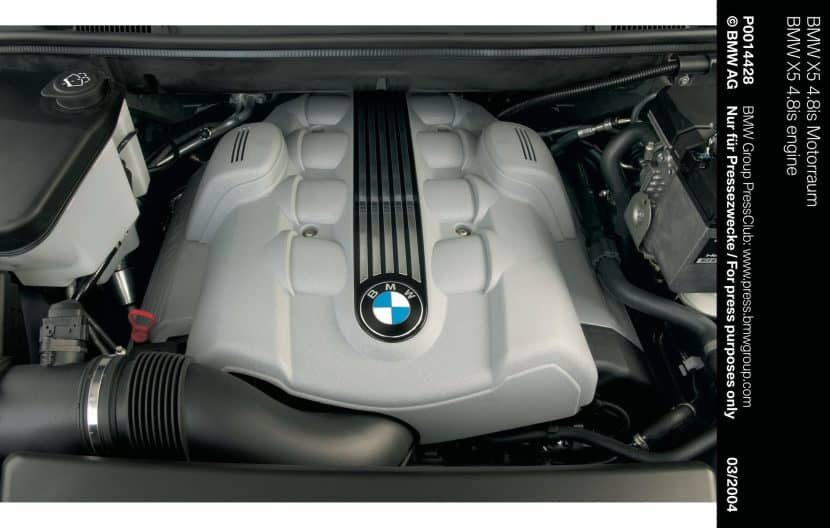
BMW's N62 V8 arrived in 2001 under the hood of the E65 7 Series carrying nearly every piece of engine technology the company had at the time, and it won the overall International Engine of the Year title in 2002 along with Best New Engine and the Above 4-Liter category. Two decades later, that same engine is the reason a 545i, 650i, or 750Li can be bought for the price of a used economy car — and why many of those cars are cheap for a reason.
The N62 was a clean-sheet 90-degree V8 that replaced the M62. It used an aluminum block and aluminum cylinder heads, double overhead camshafts per bank with four valves per cylinder, chain-driven cams, port fuel injection, and a 6,500-rpm redline. It was the first V8 with Valvetronic variable valve lift, only the second BMW engine to use the system after the N42 four-cylinder, and it paired that with double VANOS on both camshafts. The 4.4-liter launch engine also used a continuously variable-length intake manifold, called DIVA, that no other production engine has used.
Today the N62 comes up mostly in conversations about valve stem seals, the alternator bracket gasket, and a coolant pipe buried in the engine valley. Much of the hardware sits in the valley between the cylinder banks under the intake manifold, a packaging decision behind most of the engine's reputation for expensive repairs. Many jobs that would be simple on an inline-six start with removing the intake.
BMW built the N62 from 2001 to 2010, by which point the twin-turbo N63 was already taking its place. Morgan kept using it until 2019. There was never an M version, but the engine received one of the longest application lists of any BMW V8, spanning four BMW model lines, two small-volume sports car makers, and ALPINA's supercharged flagships.
Four displacements were offered. The N62B36 made 268 horsepower, the N62B40 made 302, the N62B44 made 333 horsepower and was rated at 325 in the US, and the N62B48 made 367 horsepower and was rated at 360 in the US. A 315-horsepower version of the 4.4-liter went into the X5, and lower-output versions of the 4.8-liter made 350 and 355 horsepower.
In the US, the N62 appeared in the 745i and 745Li, the 545i, the 645Ci coupe and convertible, the X5 4.4i and 4.8is, and later the 550i, 650i, 750i and 750Li, plus the E70 X5 4.8i. The 3.6- and 4.0-liter engines were never sold in the US. Outside BMW, the engine powered Morgan's Aero models and Wiesmann's MF4, while ALPINA built its own supercharged version, the H1, making 493 horsepower in the B7, B5, and B6, and 523 horsepower in the later B5 S and B6 S.
For the 2006 model year in the US, BMW introduced the N62TU. The 4.8-liter engine, first used in the X5 4.8is, replaced the 4.4 in the 5, 6, and 7 Series, and a new 4.0-liter replaced the 3.6 in Europe. The update went beyond displacement: BMW dropped the DIVA intake in favor of a conventional two-stage DISA manifold, deleted the secondary air injection system, and fitted new cylinder heads, exhaust manifolds, catalytic converters, and pre-cat oxygen sensors.
For used-car shoppers, the result is a market full of large, once-expensive BMWs whose purchase price no longer reflects their engineering ambition. The N62's award-winning technology is intact, but so is the repair bill that comes with it.
3