4 minWorld
Washington presses UN aviation agency over Taiwan flight restrictions
The United States is pressing the International Civil Aviation Organization to ease restrictions on Taiwan's role in civil aviation, and Beijing has rejected the push and responded sharply.
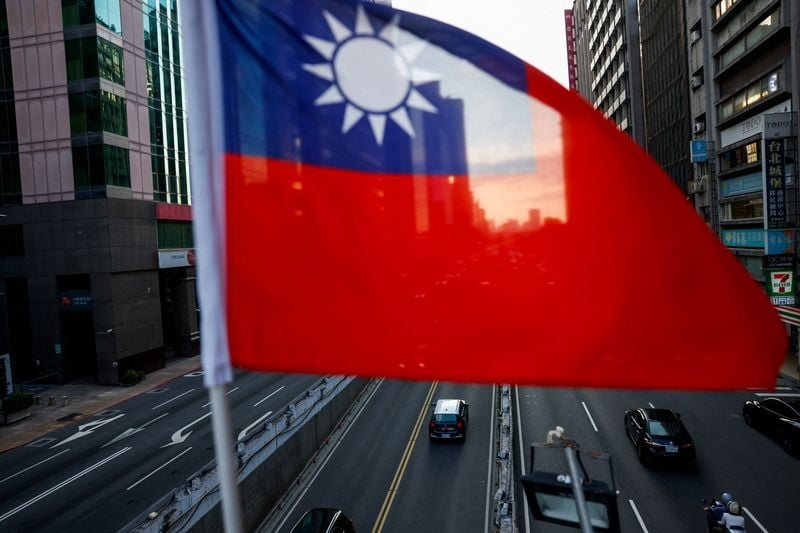
The United States is pressing the International Civil Aviation Organization, the United Nations agency that sets global standards for civil aviation, to change the restrictions that limit Taiwan's role in international air traffic management. China has rejected the American push and responded sharply, adding a new layer of tension to a long-running dispute over the island's access to multilateral bodies.
At the center of the disagreement is Taiwan's exclusion from ICAO decision-making. Taiwan has been shut out of the agency's formal processes because of objections from Beijing, which regards the island as part of its territory. As a result, Taiwan cannot take part directly in the decisions that shape how airspace is organized and how safety coordination is handled across the region. The exclusion means that the island's aviation authorities have no formal seat at the table where the rules governing that airspace are written.
The issues at stake include the flight information region, or FIR, that covers airspace around Taiwan, and the management of that airspace more broadly. Restrictions on the island's operational role in civil aviation limit how Taiwanese authorities can coordinate with neighboring countries and carriers. Washington has raised safety coordination concerns, arguing that these limits can complicate the communication and oversight needed to keep air traffic moving safely. The US position is that safety should be the guiding consideration in how the region's airspace is organized, and that practical coordination should not be held hostage to political disputes over the island's status.
China's response was swift. Beijing rebutted the US criticism of its position and rejected the lobbying effort at the UN agency. Beijing's stance has been consistent: it maintains that Taiwan is part of China and that any role for the island in international bodies must be handled under that framework. The exchange underscores how the question of Taiwan's aviation access has become a point of friction between Washington and Beijing, even in a technical forum that is usually focused on standards and procedures rather than politics.
The episode fits into a broader pattern in which Taiwan's participation in international organizations has repeatedly been constrained by Beijing's objections. Those constraints have affected areas beyond aviation, and each dispute tends to draw in the United States as a supporter of greater practical engagement for the island. Washington's current push at ICAO is therefore part of a wider effort to press for working arrangements that address safety and operational needs without resolving the underlying political question.
It remains unclear whether the American effort will win support from ICAO member states. Any policy change at the agency would require backing from its members, and the scope and timing of any such shift have not been established. Nor is it clear how far Beijing is prepared to go in responding to the US campaign, as China has already signaled strong opposition and the dispute shows no sign of easing in the near term. For now, the outcome will depend on whether member states see the safety argument as sufficient to justify a change in a long-standing arrangement.
Source: investing.com
64