6 minWorld
US intelligence support for Ukraine’s deep strikes is continuing, Atlantic reports
The Atlantic says U.S. targeting packages still cover Russian troop positions and energy infrastructure inside Russia. Earlier Reuters reporting and a Senate statement corroborate the policy’s broader direction, though current classified details are not independently verifiable.
The United States continues to share intelligence with Ukraine for strikes on Russian military positions and energy infrastructure inside Russia, according to The Atlantic, which reported Sunday that the support is still being provided free of charge. The report offers a new look at a classified relationship whose broader outlines have been visible in public for months.
The Atlantic cites American and Ukrainian sources in describing targeting packages supplied to Kyiv. It does not identify specific current targets or say that U.S. personnel approve individual Ukrainian strikes. That distinction is important in reporting on intelligence cooperation: the existence of a targeting relationship can be documented at a policy level even while the operational details remain secret.
Previous reporting supports the broader claim. Reuters said in October 2025 that two U.S. officials confirmed a decision to provide Ukraine with intelligence on long-range energy infrastructure targets in Russia. The reporting discussed refineries, pipelines and power plants and said the new data were intended to make it easier for Ukraine to strike infrastructure linked to Russian energy revenue.
The policy was later referenced publicly by Sen. Jerry Moran. In a February 2026 Senate speech, the Kansas Republican said the United States had expanded intelligence sharing the previous October to assist Ukraine in targeting energy infrastructure deep inside Russia. He also said the U.S. had lifted range limitations on certain weapons. His statement did not disclose specific intelligence products but corroborated the existence of the policy change.
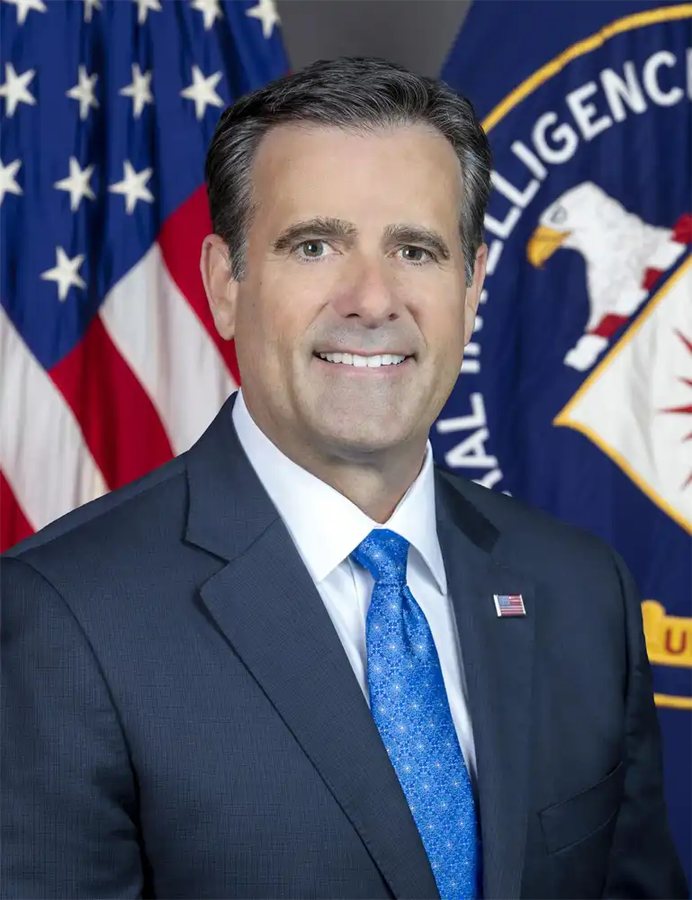
The Atlantic’s new account focuses in part on CIA Director John Ratcliffe. The CIA’s own public biography says Ratcliffe has led the agency since Jan. 23, 2025. According to The Atlantic, Ratcliffe has helped sustain the policy by emphasizing Russian battlefield losses in conversations with President Donald Trump. The article includes an anecdote about discussing such data on the golf course; because that concerns private conversations and relies on sources, it cannot be independently verified from the public record.
The casualty number attached to that anecdote needs context. Ukraine’s General Staff reported 42,860 Russian personnel losses in July, according to the Kyiv Independent. The estimate includes killed, wounded, missing and captured service members. July was the first month of 2026 above 40,000; the average for the year was about 34,000 per month. The figures are Ukrainian estimates and should not be presented as independently confirmed Russian casualty totals.
Meanwhile, Ukraine’s long-range campaign remains active. The Associated Press reported Aug. 6 that Ukrainian forces struck refineries in Bashkortostan and Yaroslavl, hundreds of miles from the border. Kyiv says such attacks are intended to weaken the economic and logistical base supporting Russia’s war. Russian authorities have acknowledged damage from some strikes, while Russia continues its own extensive missile and drone attacks on Ukrainian infrastructure and populated areas.
Energy targets also raise a legal issue that cannot be resolved by broad labels. The International Committee of the Red Cross says energy infrastructure is civilian in principle and may be attacked only if the particular object makes an effective contribution to military action and an attack offers a definite military advantage. A facility that serves both civilian and military purposes may qualify, but proportionality and precautions still apply.
The ICRC specifically warns that merely degrading an opponent’s economy does not, by itself, make civilian energy infrastructure a lawful military target. This is relevant when public rhetoric emphasizes oil revenue or bargaining pressure. A legal assessment has to focus on the function of the specific facility and the military advantage expected at the time, not simply on its value to the national economy.
A U.N. Human Rights Monitoring Mission report released in June documented systematic Russian attacks on Ukraine’s energy network during the 2025-26 winter and also Ukrainian attacks on electricity and heating infrastructure in Russia’s Belgorod region. The mission said energy attacks during the period appeared to violate fundamental principles of international humanitarian law, underscoring how severe civilian consequences can follow damage to power and heating systems.
The best-supported conclusion, therefore, is narrower than an absolute statement that the U.S. directs Ukrainian strikes. The public record shows that Washington expanded intelligence sharing for deep energy targets in Russia, and The Atlantic now reports that such support continues without charge. What remains outside public verification is the current scope of individual targeting packages, their use in particular operations and the private decision-making described inside the Trump administration.
44