6 minWorld
Ukraine’s Orthodox primate urges unity in Christ in August sermon
Metropolitan Epiphanius called on believers to remain united in Christ, heed the Church’s fathers and teachers, and resist temptation in a sermon for the tenth Sunday after Pentecost.
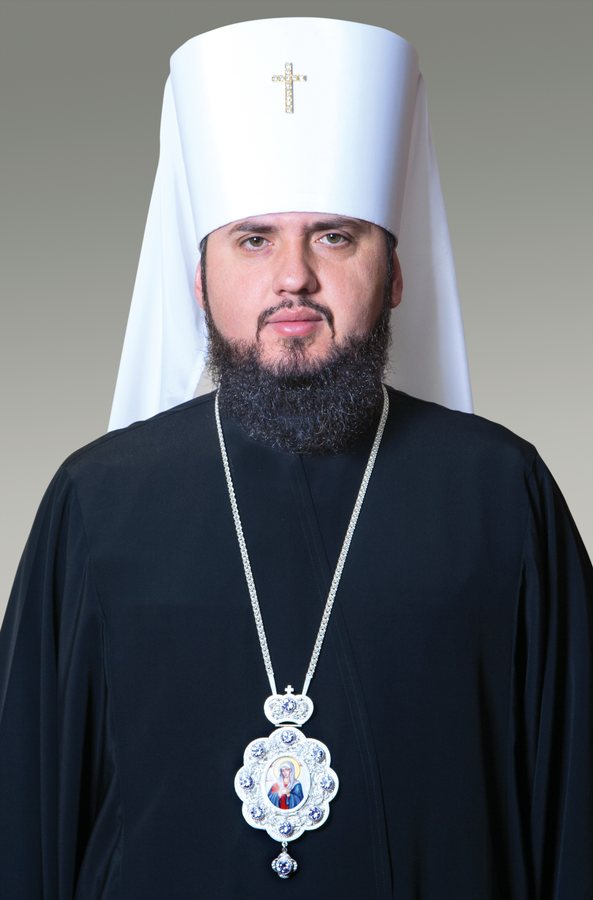
Metropolitan Epiphanius of Kyiv and All Ukraine called on Orthodox Christians to hold firmly to the unity of the Church in Christ, listen to the guidance of its fathers and teachers, and avoid temptation in a sermon for the tenth Sunday after Pentecost. The date fell on August 9 in 2026, ten Sundays after Pentecost on May 31.
The message is primarily theological rather than political. Epiphanius places Christ at the center of church unity and presents inherited teaching as a means of testing spiritual claims. His warning about temptation adds a personal dimension, focusing on the ways pride, resentment or misplaced loyalty can damage a community.
The position is consistent with earlier sermons by the head of the Orthodox Church of Ukraine this year. On June 29, during the feast of the apostles Peter and Paul, Epiphanius said their joint commemoration shows that the Church is not Peter’s or Paul’s but Christ’s. The statement used two of Christianity’s best-known apostolic figures to reject the idea that the Church can be reduced to the authority of any human personality.
In March, during the Triumph of Orthodoxy, Epiphanius also emphasized what he described as true church teaching, apostolic tradition and participation in the sacraments. Those themes provide context for the August instruction to listen to the Church’s fathers and teachers. In Orthodox Christianity, the term refers to influential theological and spiritual writers whose teachings became part of the Church’s received tradition.
The sermon does not present that tradition as a substitute for Christ. Instead, it treats teachers as witnesses whose authority is measured by their relationship to the faith they transmit. That distinction is central to the message: a respected leader may guide the community, but the leader does not become the source or owner of the Church.
Epiphanius addressed the subject of unity more directly in April, when he said believers are joined spiritually with one another and with Christ through the Church, allowing personal faith to grow. That framing suggests that unity is not the elimination of individual difference. It is a religious relationship that is meant to place difference inside a shared spiritual order.
The Orthodox Church of Ukraine also has a current institutional context. In July it held an expanded Bishops’ Council under Epiphanius’s chairmanship. Councils and synods are formal mechanisms for governance, but the August sermon focuses on the less formal conditions of cohesion: trust, shared teaching and the ability to distinguish conviction from temptation.
The distinction matters because religious communities, like other institutions, can become polarized around personalities. A highly visible priest, bishop or commentator may attract followers whose loyalty becomes personal rather than doctrinal. Epiphanius’s formulation attempts to set a boundary by making Christ, not the leader, the center of unity.
The instruction to avoid temptation extends that boundary to individual behavior. In Christian usage, temptation can refer not only to an obvious invitation to wrongdoing but also to subtler impulses that distort judgment. Anger can make a hostile interpretation feel certain. Pride can make correction feel like humiliation. Loyalty can make a believer reluctant to question a favored teacher.
That gives the sermon contemporary relevance beyond church administration. Religious discussion increasingly takes place on digital platforms where short clips, emotionally charged commentary and algorithmic amplification can reward certainty more than context. A believer may encounter theological claims from sources with no clear accountability to a church or scholarly tradition.
The appeal to the fathers and teachers provides one Orthodox response to that environment: compare the new claim with a received body of teaching instead of treating popularity as evidence. The method does not guarantee agreement, but it imposes a longer timeline on judgment and reduces the authority of the moment’s most persuasive personality.
The liturgical calendar also gives the sermon a symbolic setting. Pentecost is commemorated as the descent of the Holy Spirit and the birth of the New Testament Church. The Sundays after Pentecost move through a period in which Christian preaching focuses on how that community lives. A sermon on unity ten Sundays later therefore addresses not the founding of the Church but its durability.
For international readers, the main factual point is straightforward: Epiphanius is emphasizing spiritual unity and traditional teaching at a time when the Orthodox Church of Ukraine continues to develop its institutional life and its public role. The sermon itself does not announce a policy change or political initiative. Its subject is the internal discipline of Christian belonging.
The message can be summarized as a hierarchy of authority. Christ is the center. Teachers matter because they transmit a tested tradition. Institutions matter because they organize shared life. Individual believers still bear responsibility for discernment. By putting those levels in order, Epiphanius presents unity not as automatic agreement but as a practice that must be maintained.
55