5 minWorld
Ukraine fortifies Chornobyl sector while no Belarus buildup is seen
Ukraine has made the Chornobyl sector part of a fortified northern frontier after Russia used Belarus for its 2022 assault on Kyiv. The defenses are extensive, but officials have not reported a current strike buildup across the border.
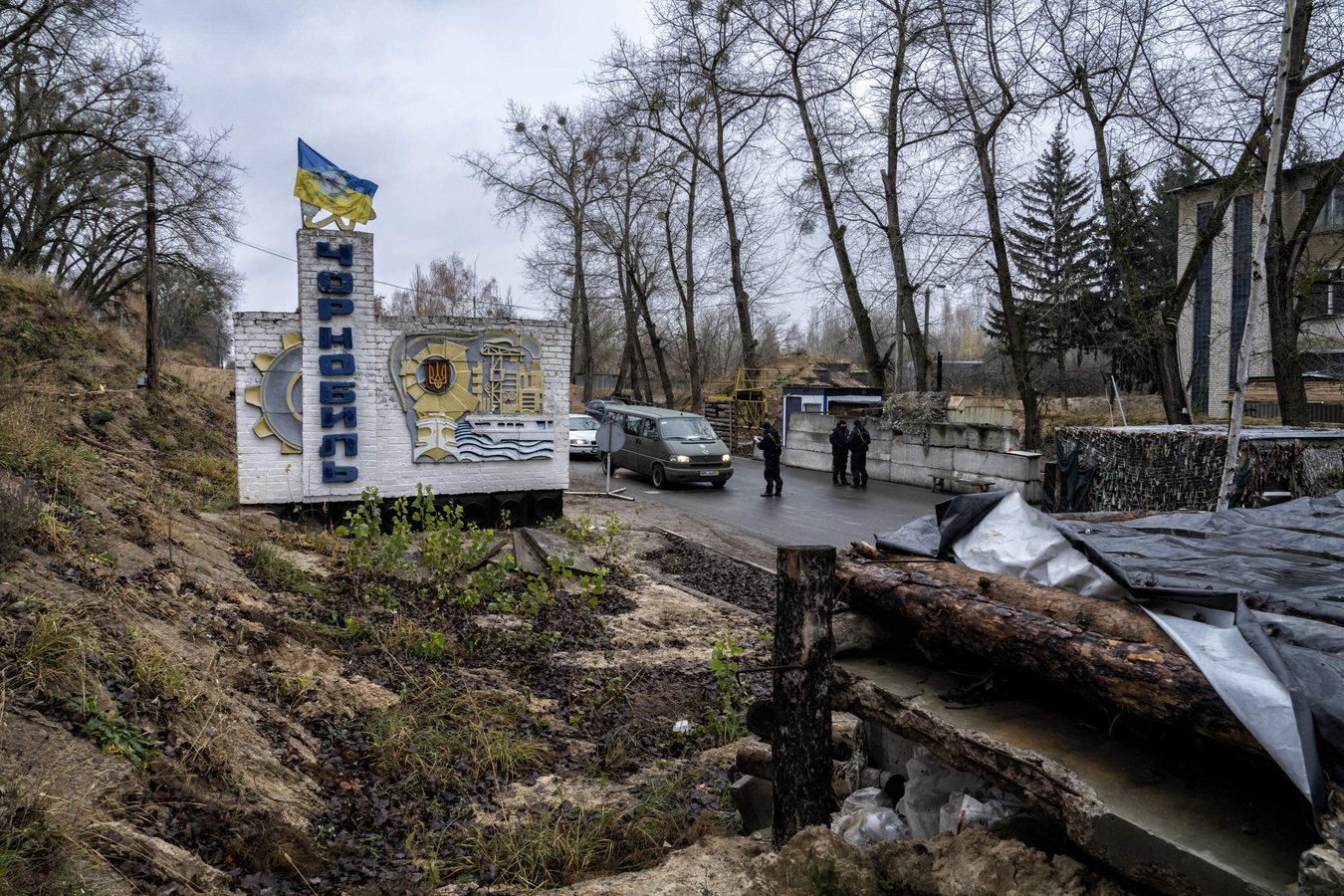
Ukraine is continuing to fortify the Chornobyl sector of its northern border more than four years after Russian forces used Belarusian territory to launch an assault toward Kyiv. The exclusion zone now forms part of a broader defensive system that includes engineered barriers, minefields and persistent surveillance, according to official Ukrainian documents and independent reporting.
The policy has a formal legal foundation. A presidential decree issued on Dec. 5, 2024 changed the boundaries of the Chornobyl Radiation and Ecological Biosphere Reserve. It removed 695.2 hectares of state-owned land along the Ukrainian border and assigned the property to State Border Guard Service military units for the construction and maintenance of engineering and fortification structures, fences, border clearings, signs and communications.
The measure followed the experience of the opening phase of the full-scale war. Russian troops entered the Chornobyl Exclusion Zone from Belarus in February 2022 as they advanced toward the Ukrainian capital. They occupied the nuclear site before withdrawing from northern Ukraine. The operation demonstrated that the exclusion zone, despite its contamination and restricted access, could still be used as a military corridor.
Ukrainian border authorities said in June 2026 that fortification lines along the Belarus border were being expanded and that mine-explosive barriers were being increased in the most vulnerable sectors. Associated Press reporting published July 25 described stretches of the border protected by mines, anti-tank obstacles, razor wire and anti-drone equipment. The AP reported that border guards patrol around the clock with drones, armored vehicles and other surveillance systems.
Public reporting also supports a heavily militarized picture inside Chornobyl itself. An AP feature in April described the exclusion zone as a heavily monitored military corridor marked by concrete barriers, barbed wire and minefields. The report said Russian troops had dug defenses in contaminated soil during the 2022 invasion and that fires associated with military activity swept through forests.
Some claims about the defenses require narrower wording. Public sources do not confirm that every road and forest track in the Chornobyl zone is densely mined. They establish the presence of minefields and the continued expansion of mine barriers in the most dangerous approaches. The AP establishes around-the-clock border patrols with drones and surveillance systems, but operational maps of observation posts, patrol routes and obstacle locations are not public.
Ukrainian officials have simultaneously emphasized that the fortification effort should not be read as evidence of an imminent invasion. In June the State Border Guard Service said it was not detecting units or formations near the frontier capable of carrying out a new incursion. The AP reported in late July that Ukrainian officials saw no signs of a Russian troop buildup in Belarus. Officials have said they are strengthening defenses because the direction remains a potential threat and because Belarus is closely aligned with Russia.
The Chornobyl nuclear complex gives the border issue an additional international dimension. A drone strike in February 2025 damaged the New Safe Confinement, the giant structure over the destroyed fourth reactor. In April 2026, the plant operator said the arch had lost the ability to fully maintain the leak-tightness of its internal volume, although the facility remained controlled, radiation monitoring showed no exceedances and no releases above regulatory limits had been recorded.
For Ukraine, the objective is therefore broader than defending a conventional frontier. The government is trying to prevent a repeat of the 2022 route while managing a territory that remains environmentally and radiologically sensitive. Military construction, emergency response and nuclear safety all have to operate in the same restricted landscape.
The available evidence supports a clear conclusion: the Chornobyl sector is now part of a long-term fortified border system. It does not support the conclusion that a new attack is currently underway or inevitable. The distinction between readiness and warning is central to understanding why Ukraine is building defenses even when no strike force is visible across the border.
54