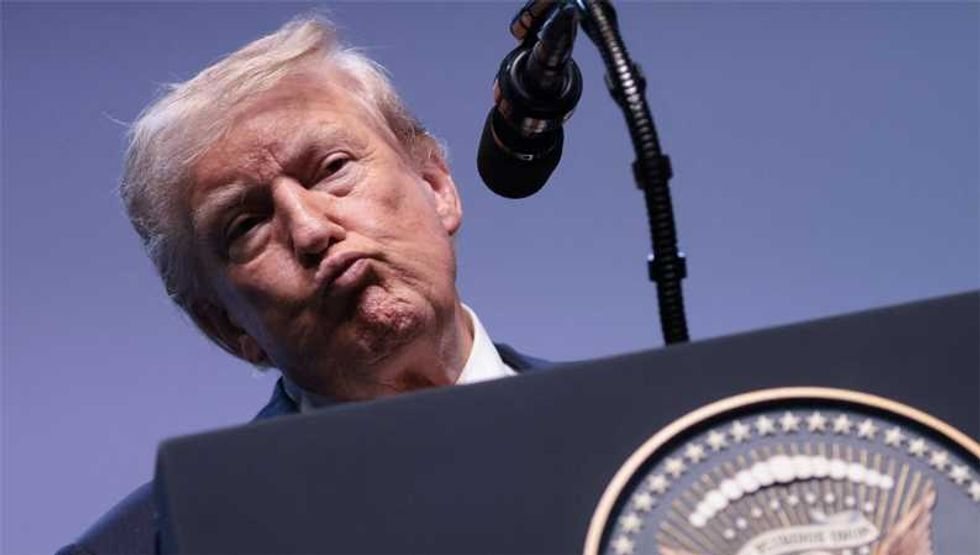
Spanish officials are expressing bewilderment over President Donald Trump’s contradictory ultimatums on military spending and trade, with the country’s top diplomat essentially dismissing the president’s chaotic demands as inexplicable. The confusion stems from Trump’s erratic behavior at this week’s NATO summit in Ankara, where he attacked Spain as a “terrible partner” for refusing to commit to spending 5 percent of its gross domestic product on defense. Then, on Wednesday, the president ordered Treasury Secretary Scott Bessent to “cut off all trade with Spain, please, including visits”—a threat that appeared to be in earnest when a U.S. official confirmed Thursday that the Treasury and Commerce Departments were drafting “a menu of Spanish products that may be embargoed in the coming days.” Trump later backed down after creating the international incident, claiming Spain had “honored a request for lots of payment” and was “very generous today.”
Spanish Foreign Minister José Manuel Albares expressed bewilderment over the episode, telling national broadcaster RTVE that he had no idea what Trump was referring to. “Only he can explain,” the diplomat said dryly. Spanish government officials were still scrambling to make sense of Trump’s comments, ultimately concluding he must have been referring to Spain’s compliance with existing NATO commitments to spend 2 percent of GDP on defense—not any new spending increases. A Spanish government spokesperson told Politico that Madrid understood Trump was referring to data showing Spain had “satisfactorily complied with the 2 percent target.”
The incident highlights the broader tensions within NATO over defense spending, a recurring theme of Trump’s presidency. Trump has long pressed allies to meet or exceed the alliance’s spending targets, often using confrontational language and threats of trade retaliation. The 5 percent target he demanded from Spain far exceeds the current NATO guideline of 2 percent, which many member nations have struggled to meet. Spain, like several other European allies, has been gradually increasing its defense budget but remains below the 2 percent threshold, a point of contention that Trump has seized upon repeatedly.
The trade threat against Spain also raised concerns about the potential economic fallout. Spain is a significant trading partner for the United States, with bilateral trade in goods and services totaling over $20 billion annually. Key Spanish exports to the U.S. include machinery, chemicals, and food products, while American exports to Spain include aircraft, pharmaceuticals, and agricultural goods. An embargo would disrupt these flows, affecting businesses and consumers on both sides. The Trump administration’s drafting of a menu of potential embargoed products suggested the threat was being taken seriously, at least initially.
Trump’s shifting stance—from demanding a 5 percent defense spending commitment to threatening a trade embargo, then claiming Spain had come back “all the way”—left many observers puzzled. The president’s comments aboard Air Force One, where he said Spain had “honored a request for lots of payment,” did not clarify the situation, as Spanish officials denied any new agreement had been reached. The episode underscores the unpredictability of Trump’s foreign policy approach, which often relies on public ultimatums and abrupt reversals.
For Spain, the incident is the latest in a series of diplomatic challenges posed by the Trump administration. The two countries have clashed over trade, climate policy, and defense spending in the past, but the direct threat of an embargo marked a new escalation. Spanish officials are now working to de-escalate the situation, emphasizing their commitment to NATO and their willingness to engage in dialogue. However, the foreign minister’s comments suggest a degree of frustration with the lack of clarity from Washington.
The broader context of the NATO summit also included discussions on other pressing issues, such as tensions with Iran and the ongoing conflict in Ukraine. Trump’s focus on Spain’s defense spending came amid a broader push for allies to increase their contributions, a theme that has defined his approach to the alliance. The summit in Ankara was intended to address these and other security challenges, but Trump’s outburst against Spain diverted attention from the agenda.
As the dust settles, the episode serves as a reminder of the challenges of transatlantic relations under a Trump presidency. While Spanish officials remain publicly diplomatic, the incident has strained ties and raised questions about the reliability of U.S. commitments. For now, Madrid is left to interpret Trump’s words as best it can, with the foreign minister’s comment—“Only he can explain”—summing up the confusion felt by many in Europe.