6 minWorld
Russia expands military training in schools as war enters fifth year
Russian students returning to school will find a revamped civics course that puts basic military training at its core, part of a broader effort to prepare the next generation of recruits for the war in Ukraine.
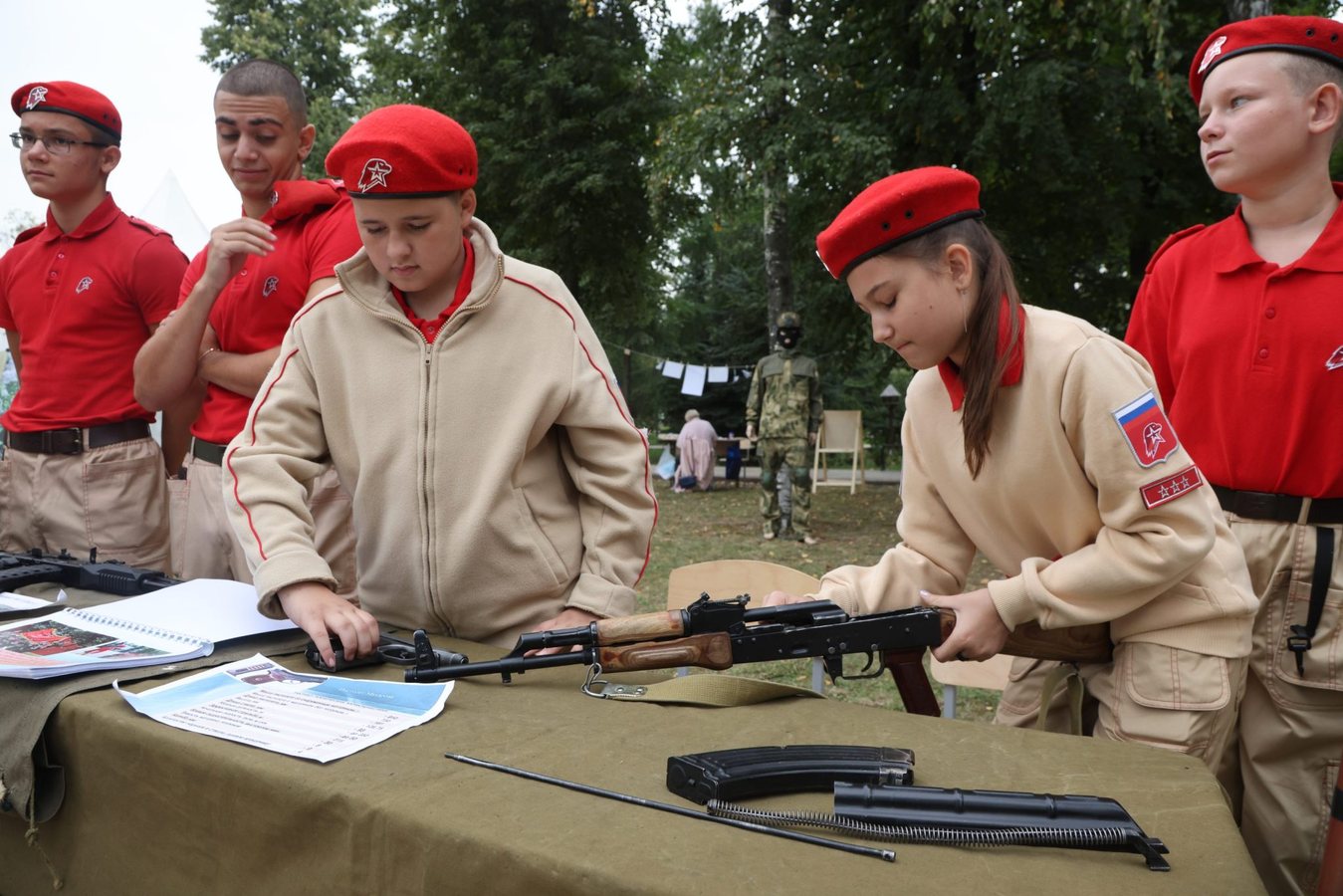
Russian students returning to school next week will find a significant change in their civics courses, with military training now placed at the heart of mandatory lessons for teenagers. The revamped curriculum, ordered by the Education Ministry, requires half of weekly classes in the “Fundamentals of Security and Defense of the Motherland” course to focus on basic military training. Students as young as 13 will learn about machine guns, anti-tank weapons, hand grenades, emergency field medicine, and general military discipline, skills previously taught only in limited high school modules.
The educational overhaul is part of a creeping militarization of Russia’s schools intended to shape the next generation of army recruits as the Kremlin continues its war in Ukraine, now in its fifth year. Beyond weapons instruction and battlefield tactics, the course covers Russia’s national security doctrine, the structure of the armed forces, mines and explosive hazards, first aid for combat injuries, chemical and radiation exposure, acute stress management, survival training, and procedures for operating in conflict zones.
“The romanticization of war and violence, combined with a constant fear of external enemies, instills in young people the idea that human life holds no value and that dying for the regime and the president is normal,” said Pavel Talankin, an exiled Russian teacher who co-directed the Oscar-winning documentary “Mr. Nobody Against Putin,” which focused on rising war propaganda in his school. “If necessary, one must die for the motherland, taking up the flag and marching into the line of fire without asking questions.”
The classroom pipeline feeds directly into Russia’s conscription system, which requires all 18-year-old men to complete one year of military service, though many avoid or delay being drafted. While conscripts cannot be sent to Ukraine, enlistment officers and military instructors pressure young draftees to sign lucrative professional contracts early in their training, making them eligible to fight. Russia seeks about 400,000 new recruits each year for a war that has already created more than 1.5 million killed and wounded in the army, according to Western estimates.
State Duma speaker Vyacheslav Volodin has called for veterans of the war in Ukraine to be placed in “every single school” to teach children subjects related to their military experience. “Their qualities should be put to use in educating children,” he told university students in Krasnodar in September 2025, pointing to his own Soviet childhood when World War II veterans were present in schools. A survey of more than 2,600 Russian school leaders and teachers conducted by the state-sponsored Knowledge Society found that 95% of schools host events dedicated to the war in Ukraine, more than 80% invite combatants to speak to students, and nearly 75% run special lessons about the war.
Outside the classroom, Russia has revived and modernized Soviet-era youth military games called “Zarnitsa” (Summer Lightning). Organized by the state-backed “Movement of the First” youth group, children are organized into 10-person squads with military specialties including commanders, stormtroopers, drone operators, sappers, and medics, undertaking combat simulation training with laser-tag gear, VR flight simulators, trench maneuvers, and assault rifle mockups. Participation has grown from 800,000 children aged 7 to 17 in 2024 to an expected 2.5 million this year, with the overseeing youth organization receiving annual funding of about 20 billion rubles ($233 million) from the federal budget.
High school boys are also offered week-long barracks-style field training at state-run Avangard military centers, a nationwide network of over 70 facilities backed by tens of billions of rubles in state funding. Authorities in Russia’s far eastern Primorye region have opened specialized summer military camps for 14-to-17-year-olds with names like “Stormtrooper” and “Infantryman.” Russia’s federal budget has allocated a record 70 billion rubles this year for “patriotic education” through the national project “Youth and Children,” a twenty-fold increase since 2021. Enrollment in formal military cadet schools and specialized recruitment tracks reached 780,000 students by 2025, up from 200,000 in 2018.
The Soviet Union previously made basic military training compulsory in schools, including gas mask drills, march practice, and rifle assembly, framing military readiness as a deterrent against foreign aggression. “Back then, people feared war, and there was propaganda for peace everywhere, so that war would not happen again,” said Irina Lukyanova, a teacher and researcher who studies trends in Russia’s education system. “But now the ideology is militarism.” Russian schools all start the new academic year on Sept. 1.
76