5 minWorld
Polish parliament speaker says Ukraine must confront Volhynia on its EU path
Czarzasty backs Ukraine’s membership but says historical recognition is part of European values. Formal negotiations continue, with two clusters opened by mid-July.
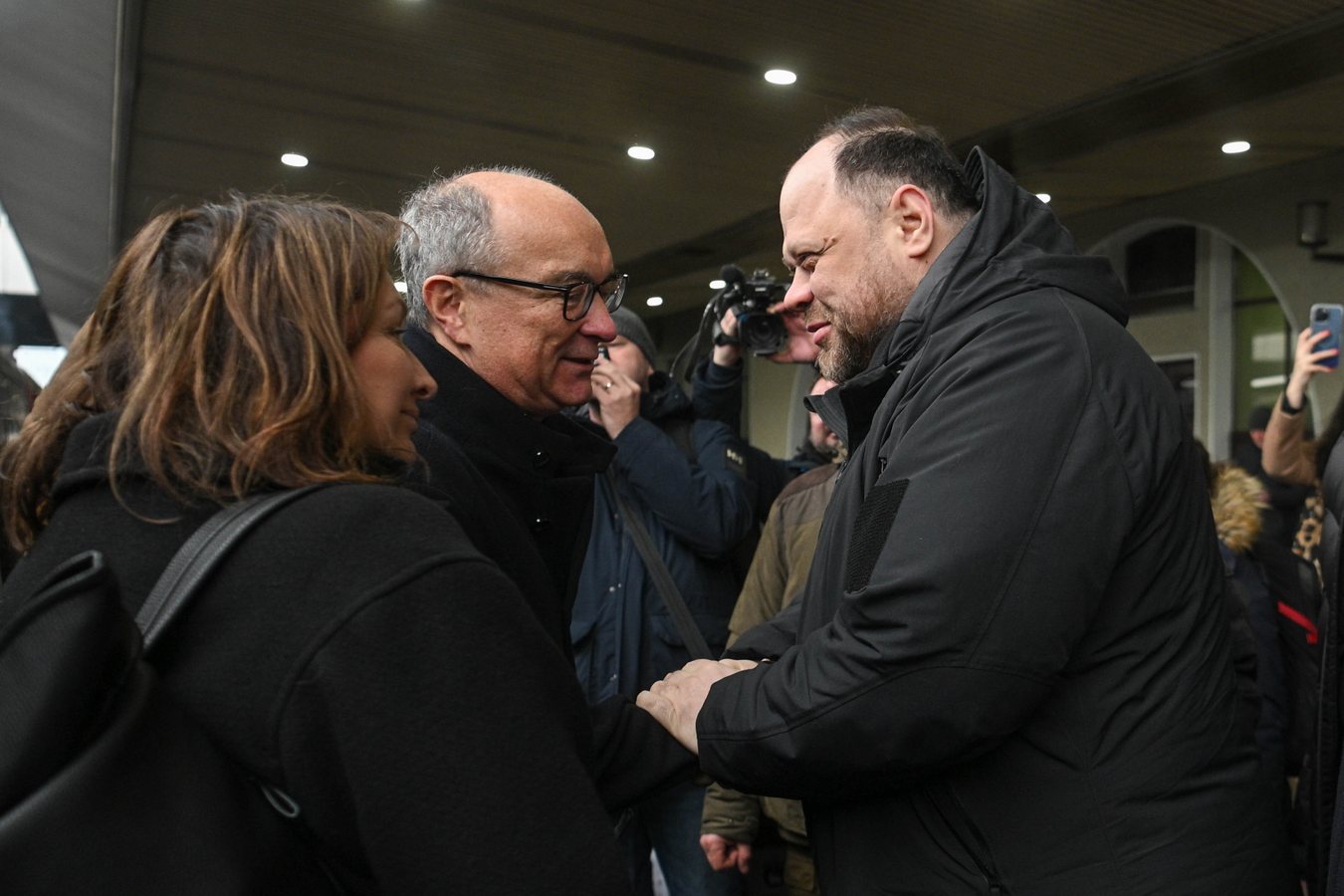
Poland’s Sejm Speaker Włodzimierz Czarzasty said Ukraine’s path to European Union membership must include a reckoning with the history of the Volhynia killings, sharpening a dispute that has become increasingly prominent in Polish-Ukrainian relations.
Czarzasty made the remarks on August 10 in Szczawnica after talks with Ukrainian parliament chairman Ruslan Stefanchuk. He said Ukraine’s accession would require reflection on all aspects of its history and invoked the need to call genocide by that name, referring to the Polish state’s characterization of crimes against Poles in Volhynia.
He also made clear that he supports Ukrainian EU membership. That combination is central to understanding the statement. Poland’s speaker was not announcing opposition to accession; he was arguing that Poland’s support should be accompanied by historical recognition.
No EU institution has announced a new formal membership criterion requiring Ukraine to adopt Poland’s terminology for Volhynia. The European Union’s accession standards remain based on democratic governance, the rule of law, human rights, a functioning market economy and the implementation of EU obligations. Ukraine’s negotiations are already active, and by July 14 two of six negotiating clusters had been opened.
Nevertheless, Poland has meaningful leverage. Membership in the EU requires unanimous approval by the member states. That means a national government can make bilateral disputes politically relevant to accession even if they are not written into the general criteria. The distinction between a formal EU benchmark and a national condition is therefore real, but both can affect the eventual outcome.
The Polish parliament has taken a clear official position on the historical terminology. On July 17, the Sejm voted unanimously, 441-0, for a resolution commemorating victims of crimes committed by Ukrainian nationalists on the eastern territories of the Second Polish Republic and describing those crimes as genocide.
Polish political pressure extends beyond that resolution. A separate lawmakers’ proposal called for opposition to Ukraine’s EU membership because of what its sponsors described as the glorification of perpetrators of the Volhynia crimes. It was referred to the foreign affairs committee. That proposal is not Polish state policy, but it demonstrates the direction of a significant part of the domestic debate.
Ukraine has continued cooperation on the physical record of the violence. Its Institute of National Memory announced research and exhumation work at the former villages of Ostrivky and Volia Ostrovetska in the Volyn region between July 13 and August 7. The work was intended to support exhumation and later reburial of residents killed in August 1943.
Czarzasty’s previous statements underscore the strategic complexity. In February he signed a declaration with Stefanchuk supporting Ukraine’s EU membership path. In June he described membership as a vital Polish interest and warned against escalating historical disputes. His latest remarks do not erase those positions, but they make historical recognition a more explicit part of Poland’s political expectations.
The August 10 meeting also took place as the two parliamentary leaders visited Ukrainian children affected by the war. Afterward Czarzasty called for rebuilding trust, keeping communication open between the two parliaments and condemning mistreatment of Ukrainians by Poles and Poles by Ukrainians.
The conflict therefore contains two parallel realities: Poland remains a strategic supporter of Ukraine’s European future, while the dispute over memory is becoming harder to separate from that future. For Kyiv, the challenge will be to continue EU reforms while reaching workable arrangements with Warsaw on exhumations, memorialization and historical language.
For now, the talks have not stopped and Poland has not announced a formal veto. But the speaker’s statement is a warning that accession is not only a technical process between Kyiv and Brussels. It is also a political process involving every member state, and the unresolved history between Poland and Ukraine is increasingly part of that equation.
43