6 minWorld
Poland to add SMS warnings after Russian Kh-101 crossed its airspace
A July missile incursion has prompted Warsaw to tighten the link between military air defense and civilian alerts. Poland says people should receive more information when threats from the war in Ukraine lead to fighter scrambles.
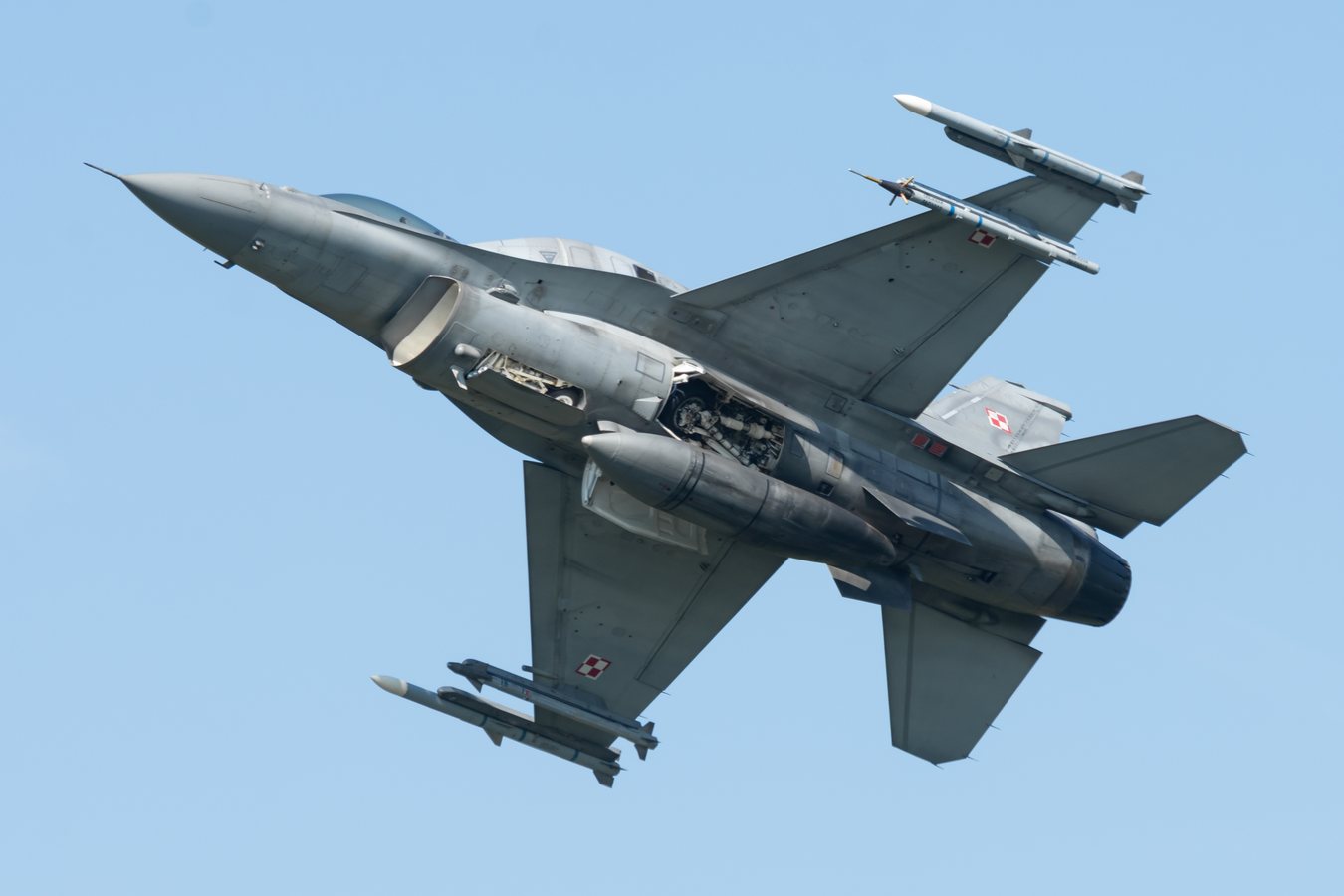
Poland plans to send text messages to residents when a dangerous situation connected to the war in Ukraine causes Polish fighter jets to be scrambled, a change prompted by a Russian cruise missile that crossed into Polish airspace late last month.
RMF24 reported the plan on August 10, citing comments by Magdalena Sobkowiak-Czarnecka, a secretary of state at Poland’s Ministry of National Defense, in an interview with Wirtualna Polska.
The change is still being designed. Polish officials have not said that every Russian strike on Ukraine or every Ukrainian air-raid warning will automatically generate an emergency text in Poland. The defense official said authorities intend to distribute more information through systems operated by the Government Security Centre, or RCB, when Polish fighters are launched. She said the Interior and Administration Ministry will determine the details.
The review follows the events of July 30, when Russia carried out a large attack on western Ukraine. A Russian Kh-101 cruise missile entered Polish airspace and came down near Tarnawa-Kolonia in the Lublin region.
According to RMF24’s account, based on information from Poland’s Operational Command, an unidentified object was detected at 3:40 a.m. An F-16 was dispatched to identify and intercept it. Roughly six minutes later, the object disappeared from radar.
A military Mi-24 helicopter later found an impact crater. The missile fell in an uninhabited area, and authorities reported no injuries or property damage.
Poland’s Defense Ministry says the military response itself worked correctly. The issue now under scrutiny is the civilian warning process.
Sobkowiak-Czarnecka said RCB and the Interior Ministry are drawing lessons from the incident. The General Staff and Operational Command are involved in work intended to make the overall warning system more complete.
Today, Operational Command publicly announces fighter scrambles connected to the security situation in Ukraine. The planned reform would push information beyond military statements and news updates, sending it directly to mobile phones when the situation reaches a level that prompts Polish aviation to act.
Poland already uses RCB alerts for serious emergencies. Government guidance describes Alert RCB as a text-message system for extraordinary events when there is a probability of a direct threat to life or health over a significant area.
The system does not require people to subscribe or download an application. Mobile carriers send messages to phones located within a designated area. RCB says a powiat, a county-level district, is the smallest unit that can be targeted.
That established framework does not necessarily answer how the new aviation-related messages will work. The defense official referred to using RCB systems but did not say that every fighter scramble will become a conventional Alert RCB under the existing threshold. That distinction will depend on the Interior Ministry’s final rules.
For residents, the practical questions are straightforward. Will the message be sent only near the eastern border, or more widely? Will it simply explain that military aircraft are operating, or instruct people to take precautions? How quickly can a military assessment be converted into a geographically targeted civilian warning?
The July missile incident shows why those questions cannot be left until after an object has crossed the border. Russia’s strikes on western Ukraine can unfold close to NATO territory, and the difference between an external military threat and an internal public-safety concern can be measured in minutes.
Poland’s proposed response also illustrates a broader change along NATO’s eastern flank. The alliance’s security debate often focuses on weapons, aircraft and troop deployments. But an effective defense system also depends on what local authorities and civilians know while military units are already responding.
A fighter scramble can be precautionary. It does not mean a missile has entered Polish territory. That is another reason officials will need to calibrate the wording carefully. A useful alert should communicate elevated risk without implying facts that have not been established.
The plan announced this week does not yet provide that level of detail. It establishes a direction: when Poland’s military sees a threat from events in Ukraine serious enough to launch fighters, the civilian information system should become more active too.
The Kh-101 that fell in the Lublin region caused no casualties. Its lasting effect may instead be institutional, forcing Poland to connect radar tracks, command decisions and public warnings more tightly before the next fast-moving incident reaches its border.
48