3 minWorld
Pasta factory expansion in Italy uncovers 2,600-year-old necropolis
Archaeologists discovered an ancient city of the dead with tombs and rare artifacts during an expansion of the Pasta Garofalo factory in Gragnano, Italy. The site dates to the sixth century B.C. and reveals the region's role in Mediterranean trade networks.
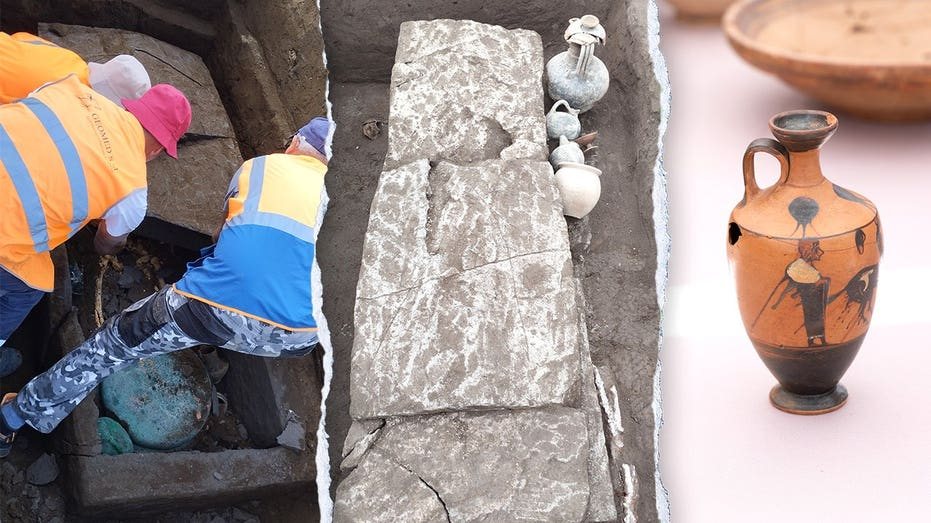
An expansion project at a pasta factory in southern Italy has revealed a 2,600-year-old necropolis filled with tombs, human remains and rare treasures, offering a new window into life during the Archaic period of Mediterranean history.
The discovery was made at the Pasta Garofalo production facility in Gragnano, a town near Naples, during excavation work carried out between 2025 and 2026 ahead of the factory's expansion. The company announced the findings in July, releasing images that show rows of stone burial chambers, along with pottery, textiles, wooden objects and woven baskets preserved inside them.
Officials said the site dates to the first half of the sixth century B.C., centuries before the rise of the Roman Empire. The preservation of organic materials such as textiles and baskets is considered rare, and researchers said the finds deepen understanding of funerary practices, social organization and everyday life during that era.
The grave goods recovered at the site were described as remarkable. They include Egyptian scarabs, animal-shaped amber ornaments, and silver and bronze artifacts of Etruscan origin. According to the company's statement, these objects testify to the central role played by the ancient territory of Gragnano within Mediterranean trade networks, serving as a crossroads connecting the Greek, Egyptian and Etruscan worlds.
For Pasta Garofalo, the discovery carries particular significance given the company's centuries-old ties to Gragnano and its pasta-making tradition. The company said the relationship between its brand and the town has been enriched by an extraordinary new chapter in their shared history.
Massimo Menna, chief executive officer of Pasta Garofalo, said the discovery fills the company with great pride and a profound sense of responsibility. He noted that the company's history is inseparably linked to Gragnano, a place that has safeguarded a unique heritage of culture, tradition and manufacturing expertise for centuries. Doing business, he added, also means caring for the places where the company operates and contributing to their knowledge and enhancement.
Researchers will continue studying the human remains to learn more about the ancient community's diet, movements and living conditions. The company's statement said ongoing research will prioritize analysis of the osteological remains to examine these aspects of life during the Archaic period.
The find follows other significant necropolis-related discoveries across Italy in recent years. Earlier this year, officials found the remains of an ancient sanctuary in northern Italy after construction crews unexpectedly uncovered the site while working on a new highway. In 2025, archaeologists discovered a nearly 3,000-year-old city of the dead in Trento, Italy, dating back to the Iron Age.
53