5 minWorld
Lawmakers Push to Revive Monroe Doctrine as U.S. Expands Latin America Security Role
A congressional delegation is urging renewed focus on the Western Hemisphere as the Trump administration deepens military training, intelligence sharing and diplomatic engagement across Latin America to counter Chinese influence and drug trafficking.
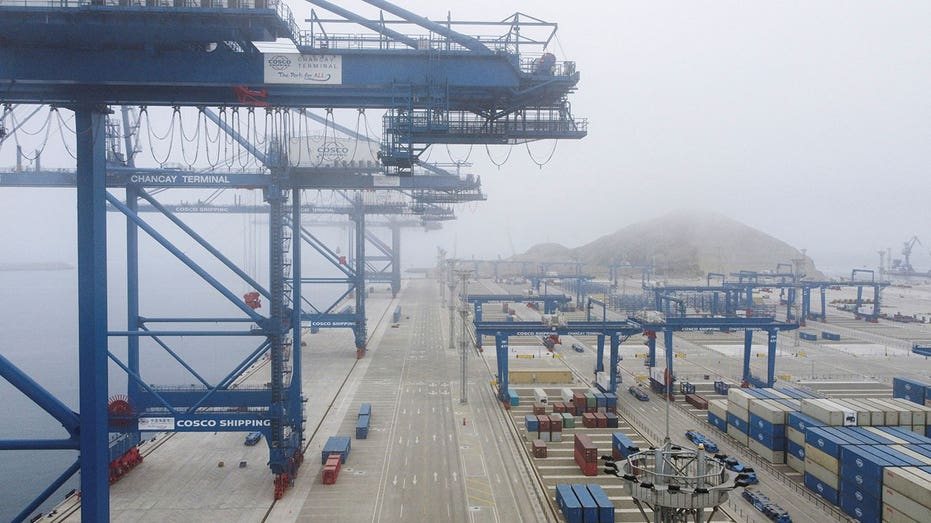
A push to revive the Monroe Doctrine as the organizing principle of U.S. foreign policy in the Western Hemisphere is gaining traction, with supporters arguing that the security of the United States is inseparable from the security of Latin America. The case rests on two converging threats: the expanding economic and strategic footprint of communist China across the region and transnational criminal organizations that traffic drugs toward American communities.
President Donald Trump's administration has moved to expand military training and security cooperation with Latin American partners, a step backers describe as a practical application of America First principles. The deployment of elements of the 10th Mountain Division to Panama for jungle training and joint exercises is being framed as part of the Shield of the Americas initiative, which aims to strengthen regional allies so they can dismantle drug-trafficking networks, disrupt smuggling routes and stop deadly narcotics before they reach U.S. borders.
The administration is also expanding regional intelligence capabilities by shifting MQ-9 Reaper drones from U.S. Africa Command to U.S. Southern Command. The aircraft are supporting operations in Colombia and Ecuador, providing surveillance to track trafficking networks across remote jungles, border areas and maritime routes. Combined with greater intelligence sharing and coordinated operations, officials say the effort helps dismantle criminal networks at their source.
During a recent congressional delegation trip to Ecuador, Peru and Colombia, lawmakers said they saw firsthand the growing influence of Beijing. China has spent years expanding its economic and strategic footprint through investments in ports, mining operations, critical infrastructure and key industries. Those investments, the delegation argued, are not simply about trade — they give China leverage over regional economies, access to critical resources and influence over historically reliable American partners.
One of the clearest examples cited is the Port of Chancay in Peru. Built and operated by Chinese state-owned COSCO, the deep-water port has the capacity to transform trade between South America and Asia. While increased trade benefits Peru's economy, China's control of critical infrastructure raises serious security concerns regarding intelligence collection, logistical support or future military use, according to the delegation's account.
In Peru, the delegation met with U.S. Ambassador Bernie Navarro, who has been working to strengthen the partnership. Navarro's recent coordination with Peruvian defense officials and Southern Command commander General Francis Donovan to combat narcoterrorist organizations — including those in the VRAEM region, the Valley of the Apurímac, Ene and Mantaro rivers — was held up as an example of results-driven engagement.
Supporters of the approach argue that a strong American presence in the hemisphere does not require acting alone. It requires working with willing partners who share an interest in combating criminal networks, protecting sovereignty and preventing hostile foreign powers from gaining strategic influence. That is why, they contend, renewing the commitment to the Monroe Doctrine is critical: the Western Hemisphere cannot be treated as a secondary priority while China expands its influence and criminal organizations exploit weak institutions and porous borders.
The argument also carries a fiscal dimension. As a member of the House Appropriations Subcommittee on National Security, Department of State, and Related Programs, one delegation member said foreign policy and assistance must produce tangible benefits for the American people. Embassies, security partnerships and diplomatic resources should focus on advancing American interests, countering Chinese influence and helping allies confront shared threats. Taxpayers deserve to know their dollars are spent effectively, that partners contribute their fair share and that investments deliver measurable results, with wasteful programs cut and resources directed toward initiatives that strengthen national security.
President James Monroe established the doctrine more than 200 years ago on a simple principle: the security of the United States is directly tied to the security of the Western Hemisphere. Two centuries later, supporters say that lesson remains true, and that a secure hemisphere is essential to a secure United States.
5