4 minWorld
Italian McDonald’s locations expand security as urban pressures enter restaurants
Reports from Milan and Naples and a 2026 protocol in Frosinone show a real security challenge, while the viral claim of an ethnic hiring strategy remains unsupported.
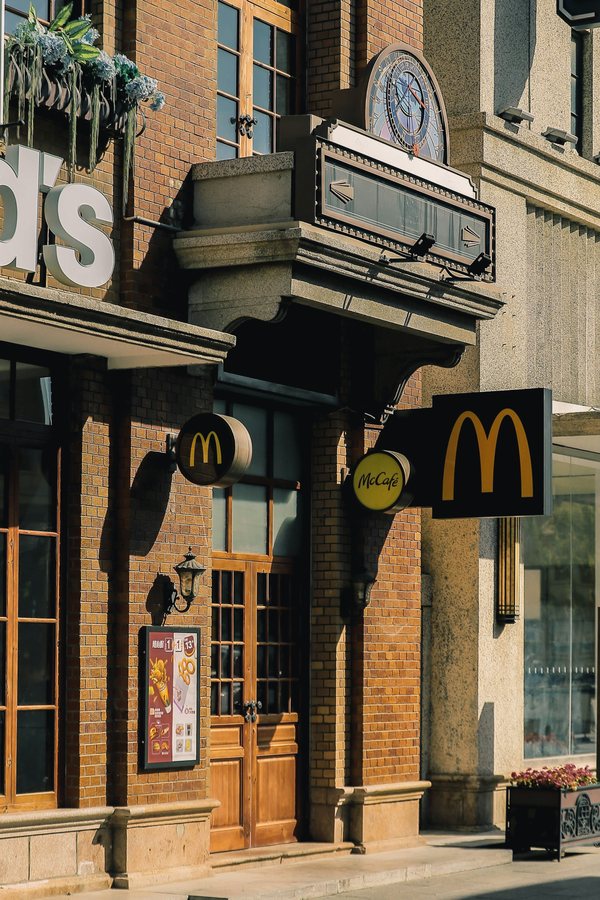
Some McDonald’s restaurants in Italy are responding to urban safety pressures with visible security staff, controlled restroom access, surveillance and closer ties to law enforcement, according to MAIR’s Italian publication Ascensio and its report “Guardie e mendicanti nei McDonald’s italiani.” The reporting was prompted by a viral claim that African guards were deliberately hired to remove other Africans who beg or cause problems. No public evidence was found for such an ethnic hiring policy.
Customer reviews from Milan in 2024 and 2025 describe security or “bouncers,” receipt checks and rules linking restroom access to a purchase. A reviewer near Piazzale Loreto described a man the reviewer perceived as African who insisted that an order be made before use of the bathroom. The account is subjective. It does not establish the man’s employment status, origin or the criteria used to place him in the restaurant.
Reviews are useful for showing repeated perceptions but are not official evidence of misconduct or company policy. Their value in this case is that they document a pattern of customers noticing physical control inside restaurants.
In Naples, a reviewer at the Piazza Garibaldi McDonald’s said two security workers were present but that diners were still approached several times for money. The station area is one of the city’s major transit points. A restaurant there is exposed to a flow of people that extends well beyond paying customers.
A December 2017 case in Milan provides a verified example of the risks. ANSA reported, citing police, that a group described as North African occupied tables and disturbed customers at a McDonald’s. The manager asked a security guard to remove the group. During the confrontation, a customer who verbally supported the guard was stabbed.
In May 2026, authorities in Frosinone and McDonald’s announced a more structured approach. The security protocol included stronger video surveillance, lighting of exterior areas, staff training and rapid contact with law enforcement. The stated purpose was to protect both workers and customers.
McDonald’s Italia says more than 90 percent of its restaurants are operated by franchisees. In a January 2026 release, the company reported more than 800 restaurants, about 38,000 workers and more than 165 local franchise entrepreneurs. That decentralized operating structure is relevant because security measures can respond to specific locations without representing a national policy across the brand.
McDonald’s public materials describe inclusion, integrity and attention to people among its values, and its recruiting pages emphasize an inclusive and safe workplace. Those statements do not resolve individual complaints, but they provide no support for the claim that ethnicity is used as a formal security tool.
The Italian cases reflect a challenge familiar across large cities: businesses that provide seating, restrooms and long opening hours often become informal pieces of public infrastructure. The growth of security protocols around McDonald’s is best understood as an institutional response to the pressures that enter through the restaurant door, not as evidence of an ethnic staffing strategy.
53