6 minWorld
Geologist warns of deeper oil threat as Hormuz shut-ins persist
A petroleum geologist warns that millions of barrels of Persian Gulf oil production remain shut in and may not fully recover even after the Strait of Hormuz conflict is resolved, citing complex technical challenges in restarting wells.
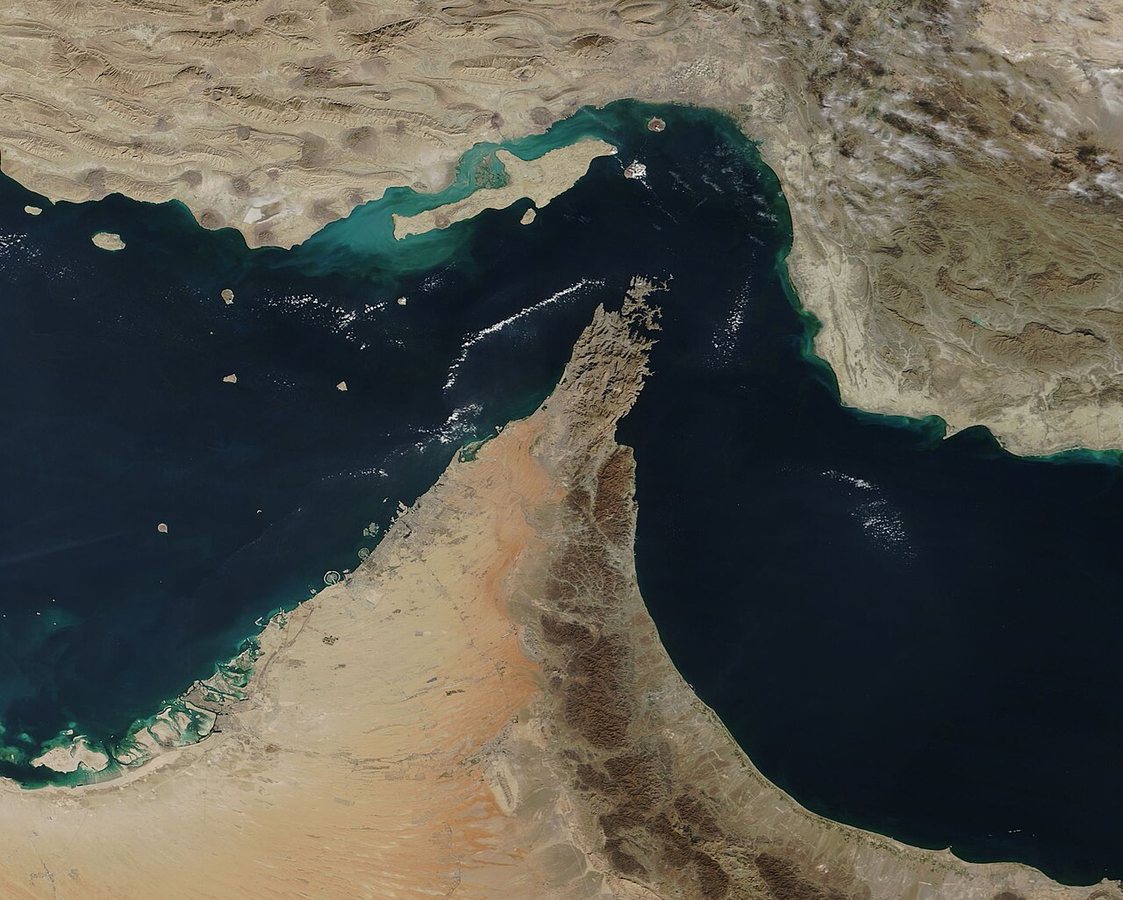
A petroleum geologist is warning that the most consequential energy story from the Persian Gulf conflict may be unfolding thousands of feet underground, not on the surface of the Strait of Hormuz, and could persist long after any political agreement ends the fighting.
Art Berman, a petroleum geologist and energy consultant with more than four decades of industry experience, said millions of barrels of Persian Gulf oil production remain shut in and that restoring those wells is far more complicated than simply reopening the strategic waterway. "This is potentially a kind of a world-changing event, even if we resolve the political issues," Berman said.
Berman estimated that 8 million barrels of Persian Gulf production is currently shut in, with global production down about 10 million barrels a day. "We can move tankers around and we can obsess about, you know, are there 4 million barrels getting through or are there 6 million or 9 million or whatever the right number is," he added. "But eventually, those tankers have to be filled with oil."
His estimate is broadly consistent with the latest assessment from the International Energy Agency. The IEA said in its Aug. 12 Oil Market Report that Gulf oil production rose by a further 2.5 million barrels per day in July to 23.9 million, still 8.3 million below pre-war levels. Global oil supply remained 6.3 million barrels per day below year-earlier levels, according to the agency.
The U.S. Energy Information Administration offers a somewhat different estimate, assessing production shut-ins at an average 5.5 million barrels per day in July while warning that continuing constraints on Hormuz transit had forced the agency to increase its forecast for shut-in production in August. EIA expects production and trade patterns to generally return to pre-conflict conditions in early 2027, but says some Gulf producers may not regain their previous output during its forecast period.
The distinction matters because much of the public discussion has centered on what the industry calls the midstream problem, whether tankers can safely transport oil through Hormuz, while Berman argues that the upstream problem of producing the oil itself could prove more enduring. "The very last thing in the world I ever want to do is to shut in a well," he said.
Restarting a well requires restoring communication between equipment at the surface and reservoirs thousands of feet underground, and extended shutdowns can create complications inside the reservoir and well. "This is not like turning on a switch for a light bulb," Berman said. "It's a complicated, high-risk, relatively long-term process, and we don't know the outcome."
Berman estimated that roughly 80% of affected wells could return close to their previous production levels, although that could take weeks or months. He said many of the remainder could require additional engineering work and some could ultimately produce at lower rates. "Some of that production will never come back," he predicted.
Other energy analysts agree that restarting Gulf production presents substantial technical challenges, though Wood Mackenzie is more optimistic about the ultimate recovery. Its analysis projects that fields affected by the Hormuz closure could return to approximately 70% of their previous production within three months and 90% within six months, assuming a controlled restart. The final roughly 1 million barrels per day could take considerably longer.
Berman also warned against assuming that a ceasefire or political agreement would immediately restore pre-war energy flows. Shipowners, insurers and crews would first have to become confident that tankers could safely navigate the waterway, while other logistical and security issues could continue even after governments reached an agreement. "A simple political agreement doesn't mean the problem's over," he said.
He contends that the Persian Gulf conflict represents a fundamental shock to the global energy and economic system, one whose consequences will persist even after the immediate crisis ends. Asked about his comparison with the COVID-19 pandemic, Berman said the scale of oil production affected by the current crisis makes it comparable to the largest economic disruptions of recent years. "This is not just a news cycle," he said. "This is potentially a kind of a world-changing event, even if we resolve the political issues."
The United States is the world's largest oil producer, but Berman argues that does not isolate American consumers from the disruption. "The oil market and the refined products market is global," he said. Berman noted that U.S. refineries require different grades of crude to produce the country's mix of gasoline, diesel, jet fuel and other petroleum products, meaning domestic production alone cannot eliminate America's exposure to international markets. "The problem for the U.S. isn't that we don't have enough oil, we almost do," he said. "It's that the oil we have isn't the right kind" for everything American refineries produce.
55