6 minWorld
Freed American conservationist warns Iran hostages face greater danger after US strikes
Morad Tahbaz, an Iranian American freed after nearly six years in Iran’s Evin Prison, describes brutal conditions and warns that US strikes on Iran could make remaining hostages more vulnerable and valuable as bargaining chips. He urges Western governments to establish deterrence against Tehran’s practice of detaining foreign nationals.
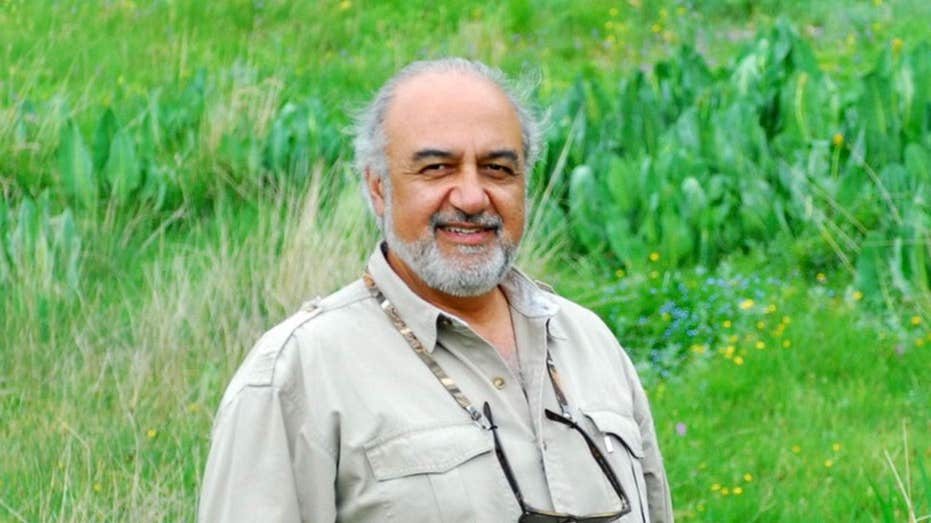
Morad Tahbaz, an Iranian American conservationist who spent nearly six years in Iran’s notorious Evin Prison, has warned that the escalating conflict between the United States and Iran could place American hostages still held in the country at even greater risk. Speaking to Fox News Digital after his release in September 2023, Tahbaz described an ordeal that included months of solitary confinement under a constant bright light, minimal human contact, and the constant threat of fabricated charges designed to keep him incarcerated indefinitely.
Tahbaz was arrested in January 2018 alongside several colleagues while working as a conservationist in Iran. He had co-founded the Persian Wildlife Heritage Foundation, an organization dedicated to protecting endangered species such as the Asiatic cheetah and the Persian leopard. Among the absurd accusations leveled against him, Tahbaz recalled that Iranian authorities claimed he had trained lizards to spy on Iranian military installations for Israel. «You can’t make this stuff up,» he said. «It just gives you an idea of the kind of narrative that this regime comes up with. They’ll come up with anything.»
The worst period of his imprisonment came during four months spent in Ward 2A of Evin Prison, a high-security facility controlled by the intelligence branch of Iran’s Islamic Revolutionary Guard Corps (IRGC). He was allowed out of his cell only twice a day for about ten minutes and forced to wear a blindfold whenever he left. His weekly telephone call with his wife lasted only a few minutes and was monitored so closely that an official interrupted whenever he spoke in English. «This is probably the harshest and toughest imprisonment that any prisoner will go through,» Tahbaz said of the IRGC intelligence detention facility.
After his conviction, Tahbaz was moved into the general prison population, where his cellmates ranged from suspected ISIS members to former Iranian government ministers. The physical conditions were accompanied by deep uncertainty. «The uncertainty when you are a hostage is not like you think at the end of your sentence they’ll necessarily let you go,» he explained. «They’ll just come up with another charge to keep you there for as long as you’re of value to them.»
Tahbaz was released on September 18, 2023, as part of a Qatar-mediated agreement between Washington and Tehran. The exchange involved five Americans held by Iran and five Iranians held by the United States, along with the transfer of $6 billion in previously frozen Iranian funds into a restricted account for humanitarian transactions. While the deal brought him home, Tahbaz believes it failed to create a real deterrent against future hostage-taking. «This business of hostage-taking has been going on essentially since the beginning of the revolution,» he said. «It will continue, in my opinion, as long as there is no deterrence. None of the Western governments, in reality, have done anything significant about stopping this practice.»
The issue returned to the headlines in July 2025 with the release of Dena Karari, a 53-year-old Iranian American from California who had been unable to leave Iran since December 2024 after authorities confiscated her passports. Her attorney said she faced allegations of espionage and collaboration with a hostile state. President Donald Trump announced in July that she had been allowed to leave, calling the decision a «gesture of goodwill.» Karari was not continuously imprisoned, but she remained under an exit ban and was repeatedly interrogated. Her release offered relief during a widening conflict, but Tahbaz stressed that dual nationals remain especially vulnerable because Iran does not recognize their foreign citizenship.
«Iran doesn’t recognize any other nationality other than the Iranian,» Tahbaz noted. Authorities can develop a national-security case, secure a sentence, and then preserve the prisoner for use in future negotiations. «You’re condemned and they pass sentence and you’re in the system, and now you are a bargaining chip,» he added.
The precise number of Americans currently detained or prevented from leaving Iran remains unclear. Reuters reported in March 2025 that at least six U.S. citizens or permanent residents were held in Iran, including journalist Reza Valizadeh, businessman Kamran Hekmati, and U.S. permanent resident Shahab Dalili. Valizadeh, a former Radio Farda journalist, was sentenced to ten years for allegedly collaborating with a hostile government. Hekmati, who has bladder cancer, received a two-year sentence for having visited Israel more than a decade earlier. Dalili was arrested after traveling to Iran for his father’s funeral and sentenced to ten years for allegedly cooperating with a hostile government. Advocates have warned that escalating strikes could increase the risk of harm or use of detainees as leverage.
Tahbaz now fears that the U.S. military strikes on Iran will make those still held both more vulnerable and more valuable as negotiating assets. «I do think the strikes in Iran will have an impact on the hostages’ situation and their circumstances,» he said. He urged Western governments to establish meaningful consequences to stop the pattern of hostage-taking, which he called a longstanding tool of the Iranian regime.
70