5 minWorld
France Faces Critical Budget Vote as Debt Crisis and Protests Escalate
France is days away from a make-or-break vote on its 2027 budget as nationwide protests over the cost of living turn into riots, bond yields hit 24-year highs, and analysts warn the country is on the brink of a fiscal crisis.
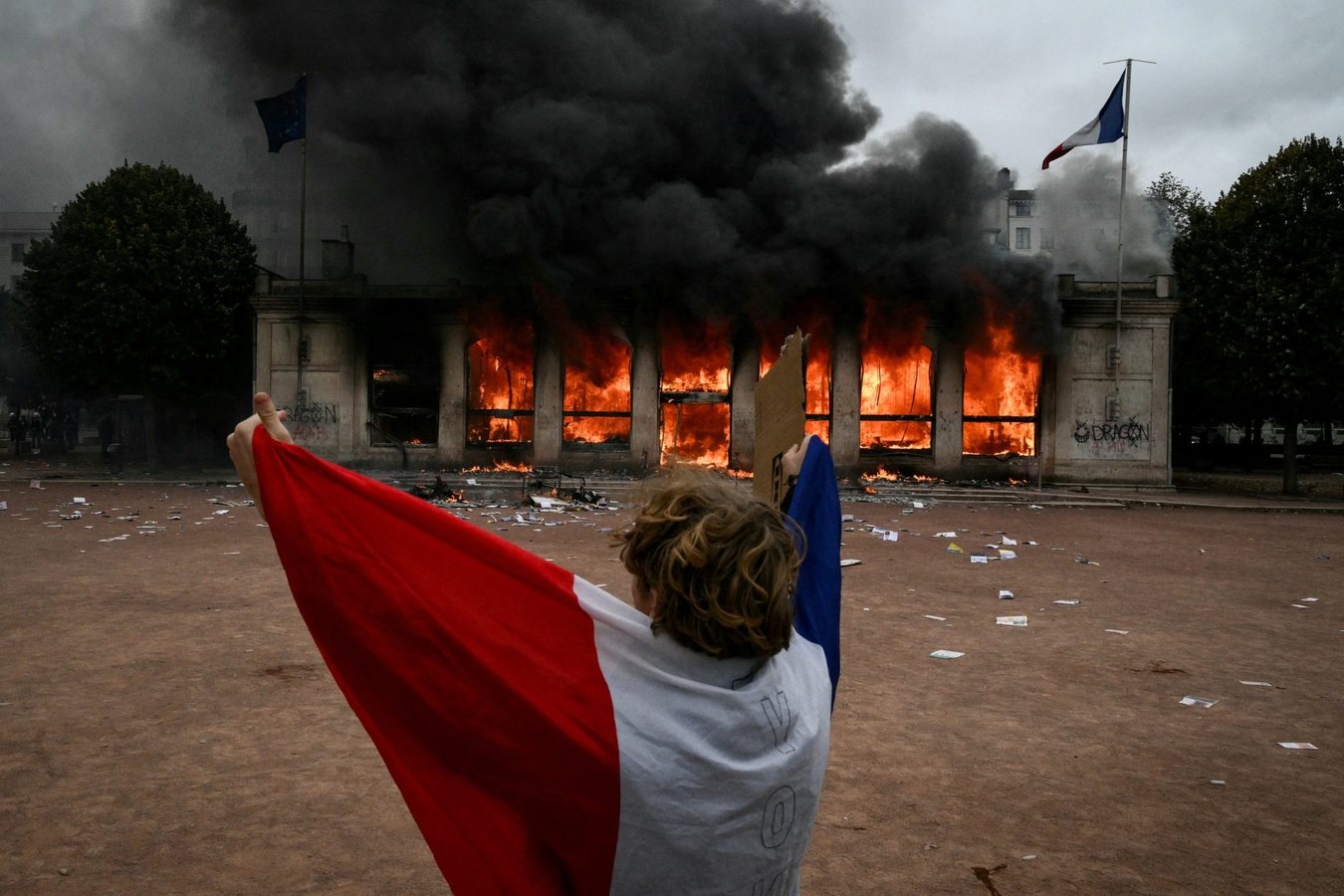
France is bracing for a pivotal vote in the National Assembly on Tuesday that will determine whether the government can pass a 2027 budget aimed at modestly reducing the deficit, as nationwide protests over the high cost of living escalate into riots and the country's borrowing costs surge to their highest level in 24 years.
The budget proposed by Prime Minister Sébastien Lecornu would bring the deficit down to 5% of GDP from 5.4%, a modest step that analysts say is critical to restoring market confidence. But with far-right and far-left candidates leading in the polls ahead of next spring's presidential election, investors fear that neither side will take the painful steps needed to rein in spending.
Over the weekend, protests across France turned violent, with luxury boutiques and supermarkets looted and public buildings defaced and set on fire. The unrest follows mass demonstrations earlier this month, when students decried run-down classrooms, missing teachers, and buildings unequipped for rising temperatures, blaming years of underinvestment in public education.
Mujtaba Rahman, managing director for Europe at Eurasia Group, described France as suffering from a crisis of liberal democracy, a crisis of fiscal mismanagement, and a crisis of youth disaffection. «But the fiscal crisis is the most dangerous, underlying many of the country's woes and threatening to bring it to ruin,» he wrote in a New York Times op-ed. «France, truly, is on the brink.»
France's public debt now stands at a record $4 trillion, or 119% of GDP — the highest ratio since the immediate aftermath of World War II. While the pandemic and the Ukraine and Iran wars worsened the fiscal picture, President Emmanuel Macron has also pulled back from reforms meant to curb the debt.
Rahman warned that if the government fails to pass the budget, «the cost of servicing French debt may explode» and France could be forced to seek assistance from the International Monetary Fund and the European Central Bank — «a humiliation for the world's seventh-biggest economy.»
The market's distrust is more political than economic, he added, fearing the country has become ungovernable. Far-right leader Marine Le Pen has vowed to roll back the retirement age to 62 and has previously suggested dropping it to 60, while far-left candidate Jean-Luc Mélenchon is campaigning on a plan to have the central bank cancel its holdings of French debt.
Nobel laureate Paul Krugman has similarly drawn a line from France's generous pension system to the student unrest, arguing that education spending has suffered because more than a quarter of it pays for retired teachers' pensions — effectively subsidizing older French at the expense of everyone else.
Rahman suggested France could avoid imminent catastrophe if Le Pen orders her allies in the Assembly to abstain on the budget, allowing it to pass. «That may avert, for now, the kind of meltdown suffered by Greece after the financial crash. But France is no longer in control of its destiny,» he warned.
Thierry Wizman, global FX and rates strategist at Macquarie Group, argued that a series of convulsions would be needed for France to appease the bond market, including a no-confidence vote, a Moody's downgrade, widening street violence, a sharper spike in bond yield spreads, and the election of Le Pen as president. The European Central Bank, he noted, would be reluctant to intervene quickly for fear of encouraging moral hazard, and other bailout mechanisms lack the firepower for an economy as large as France's.
«Either way, it would seem that one would have to go through the valley before getting to the other side of the fiscal responsibility gap,» Wizman wrote. «And only after all that transformational pain of the next few months may France find its spine and commit to austerity.»
1