4 minWorld
Carney Says Canada Seeks Unique Alliance With EU, Not Membership
Canadian Prime Minister Mark Carney said Canada wants a distinctive partnership with the European Union but is not pursuing full membership, signaling a deeper but limited strategic alignment.
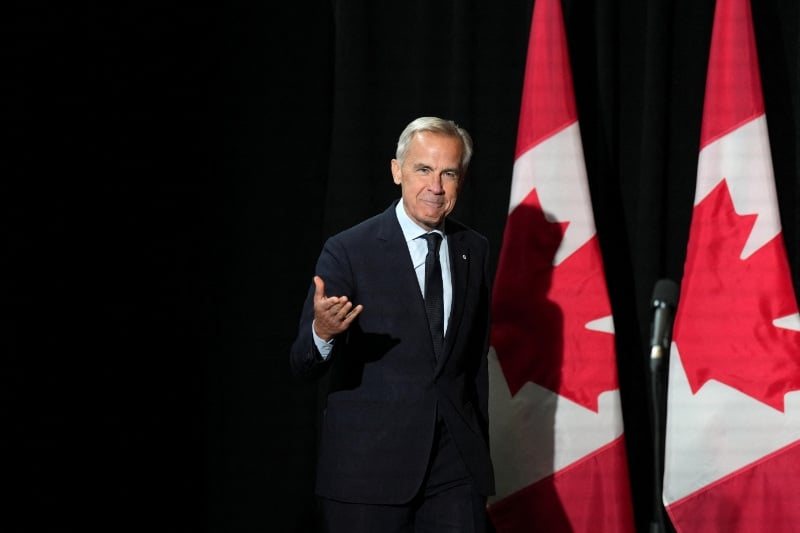
Canadian Prime Minister Mark Carney said Canada is seeking a «unique alliance» with the European Union but is not pursuing full membership in the bloc, according to remarks reported by The Wall Street Journal. The statement clarifies Ottawa's ambitions as it looks to deepen ties with Brussels without taking on the obligations of formal accession.
Carney's comments suggest Canada wants a structured, long-term partnership that goes beyond a standard trade agreement but stops short of the political and legal integration required of EU member states. The idea of an «associate membership» or similar arrangement has been floated as a way to formalize cooperation on trade, security, and shared regulatory goals.
The distinction matters because full EU membership would require Canada to adopt the bloc's legal order, accept the authority of its institutions, and align with policies on areas such as trade, competition, and regulation. That is not on the table, according to Carney's remarks. Instead, the focus appears to be on a bespoke framework that reflects Canada's geographic distance and its separate national interests.
For Canada, closer EU ties could offer economic and strategic benefits. The European Union is already a major trading partner, and both sides have an existing free trade agreement, the Comprehensive Economic and Trade Agreement. A deeper alliance could expand cooperation on critical minerals, clean energy, defense procurement, and research. It could also give Canada a stronger voice in European discussions without the constraints of membership.
For the EU, the arrangement would be unusual. The bloc has historically reserved membership for European states, and its treaties do not provide a clear category for associate members. Any new framework would likely require political negotiation and could raise questions about how such a partner would be represented in EU decision-making. The European Commission has not announced a formal proposal, and the idea remains at an early stage.
Carney's remarks come amid broader debates about how democracies with shared values can coordinate on trade, technology, and security. Canada has been looking to diversify its economic relationships and reduce reliance on any single market. A more institutionalized partnership with Europe fits that strategy, even if it falls short of membership.
The prime minister's phrasing — a «unique alliance» — signals that Ottawa wants to avoid the impression that it is seeking to join the EU. It also leaves room for a flexible arrangement that could be tailored to specific sectors. Officials have not released a detailed blueprint, and it is unclear what timeline, if any, is being considered.
Any move toward a new Canada-EU framework would likely involve consultations with member states and could take years to negotiate. Trade agreements between Canada and the EU already took years to complete, and a political alliance would add further complexity. Domestic politics in both Canada and Europe could also shape the outcome.
For now, Carney's statement sets a clear boundary: Canada wants closer cooperation, but not a seat at the EU table as a member. The next step would be discussions with European counterparts to define what a «unique alliance» would actually include. Until then, the proposal remains a signal of intent rather than a concrete plan.