5 minWorld
Cameroon President Paul Biya remains abroad more than two months after departure
The 93-year-old president left Yaounde on June 7 for a stay described as brief. Cameroon says he is in Geneva and working, while no return date has been announced.
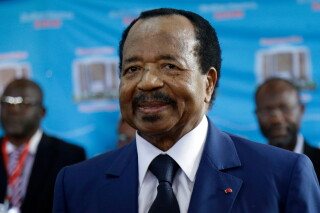
Cameroon President Paul Biya has remained outside his country for more than two months after leaving Yaounde on June 7 for what his office called a “brief private stay in Europe.” The government subsequently confirmed that Biya, 93, is in Geneva, Switzerland. Officials have not announced a timetable for his return, and international reporting has not confirmed a public appearance by the president since his departure.
The prolonged stay has prompted criticism from opposition parties and renewed questions about presidential succession in Cameroon. Biya has led the Central African country since 1982 and is the world’s oldest sitting president. He began an eighth term in late 2025 after an election whose result was contested by opposition figures. A constitutional amendment in 2008 removed limits on the number of presidential terms.
Cameroon’s government says the president remains capable of carrying out his duties from abroad. Communications Minister Rene Emmanuel Sadi has said Biya is in good health and working from Geneva. Other officials have said he continues to review state files. In early August, Biya replaced commanders in four of the country’s five joint military regions and promoted a number of senior officers, indicating continued formal use of presidential authority.
Reports about Biya’s health have been more difficult to verify. Some media organizations have cited sources alleging that he was hospitalized or received medical treatment in Switzerland. The Cameroonian government issued a statement denying that he had been admitted to a medical facility. Samuel Mvondo Ayolo, director of the president’s civil cabinet, also told Le Monde that Biya had not been hospitalized or operated on and was working from his hotel. No independent medical evidence has confirmed the allegations.
The legal question is not straightforward. Cameroon’s constitution does not specify a maximum length of time that a president may stay outside the country. Opposition politicians have argued that an extended absence creates an accountability problem even if no explicit travel limit has been violated. Government officials, by contrast, say the president’s location does not prevent him from performing his constitutional role.
A constitutional change in April 2026 added another dimension. Cameroon restored the office of vice president, potentially creating a clearer line of succession if the president became unable to serve. The office remains vacant. Opposition parties have pointed to the unfilled position while describing the country as being governed on “autopilot” or by “remote control.” Those phrases are political assessments; there has been no legal determination that the presidency is vacant or that Biya is incapacitated.
Cameroon is dealing with significant security and economic pressures at the same time. Boko Haram remains a threat in the north, while a separatist conflict continues in the country’s English-speaking west. The economy has struggled with stagnation and infrastructure problems. The combination makes continuity in civilian and military decision-making especially important.
The country’s demographics have also become part of the wider debate about Biya’s long rule. More than 70% of Cameroon’s nearly 30 million people are under age 35. Most of the population has known no other national leader. The contrast between a largely young society and a 93-year-old president who has been in office for more than four decades has fueled calls for political renewal, particularly among opposition groups.
The current episode does not establish that Cameroon has ceased to be governed. Biya’s recent military appointments are evidence that executive decisions continue to be issued. Nor is there verified evidence supporting claims that he is unable to perform his duties. The documented concern centers on transparency: why a trip described as brief has lasted more than two months, when the president will return, and how the state would handle a sudden inability to serve while the vice presidency remains unfilled.
For now, the verified facts are narrower than the rumors surrounding the case. Biya left Cameroon on June 7, is officially reported to be in Geneva, has remained abroad for more than two months, and has no publicly announced return date. His government says he continues to work. Opposition leaders dispute the adequacy of that arrangement. The next meaningful development will be either a confirmed public appearance, an announced return, or a formal institutional step that clarifies the line of authority.
59