5 minWorld
Belkovsky Links Pressure on U.S.-Born Farmer to Protestant Mission
Justus Walker’s pastoral and missionary activity in Siberia is documented by Russian Baptist sources and state media. Belkovsky alleges it played a role in the residency dispute, but no direct church link has been established.
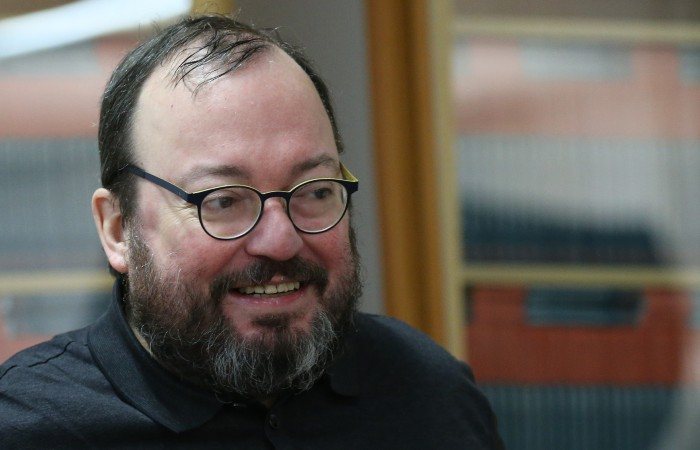
A Russian political commentator has offered a religious explanation for the pressure surrounding U.S.-born farmer Justus Walker, a longtime resident of Russia who said in early August that his residence permit could be revoked.
Stanislav Belkovsky wrote on Aug. 9 that he believed structures of the Russian Orthodox Church’s Moscow Patriarchate had inspired the action against Walker. Belkovsky pointed to Walker’s Protestant missionary work and claimed that Walker had helped create 14 Protestant congregations in Siberia.
The allegation about the Moscow Patriarchate has not been supported by a public document in the source material reviewed for this report, and the figure of 14 congregations has not been independently corroborated. Belkovsky’s statement is therefore evidence of a new claim about motive, not proof of the institutional chain behind a residency decision.
Walker’s religious work itself is well documented.
He came to Russia as a child with parents who were Protestant missionaries. A February 2026 profile by the state news agency RIA Novosti said Walker was ordained for ministry in 2004 in one of the churches his father had founded. Walker described the work as rural ministry and said that approximately two decades later he continued traveling among villages.
When Walker moved to the Altai region with his family in 2016, the possibility of continuing missionary activity was one of the factors in choosing a location, according to RIA.
The Russian Union of Evangelical Christians-Baptists has also identified Walker as a missionary. A 2018 item described him as a missionary in Altai. In 2024, the organization reported that Walker preached at a youth conference centered on Christian mission. It described him as a missionary devoted to service in villages of the Altai region and cited his online evangelism.
Those records distinguish Walker from someone whose religious identity was only inherited from missionary parents. His pastoral work continued into adulthood and remained public years after he became a national media personality.
Walker became widely known in Russia through a different story. Russian outlets often portrayed him as an American who had embraced rural life in Russia, built an agricultural business and adopted the nickname “Merry Milkman.” That image sometimes carried political value because Walker’s choice of Russia could be presented as a positive comparison with the United States.
His relationship with official institutions became more adversarial in 2026. In the spring, Walker publicly criticized Russia’s agricultural bureaucracy and the Ministry of Agriculture, saying that policies and administrative pressure were damaging small and medium-sized farms. The Moscow Times reported his criticism in March.
On Aug. 8, The Daily Beast reported that Walker had posted a video saying officials planned to revoke his residence permit and that his family could have only days to leave if the decision became final.
That sequence provides a documented dispute between Walker and agricultural authorities. Belkovsky’s statement adds a separate possible motive involving religious competition and institutional influence.
The two explanations are not mutually exclusive, but neither should be overstated. The agricultural conflict is publicly documented. Walker’s Protestant mission is publicly documented. The asserted role of the Moscow Patriarchate in a migration decision is not.
The distinction is especially important because Walker’s public profile can make the religious element look like a late discovery. It was not secret. RIA Novosti had reported his ordination months before the current dispute, and Baptist organizations had described him as a missionary for years. What changed is the relevance of that information once his legal status became contested.
Belkovsky’s claim therefore raises a legitimate question without resolving it: whether a missionary role that sat in the background of Walker’s celebrity became more important to powerful institutions than the farmer persona that made him famous.
Further clarity will depend on the formal grounds for the residency action and any evidence identifying who sought it. Until then, the record supports a narrower conclusion: Walker’s ministry is real and longstanding; the theory that Orthodox Church structures caused the pressure remains an allegation.
55