4 minSports
USC’s low opening attendance sparks debate, but Riley’s seat is not the issue
USC’s sparse crowd for its season opener against San Jose State drew criticism, but attendance trends across college football suggest fan turnout has little bearing on team quality or playoff hopes.
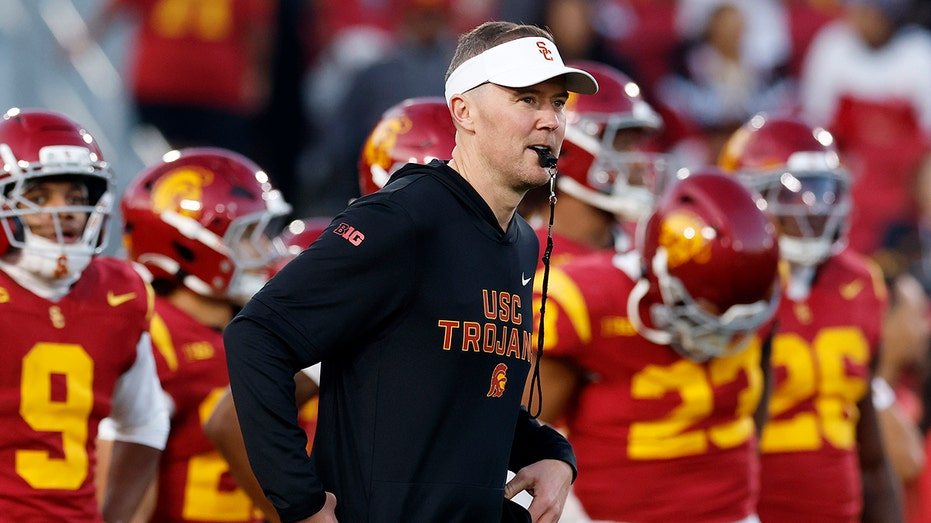
USC opened its 2026 college football season with a 42-26 win over San Jose State, but the story of the day was not the score. It was the crowd. A midday kickoff in brutal Southern California heat, combined with heavy traffic, high parking prices, and a lopsided opponent, left the Los Angeles Memorial Coliseum looking sparse at the start. Social media quickly filled with criticism of the Trojans’ fan base, and some commentators suggested the low turnout reflected poorly on head coach Lincoln Riley’s standing with the program.
The criticism misses a broader reality: attendance across college football has been declining for years, and crowd size has little to do with a team’s quality or its chances of making the College Football Playoff. The reasons for empty seats are well documented. Streaming services make it easier than ever to watch games from home. Ticket prices keep rising while everyday costs climb. And in hot-weather regions, noon kickoffs in August and September are a hard sell for fans who would rather watch from an air-conditioned living room.
This is not a USC-specific problem. Florida has struggled to fill its stadium for noon games, with reporters describing patchy student sections and empty bleachers even at well-attended matchups. Ohio State, Virginia Tech, and Ole Miss all saw attendance declines of more than five percent in recent seasons. Clemson failed to sell out a single home game in a year it won a national championship. In 2025, images of a mostly empty Death Valley at LSU went viral. These examples undercut the idea that attendance is a reliable measure of program health.
The game itself offered a more useful picture of where USC stands. The Trojans dominated while their starters were on the field. San Jose State managed just 36 yards on four first-half drives, and their first-quarter offense produced six plays for 11 yards and two punts. Overall, the Spartans averaged 3.9 yards per play and gained 102 total yards before USC emptied its bench. San Jose State’s late scoring came against backups and third-stringers, with several Trojans held out entirely due to injury concerns.
Riley’s tenure at USC has been scrutinized since he arrived, and the program’s underwhelming recent seasons have fueled speculation about his future. But the opening game did little to settle that debate. The Trojans looked sharp early, then coasted once the outcome was clear. Opposing fans, particularly those from Oklahoma, were quick to seize on the sloppy fourth quarter, but the starters had already done their job.
The broader lesson from the weekend is that crowd sizes are a poor proxy for team quality. The COVID-19 pandemic provided a natural experiment: when stadiums were empty or limited, home-field advantage in the NFL barely changed from 2019 to 2020. Fan noise matters less than fans like to believe. USC’s attendance problem is real, but it is part of a national trend, not evidence of a program in crisis.

49