6 minSports
UNLV basketball coach offers team ownership for $10 to $12 million
UNLV head coach Josh Pastner has proposed selling ownership of the Runnin' Rebels men's basketball team for $10 to $12 million, capitalizing on the NIL era and Las Vegas' growing sports market.
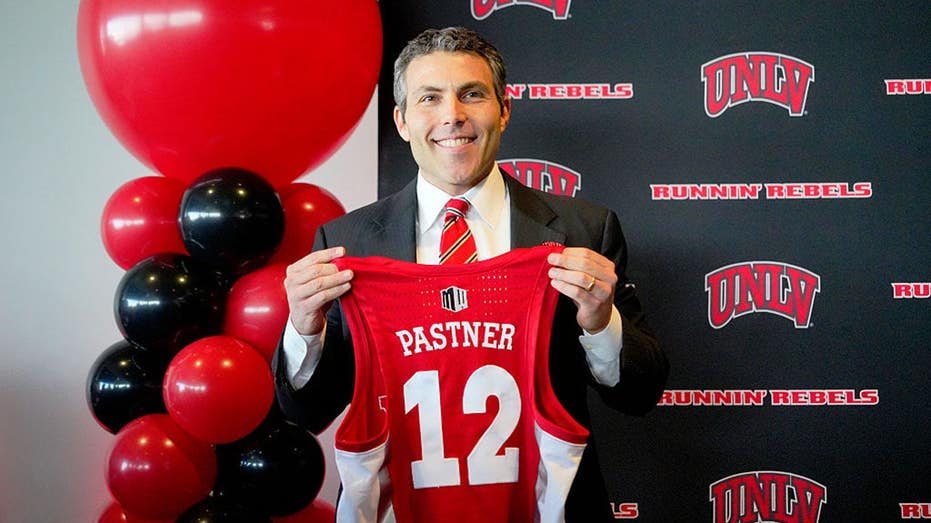
In an unprecedented move that underscores the rapidly evolving financial landscape of college athletics, UNLV head men's basketball coach Josh Pastner has publicly offered ownership of the Runnin' Rebels program for a price tag of $10 to $12 million. The proposition, announced through the university's athletic department and accompanied by promotional graphics, directly targets wealthy individuals who have long dreamed of owning a professional sports team in Las Vegas but are priced out by the billion-dollar valuations of NBA franchises.
Pastner made the pitch during an interview with OutKick's Taylor Rocha, framing the offer as a realistic alternative to buying an NBA expansion team. "Buy the college basketball team. It's legal now. You can be the owner of the UNLV Runnin' Rebels men's basketball team, and it's a lot less expensive," Pastner said. "You don't have to spend over a billion dollars to own our team. I'm asking for $10 to $12 million to own our team, and you still get a great tax write-off. You can be as involved, and you can tell people you are the owner of the team."
The offer is a direct reflection of the new normal in college sports, where name, image, and likeness (NIL) rights and the transfer portal have turned roster management into a high-stakes financial game. Boosters and collectives already spend millions to attract and retain talent, often with little tangible return beyond the satisfaction of seeing their team win. UNLV's proposal simply formalizes that arrangement, giving a single donor a visible role akin to a professional team owner.
UNLV's athletic department released graphics touting the program's brand value, calling the Runnin' Rebels "one of the most iconic brands in college basketball" with a national championship legacy and a home in "the fastest growing sports city in America." The graphics highlighted Las Vegas' recent emergence as a major sports hub, hosting NBA Summer League, the 2028 Final Four, and an upcoming NBA franchise. "According to head coach Josh Pastner, for $10 to $12 million dollars, it can all be yours," the graphic stated.
The exact privileges that come with "ownership" remain undefined, though they likely include premium seating, access to luxury boxes, and a public role as the program's primary benefactor. Pastner did not specify whether the owner would have any say in coaching decisions, roster construction, or game strategy. In practice, college coaches rarely cede control to donors, and the arrangement is expected to function more as a high-level sponsorship than actual operational authority.
The proposal arrives amid a broader push for federal legislation to regulate college sports finances, including the "Protect College Sports Act" backed by Senators Ted Cruz and Maria Cantwell, which seeks to codify NIL rules and provide antitrust protection. The SEC and Big Ten have been closely involved in those discussions, with a clock ticking as August recess approaches. UNLV's experiment, while unusual, reflects the creative ways programs are seeking to compete in an increasingly expensive environment.
For a program that once dominated college basketball under legendary coach Jerry Tarkanian, the Runnin' Rebels have experienced decades of rebuilding and inconsistency. The 1990 national championship remains the program's crowning achievement, but recent years have seen UNLV struggle to reclaim its place among the sport's elite. Pastner, who took over in 2024, is betting that Las Vegas' explosive growth and the rising tide of college sports investment will attract a deep-pocketed fan willing to take a chance.
The pitch is also a nod to the reality that traditional booster donations often yield no financial return. Third-party collectives have tried to offer equity or dividends tied to athletes' future earnings, but those models remain unproven. For $10 million, a donor would get immediate cachet and a direct association with a historic program, with no promise of dividends beyond the intangible rewards of fandom.
Critics may question the ethics of overtly selling team ownership in what remains a nominally amateur sport, but advocates argue that the NIL era has already blurred those lines. Boosters routinely pay players through collectives, and the NCAA's enforcement powers have been severely weakened by court rulings and state laws. UNLV is simply being transparent about a system that already exists in practice across the country.
Whether any buyer steps forward remains to be seen. But the offer has already generated national attention, positioning UNLV as a test case for the future of college sports financing. In a market that has embraced everything from professional hockey to Formula One, the Runnin' Rebels' sale may be the next logical step in the city's transformation into a sports powerhouse.

84