5 minSports
UEFA Rejects FIFA Rule Allowing Red Cards for Mouth-Covering During Matches
UEFA announced it will not enforce FIFA's new rule penalizing players with red cards for covering their mouths during matches, opting instead for yellow cards in its competitions next season.
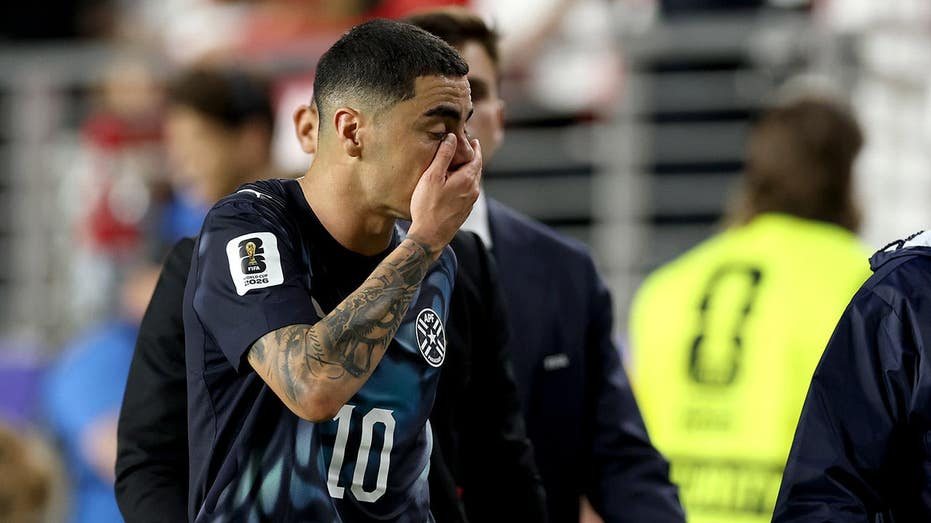
The Union of European Football Associations (UEFA) has decided not to adopt FIFA's controversial rule that allows referees to issue red cards to players who cover their mouths while speaking during matches. The rule, introduced by FIFA for this year's World Cup, was designed to prevent players from hiding abusive, discriminatory, or offensive language on the field. However, UEFA announced Thursday that players in the Champions League, Europa League, and Conference League will not face ejection for the infraction next season.
Instead, UEFA stated that players could receive a yellow card if they are "attempting to conceal communication as an act of unsporting behaviour." The governing body added that this policy is "without prejudice to any disciplinary investigation or proceedings that may follow as a consequence of or in connection with such behaviour." This approach marks a significant departure from FIFA's stricter mandate, which has already resulted in red cards for two players during the World Cup.
FIFA President Gianni Infantino pushed for the rule change after an incident involving Benfica winger Gianluca Prestianni and Real Madrid forward Vinícius Júnior in a Champions League match. Prestianni was accused of making a racially charged insult while raising his jersey to cover his mouth during the game in February. Vinícius, backed by Real Madrid teammate Kylian Mbappé, alleged that Prestianni used offensive language, prompting FIFA to seek a crackdown on such behavior.
Soccer's rulemaking panel, the International Football Association Board (IFAB), unanimously approved the rule change at a special meeting ahead of the FIFA Congress. The rule is not mandatory within the Laws of the Game but gives tournament organizers like FIFA the option to use it at their discretion. IFAB includes officials from FIFA and the four British soccer federations. Under the rule, players shown a red card for mouth-covering are ejected from the match and must serve a one-game suspension in the following match, while their team is forced to play the remainder of the game with 10 players.
To date, only two players have been red-carded under the rule: Paraguay's Miguel Almiron and Ecuador's Piero Hincapie. The rule has sparked debate among players, coaches, and fans, with some arguing it is too harsh and others supporting its intent to combat racism and discrimination in the sport. Former U.S. national team star and current commentator Alexi Lalas has weighed in on the controversy, calling for a more nuanced approach to such incidents.
UEFA's decision to opt for yellow cards instead of red cards reflects a broader reluctance among some soccer bodies to fully embrace FIFA's stricter measures. The European governing body's stance may influence other confederations and leagues as they consider how to address similar issues. The rule remains optional, and its application varies across competitions, with UEFA choosing a less punitive path for its flagship tournaments.
The controversy surrounding the rule has also drawn attention to the broader issue of racism in soccer. Vinícius Júnior has been a frequent target of racial abuse in Spain, and his case has highlighted the need for stronger measures to protect players. FIFA's rule was intended to address such incidents, but critics argue that it may be difficult to enforce consistently and could lead to unintended consequences, such as players being penalized for innocent gestures.
As the new season approaches, UEFA's decision will be closely watched by clubs, players, and fans. The Champions League, Europa League, and Conference League are among the most prestigious competitions in European soccer, and the absence of the red-card rule could affect how matches are officiated. Meanwhile, FIFA's World Cup will continue to enforce the rule, creating a patchwork of regulations across different tournaments.
The debate over the mouth-covering rule is likely to continue as soccer authorities seek to balance the need to combat discrimination with the desire to maintain the flow and fairness of the game. UEFA's decision represents a middle ground, allowing for disciplinary action without the severity of a red card. Whether other governing bodies follow suit remains to be seen, but for now, European competitions will take a different approach than FIFA's World Cup.

100