5 minSports
Trump admits ignorance of red card rule amid FIFA controversy over US World Cup star
President Donald Trump admitted he did not know what a red card meant before intervening to get US soccer player Folarin Balogun reinstated for a World Cup match, sparking a global sports and political controversy.
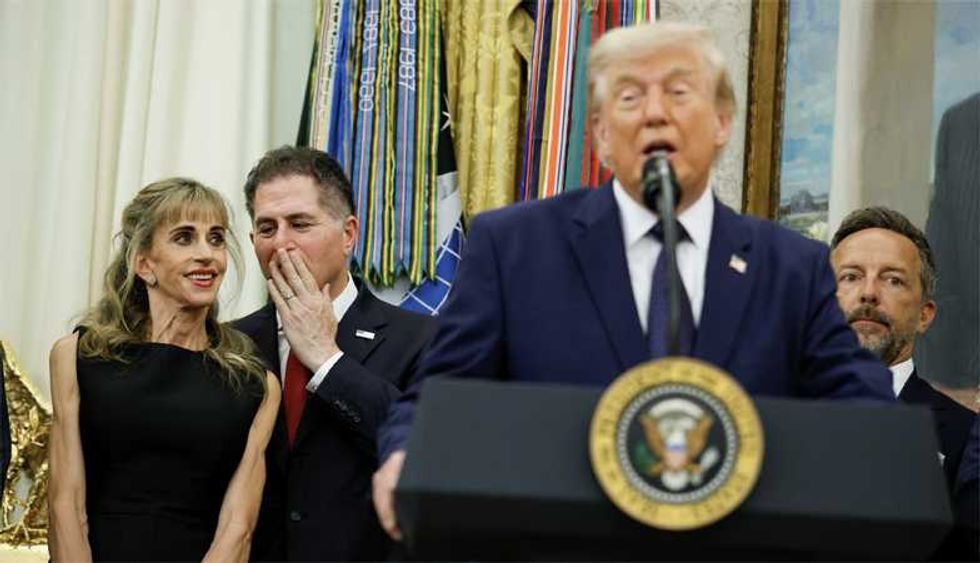
President Donald Trump acknowledged on Monday that he was unaware of the meaning of a red card in soccer before he intervened to secure the reinstatement of US national team player Folarin Balogun for a World Cup match against Belgium. The admission came during a press availability at the White House, where Trump addressed the firestorm surrounding his call to FIFA President Gianni Infantino.
«I spoke to Gianni, who's highly respected, who's produced the most successful World Cup in history, by, they say, four times they gave him a red card. I didn't know what that meant,» Trump told reporters. He added, «I didn't think it meant much. Then I started hearing that that means he can't play in the next game.»
The controversy began when Balogun, a key forward for the US men's national team, received a red card after a VAR review for stepping on the ankle of a Bosnia and Herzegovina defender during a previous match. The red card would have resulted in a one-game suspension, sidelining him for the crucial knockout-stage match against Belgium. However, FIFA's disciplinary committee suspended the ban, allowing Balogun to play.
Trump's call to Infantino raised questions about the independence of FIFA's judicial processes. In a statement released Monday, Infantino confirmed the call but emphasized that FIFA's judicial bodies operate autonomously. «Yes, I regularly discuss matters related to the FIFA World Cup with the President of the United States, and on this matter, I did receive a call from President Donald Trump, just as I receive calls from heads of state, government officials, football stakeholders and business executives from around the world on many different issues,» Infantino said.
He continued: «During our conversation, I explained that there was an ongoing legal process involving FIFA's independent judicial bodies and that the case would be decided in due course by the competent bodies. That is how FIFA's system works, and it is a principle that I will always uphold.» Infantino added that he sometimes disagrees with disciplinary decisions but respects the autonomy of the bodies that make them.
Trump defended his involvement, stating that he merely asked for a review of the play. «All I did was, I asked for a review, because I didn't think it was a foul,» he said. «I thought it was two great athletes who crashed into each other and got entangled. That was not a guy punching somebody in the face or anything that would be different.» He argued that allowing a top player like Balogun to play was essential for the integrity of the tournament.
The Belgian Football Association has appealed FIFA's decision to suspend Balogun's ban, adding to the uncertainty as the match approached. MS NOW correspondent Vaughan Hillyard described the situation as a «global news mess,» noting that Trump's lack of familiarity with soccer rules compounded the controversy. «I think the president made one very head-spinning comment for all soccer fans around the world, and that was the fact that he didn't even know what a red card was before last week's U.S. matchup,» Hillyard said.
Trump also criticized the original referee's call, calling it «horrible» and suggesting that it could have stained the championship. He compared the situation to hypothetical red cards for global stars like Lionel Messi, Cristiano Ronaldo, or Harry Kane, arguing that such decisions should not keep top players out of important matches.
The incident has sparked broader debate about the intersection of politics and sports, with critics accusing Trump of exerting undue influence over an independent sporting body. Supporters, however, argue that his intervention was justified to ensure a fair competition. As the match between the US and Belgium approached, all eyes were on FIFA to see whether it would uphold its initial decision or bow to pressure from the Belgian appeal.
Infantino's statement sought to reassure the public that FIFA's processes remain impartial. «Respect for independent institutions and the rule of law is what protects the integrity of our competitions and the credibility of FIFA at all times,» he said. Whether that message will satisfy critics remains unclear, but the episode has already become one of the most talked-about moments of the World Cup.