4 minSports
Tennessee Engineering Students Compete in EcoCAR Challenge
More than 100 students from the University of Tennessee's Tickle College of Engineering are competing in the 2026 EcoCAR Innovation Challenge, working to transform a Jeep Grand Cherokee with advanced autonomous and energy-efficient technologies.
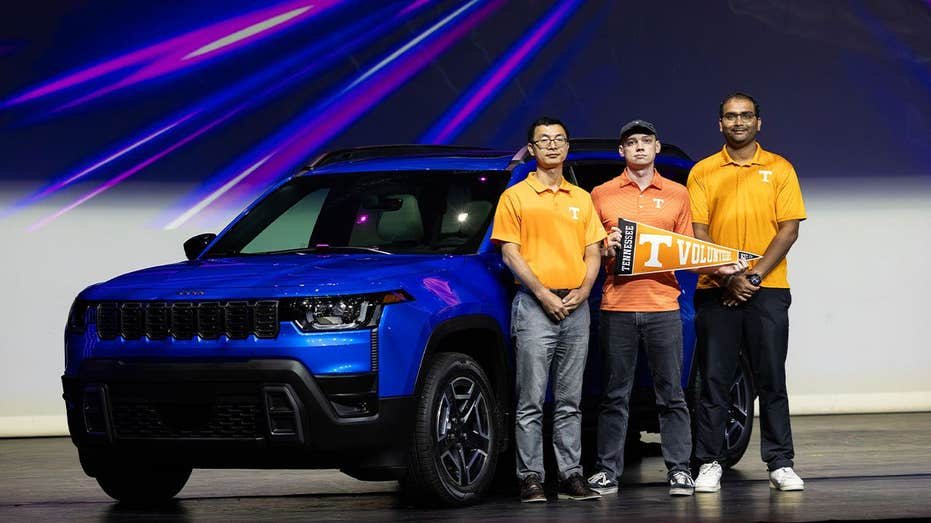
More than 100 students from the University of Tennessee's Tickle College of Engineering have been selected to compete in the 2026 EcoCAR Innovation Challenge, a four-year competition against 19 other universities from across North America. The team is tasked with transforming a Jeep Grand Cherokee, focusing on energy-efficient solutions and advanced autonomous driving capabilities.
The program, administered by the U.S. Department of Energy and Argonne National Laboratory, is sponsored by General Motors and Stellantis. It challenges college students to develop next-generation automotive technologies, including artificial intelligence, connected and automated vehicle systems, and advanced propulsion. The Tennessee team received its initial instructions this week at a conference in Atlanta, where they learned the competition's structure and requirements for the final title in 2030.
«We're at the very beginning stages,» said Tyson Beach, a Ph.D. student on the team. «Right now, it's just this big bowl of potential. We are forming ideas, but we are driven, we are working and we want to win. That's just it. Plain and simple.»
The team's faculty sponsor, Pingen Chen, a professor in the mechanical and aerospace engineering department, noted the demanding workload. «There are about 30 deliverables on our dashboard in just this year, which means our students will be working day and night, battling to get this job done,» Chen said. «It's a lot of time management, collaborations, teamwork and coming up with ideas. It's a great collaborative platform.»
While Stellantis has tasked the team with optimizing the Grand Cherokee's off-road capabilities, the students are determined to go further by adding their own innovations to enhance self-driving features. «We will follow the specific requirements, but then we want to go above and beyond, and I think we can do that by providing something related to autonomy,» said Skylar Sims, another Ph.D. student.
Sims acknowledged public skepticism about self-driving cars but remains committed to mainstreaming the technology. «When cars first came out, people would say, 'I don't trust driving a car. I have a horse, let me ride my horse,'» he said. «When anything new comes out, there's skepticism. It just takes time to implement and improve and gain people's trust to make it more safe. I've worked over the past two years on autonomous vehicles, so I'm excited about that.»
The team believes its deep history in the competition and the university's resources give it a strong chance to win. Tennessee won the very first EcoCAR Challenge in 1988, and a victory in 2030 would bookend that achievement. «I think we have a deep history in the competition,» said Zakerie Hubbs, a Ph.D. student. «And we're a large university with a lot of resources. And we have a passion in the group, especially with autonomous vehicles. There's pressure to it because it's a competition, but that adds an exhilaration to it too. We're really excited to be here, and we think we're going to have a lot of fun.»
The EcoCAR Innovation Challenge spans four years, culminating in 2030. Throughout the program, students will work on a range of deliverables for Stellantis, balancing technical requirements with creative problem-solving. The competition aims to prepare the next generation of engineers for careers in the automotive industry, with a focus on sustainability and innovation.
As the Tennessee football team prepares for its own high-stakes matchup against top-ranked Texas, the engineering students are equally focused on their own contest. Both groups share a common goal: to prove that Tennessee can compete at the highest level. For the EcoCAR team, the road to 2030 begins now, with long hours and ambitious plans ahead.

3