5 minSports
Team USA Men's Soccer Suffers Embarrassing Defeat to Belgium in Seattle
The U.S. men's national soccer team suffered a humiliating loss to Belgium in Seattle, sparking criticism over player quality and development, with a poll suggesting the Cleveland Browns might win a Super Bowl before the U.S. wins a World Cup.
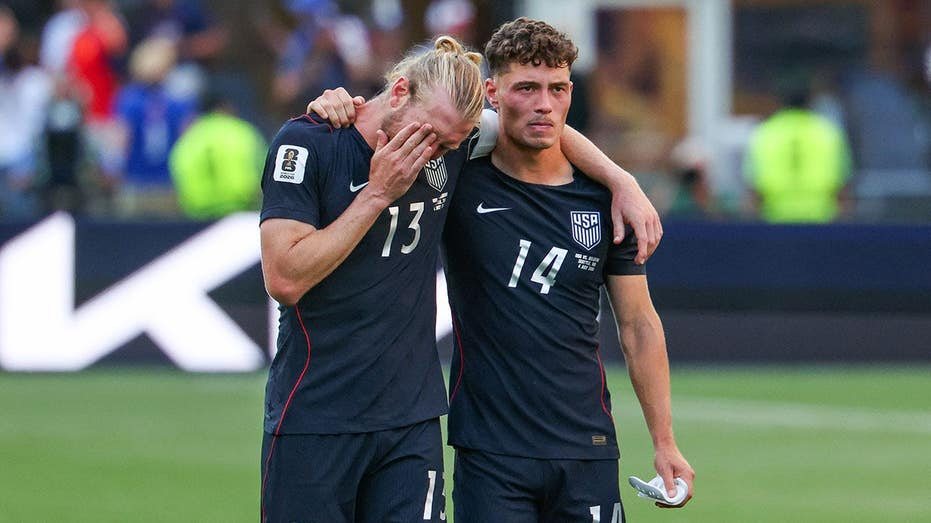
The U.S. men's national soccer team suffered one of its most embarrassing defeats in recent memory Tuesday night in Seattle, falling to Belgium in a match that has sparked widespread criticism and raised serious questions about the state of American soccer. The loss, described by commentators as pathetic, came against a nation with a population of just 12 million, roughly the size of Ohio. The performance was so poor that a subsequent poll found 78% of respondents believe the Cleveland Browns, a historically struggling NFL franchise, will win a Super Bowl before the U.S. wins a World Cup in the next 50 years.
Belgium's victory was punctuated by a celebration that added insult to injury: after scoring their fourth goal, Belgian players broke out a dance move widely associated with former President Donald Trump, a gesture that drew further attention to the U.S. team's collapse. The defeat has reignited debates about the quality of American soccer talent and the development system that produces it. Critics pointed to the inclusion of 38-year-old defender Tim Ream, who was overpowered by a smaller Belgian attacker, as emblematic of the team's shortcomings. Ream, listed at 6 feet 1 inch and 180 pounds, was easily brushed aside, leading to jokes about the need for more physical conditioning among U.S. players.
The loss has prompted a wave of commentary on social media and in sports columns, with many calling for a fundamental overhaul of how the United States develops soccer players. One prominent suggestion involves sending young American players abroad to experience tougher, more competitive environments, particularly in soccer powerhouses like Argentina. The idea is that exposure to rigorous training and challenging living conditions could help produce more resilient and skilled athletes. Reports have indicated that Argentina's youth development system sometimes uses spartan conditions to toughen players, a model some believe the U.S. should adopt.
Criticism has also been directed at the U.S. team's overall athletic profile. Some observers argue that American soccer players are often drawn from a pool of fourth- or fifth-tier athletes, compared to other major U.S. sports. The team's performance in the knockout round of recent tournaments has been described as fortunate rather than earned, with some noting that the U.S. was not among the 16 best teams in the world but advanced through favorable scheduling. Elementary defensive mistakes in the biggest game in decades have been cited as evidence of a deeper problem.
The defeat has also fueled broader cultural commentary about the state of American soccer fandom and development. Some have pointed to the decline in traditional beer consumption among younger generations as a parallel trend, suggesting that changing habits reflect a shift in priorities that may also affect sports participation. Others have noted that the U.S. team's roster includes players who fit a certain stereotype, leading to accusations that the team lacks the grit and determination seen in other national programs.
Despite the harsh criticism, there are those who argue that the U.S. team's struggles are not entirely surprising given the competitive landscape. Belgium, though small in population, has a strong soccer tradition and a well-regarded development system. The U.S., by contrast, has historically struggled to produce world-class talent, relying on a mix of domestic college programs and professional leagues that have not yet reached the level of Europe's top competitions. The loss has intensified calls for more investment in youth soccer, including more international exposure for young players.
As the U.S. team regroups, the focus will be on whether the program can learn from this defeat and make the necessary changes to compete on the world stage. The poll comparing the team's prospects to those of the Cleveland Browns underscores the depth of pessimism among fans. For now, the defeat in Seattle stands as a stark reminder of the gap between American soccer aspirations and reality.

91