6 minSports
Sports Remain a Unifying Force in American Life, Opinion Argues
An opinion piece highlights how sports transcend political, racial, and economic divides, serving as a powerful unifying tradition in the United States for 250 years.
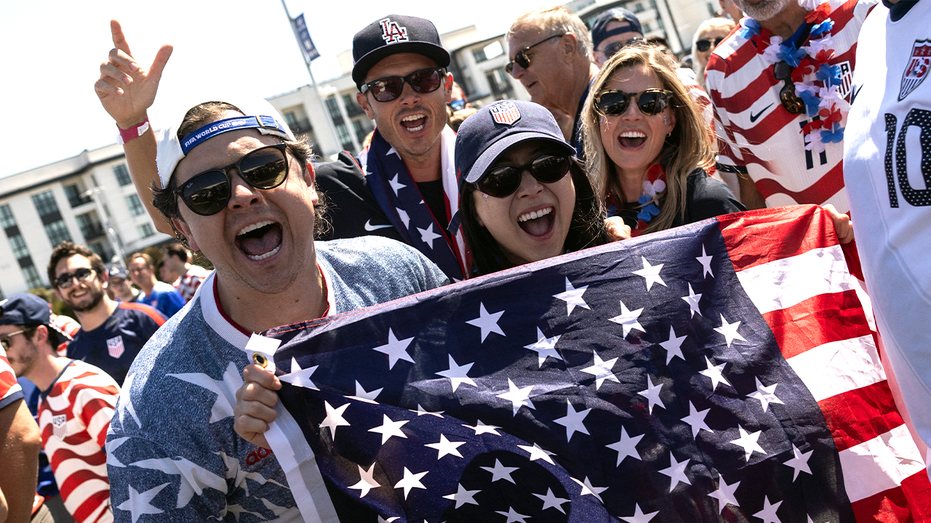
For 250 years, sports have served as one of the most enduring and unifying traditions in American life, according to a recent opinion piece that examines the role of athletics in bridging divides across the nation. The argument contends that sports transcend politics, race, religion, income, and geography in ways few other institutions can, bringing together Americans from all walks of life to share in common experiences and values.
The piece points to a wide range of sporting events that have become woven into the fabric of American culture, from Friday night high school football games in small Texas towns to the NCAA Tournament's March Madness, the World Series, the Super Bowl, and Team USA's appearances in the Olympics and World Cup. These events, the author writes, are more than mere entertainment; they are expressions of the American spirit that allow Republicans and Democrats, people of different races and sexual orientations, and individuals from every socioeconomic background to sit side by side in stadiums, arenas, and sports bars across the country.
The unifying power of sports is not accidental, the opinion argues. It reflects values that America itself was founded upon: hard work, perseverance, sacrifice, accountability, teamwork, and merit. On the field, court, diamond, or rink, success is determined not by social status or political influence but by preparation, discipline, and performance. The piece quotes President Ronald Reagan's observation that there is no limit to the good one can do if one does not care who gets the credit, noting that this philosophy is lived out daily in sports.
Historically, sports have also served as a catalyst for positive social progress. The piece highlights Jackie Robinson's breaking of Major League Baseball's color barrier in 1947 as a moment of courage, dignity, and excellence under unimaginable pressure. While Robinson's success did not erase America's racial problems overnight, it helped change hearts and minds in ways politics alone could not. Decades later, athletes from every race have become teammates, friends, and role models for millions of children across the country.
In times of national tragedy, sports have provided healing. Following the September 11, 2001, terrorist attacks, athletes from nearly every sport carried the American flag onto the field. The piece recalls Sammy Sosa sprinting out with a tiny American flag at Wrigley Field and President George W. Bush throwing out a memorable first pitch at a World Series game, offering a sense of normalcy to a grieving nation. More recently, athletes like Riley Gaines have been cited for fighting to keep women's sports female, while college athletics have opened educational opportunities through scholarships and Name, Image, and Likeness (NIL) deals that have transformed the lives of entire families.
Professional sports have also provided platforms for athletes to invest in charities, mentor youth, rebuild neighborhoods, and support military families, first responders, and disaster relief efforts. The opinion argues that sports have repeatedly demonstrated their power to bring about positive social change and improvement, celebrating an unapologetic love of country that is increasingly rare in modern culture.
The piece draws on the wisdom of legendary coaches to underscore the values embedded in sports. Bear Bryant, the iconic football coach, famously said: If anything goes bad, I did it; if anything goes semi-good, we did it; if anything goes really good, you did it. John Wooden, the Hall of Fame basketball coach, defined success as peace of mind resulting from knowing you made the effort to become the best of which you are capable. These messages, the opinion notes, are not just about athletics but about personal responsibility and servant leadership.
Many of America's greatest athletes have expressed gratitude for the opportunities the country has given them. Olympic legend Michael Phelps said it was an honor every time he put on the USA cap. The 1980 U.S. hockey team's victory over the Soviet Union in the Miracle on Ice became a symbol of American resilience and determination at the height of the Cold War. Coach Herb Brooks reminded his players that great moments are born from great opportunity, and their victory became far more than a hockey game.
Perhaps no athlete better exemplified love of country through action than Pat Tillman. In 2002, at the height of his NFL career with the Arizona Cardinals, Tillman turned down a multi-million-dollar contract extension to enlist in the U.S. Army following the September 11 attacks. He selflessly sacrificed his life serving the country, putting service above fame and fortune. The opinion concludes that sports remain a powerful force that unites Americans, reminding them of what binds them together as a nation.