6 minSports
Spanish Goalkeeper Borja Iglesias Expresses Reluctance to Shake Trump’s Hand at World Cup Final
Spain goalkeeper Borja Iglesias, ahead of the World Cup final against Argentina, expressed reluctance about shaking President Donald Trump’s hand, citing political disagreements and a desire to avoid controversy.
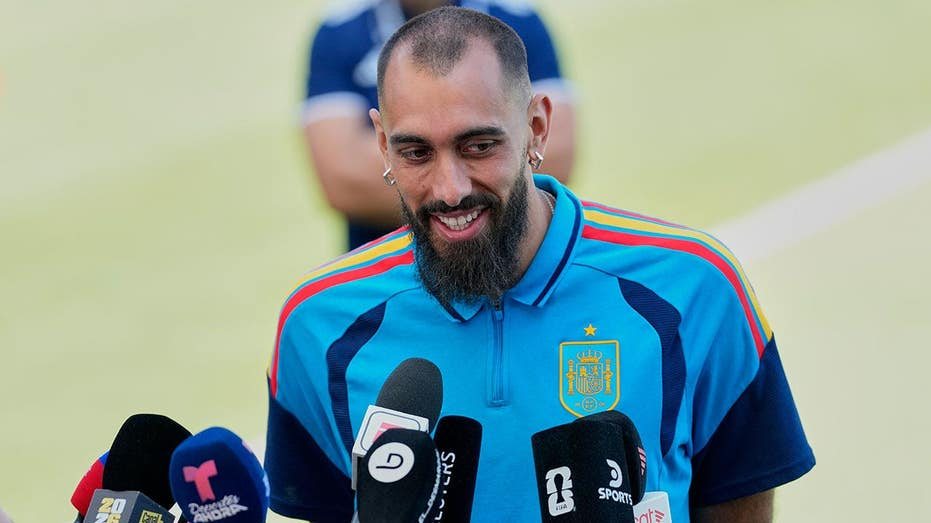
Spanish goalkeeper Borja Iglesias, preparing for the biggest match of his career in Sunday’s World Cup final against Argentina, has voiced reluctance about a post-match tradition that would require him to shake President Donald Trump’s hand. Speaking to Spanish media on Saturday, Iglesias made clear his discomfort with the prospect, though he acknowledged the ceremonial obligation.
«I don’t want to go to prison,» Iglesias said of shaking Trump’s hand, according to All Out Soccer. «I hope to greet him at a time when we are all very happy, and that it passes very quickly and I can forget about it.» The goalkeeper, who plays for Spain’s national team, emphasized that he does not wish to create controversy ahead of the high-stakes match at New York/New Jersey Stadium.
Iglesias has been outspoken on political and social issues in the past. He has expressed support for pro-Palestinian protesters and was vocal in criticizing the former Spanish soccer federation president, who resigned after kissing a player during the FIFA Women’s World Cup. In his comments Saturday, Iglesias said he believes Trump «struggles» with people who fight «for progress and for fundamental values.»
President Trump is expected to attend the World Cup final and participate in the trophy presentation, following his appearance at the FIFA Club World Cup, where he remained on stage for the celebration ceremony. The tradition of having the U.S. president present the trophy and shake hands with players has been a standard part of major international soccer events hosted in the United States.
Iglesias, while critical of Trump, sought to downplay any potential disruption. «I don’t think this is the time to create controversy,» he said. «People know perfectly well what I think. I would love to do many things, but the reality is that even if people think I am all-powerful, I don’t have that much power to tackle certain things.»
The match between Spain and Argentina is scheduled for Sunday at 3 p.m. ET and will be broadcast on FOX. It marks the culmination of the 2026 World Cup, which has been hosted across the United States, Canada, and Mexico. Spain, led by Iglesias in goal, has advanced through a challenging tournament, while Argentina, featuring star forward Lionel Messi, enters as a formidable opponent.
Iglesias’s comments have drawn attention to the intersection of sports and politics, a recurring theme in recent international tournaments. In 2022, players from several teams used the World Cup in Qatar to highlight human rights issues, and protests have been planned for Sunday’s final as well. A coalition of artists and advocates has announced plans to hand out red cards to fans at the stadium, targeting both FIFA President Gianni Infantino and President Trump, according to a report from the Los Angeles Times.
The goalkeeper’s reluctance to shake Trump’s hand reflects a broader trend of athletes using their platforms to express political views, even as they navigate the expectations of their sport. Iglesias, however, made clear that his primary focus remains on the game. «I hope to greet him at a time when we are all very happy,» he said, suggesting that a Spanish victory would make the moment more bearable.
Trump’s presence at the final has been a topic of discussion among players and fans alike. The president has made appearances at major sporting events during his term, including the Super Bowl and the College Football Playoff National Championship. His participation in the World Cup trophy presentation is seen as a symbolic gesture, but it has also sparked debate about the role of political figures in sports ceremonies.
For Iglesias, the situation is a delicate balance between personal conviction and professional duty. «I would love to do many things, but the reality is that even if people think I am all-powerful, I don’t have that much power to tackle certain things,» he said, acknowledging the limits of his influence as an athlete.
The World Cup final is expected to draw a global audience of hundreds of millions, with fans tuning in from every continent. The match will determine the champion of the 2026 tournament, which has been praised for its organization and competitive balance. Spain and Argentina have met twice before in World Cup finals, with each team winning once.
Iglesias’s comments add a layer of political intrigue to an already highly anticipated sporting event. While the goalkeeper’s reluctance to shake Trump’s hand may be a minor moment in the larger narrative of the final, it underscores the ongoing tension between sports and politics in an era of heightened polarization.

67