5 minSports
Riley Gaines and Women’s Sports Activists React to Supreme Court Title IX Ruling
The U.S. Supreme Court upheld state laws protecting women’s sports in a 6-3 decision, prompting reactions from Riley Gaines and other activists who celebrated the win but acknowledged the fight is not over.
The U.S. Supreme Court’s 6-3 decision to uphold state laws that protect women’s sports marked a significant victory for advocates like Riley Gaines, but the former collegiate swimmer admitted the long battle has left her exhausted. In an interview with Fox News Digital, Gaines expressed both relief and frustration that such a ruling was necessary in 2026, noting that a decade ago, the idea of boys competing in girls’ sports would have been universally rejected. “It’s exhausting that in the year 2026, we are still having this conversation, that the highest court in the land is having to rule on such insanity,” Gaines said. She emphasized that while the ruling is a win, it reflects a cultural shift that requires continued effort.
Gaines, who led a rally on the steps of the Supreme Court during oral arguments for the two cases, described the opposing crowd of pro-transgender activists as angry and confrontational. “You look across the bike racks that were there separating us, and you saw anger, and you saw negativity, and you saw screaming, and you saw vitriol,” she said. Gaines, a new mother at the time, wrapped her infant daughter Margot in a bulletproof blanket while speaking at the rally. She now looks toward next steps, calling on Congress to codify President Trump’s executive orders and implement enforcement mechanisms for those who continue to violate protections for female athletes.
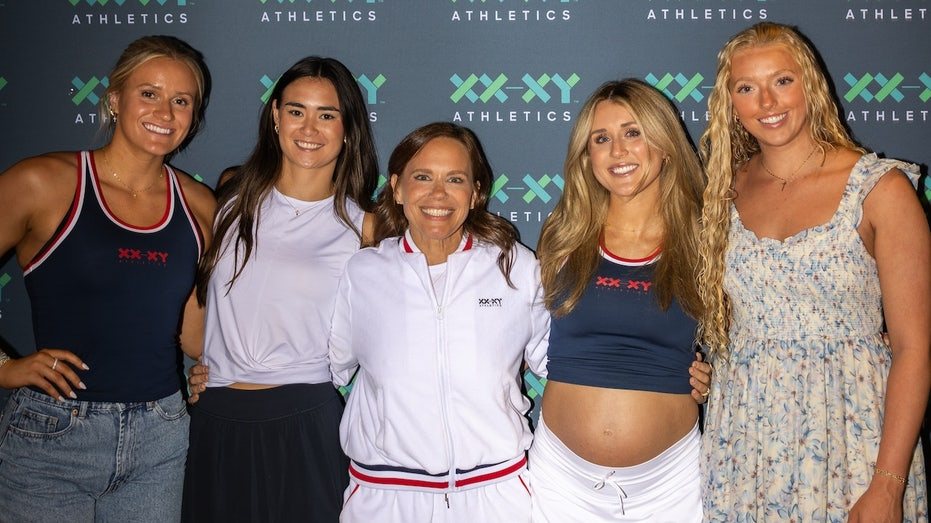
Other prominent women’s sports activists echoed Gaines’ sentiments. Jen Sey, founder of XX-XY Athletics, told Fox News Digital that the fact that 23 states still lack laws protecting women’s sports is “unacceptable.” Sey argued that the ruling does not go far enough, as it only applies to the 27 states with existing laws. “Girls in every ZIP code deserve fair sports,” Sey said, adding that the ultimate goal is a widespread culture change that would compel all governing bodies to protect the women’s category. Her company has been instrumental in recruiting star Olympians and other athletes affected by the issue as brand ambassadors to advance the movement.
Former University of Pennsylvania swimmer Paula Scanlan, who shared a pool and locker room with transgender swimmer Lia Thomas during the 2021-22 season, praised the court’s decision but stressed that more work remains. “We need to see protections in all 50 states in this country,” Scanlan said in an interview on Fox News’ “America’s Newsroom.” She expressed disappointment that the ruling was not unanimous, noting that a 9-0 decision would have sent a stronger message. Despite this, Scanlan called the outcome a win for female athletes who have faced unfair competition.
Former San Jose State volleyball player Brooke Slusser described the Supreme Court ruling as the “biggest win” female athletes have achieved so far. Slusser, who became a prominent voice after speaking out about a transgender player on her team in 2024, appeared on Fox News’ “The Faulkner Focus” to share her reaction. “It’s amazing. It’s the biggest win we’ve had yet, so I couldn’t be happier,” Slusser said. The ruling upheld state laws in West Virginia and Idaho that require student-athletes to compete on teams corresponding to their biological sex at birth, rather than their gender identity.
Former high school volleyball player Payton McNabb, whose athletic career ended after she was struck in the face by a spike from a transgender player, also weighed in. In an op-ed published on Fox News Digital, McNabb wrote that the Supreme Court’s decision affirms what many have long believed: girls deserve fair competition. “Today, I feel something that I haven’t felt in a long time when it comes to the protection of women’s sports,” McNabb stated. Her personal experience underscores the real-world impact of the debate, as she suffered a career-ending injury that highlighted the physical disparities between biological males and females in sports.
The Supreme Court’s ruling applies to the 27 states that have enacted laws protecting women’s sports, leaving advocates to push for similar protections nationwide. Gaines and others are now focusing on legislative action at the federal level, as well as grassroots efforts to change public perception. “What we’re going to see make the biggest change is when people, your everyday person, so think of parents, coaches, etc., when they’re bold enough to defend their daughters or defend their athletes or defend themselves,” Gaines said. The fight, she acknowledged, is far from over, but Tuesday’s decision provides a foundation for future progress.

94