4 minSports
Reusser Dominates Tour de France Femmes Time Trial; Ferrand-Prévot Loses Ground
Marlen Reusser set the best time in the stage 4 time trial of the Tour de France Femmes, while Pauline Ferrand-Prévot lost significant ground on the 21-kilometer course.
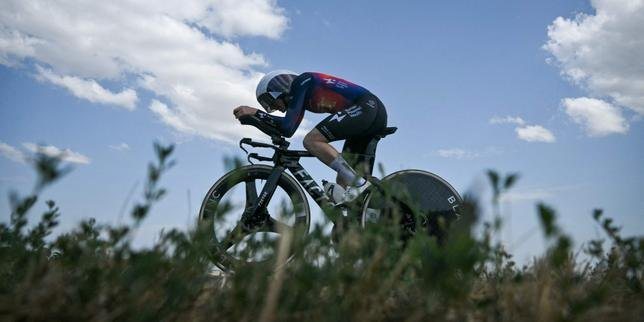
The individual time trial returned to the Tour de France Femmes on Tuesday and immediately changed the shape of the race, with Marlen Reusser setting the fastest time while Pauline Ferrand-Prévot lost significant ground on the 21-kilometer course between Gevrey-Chambertin and Dijon.
Reusser dominated the stage, producing the best performance of the afternoon on the roads of Côte-d'Or. Ferrand-Prévot, by contrast, endured a difficult ride and conceded substantial time to the stage winner, ending the day with a heavy loss in the overall standings. Live race reports described the Frenchwoman as being in difficulty from the early part of the course, with the time gaps growing steadily as the route progressed.
The stage was the fourth of the 2026 edition and marked the return of the time trial to the women's Tour after a two-year absence. It had been one of the most anticipated moments of the race, with the course starting in Gevrey-Chambertin, in the heart of the Burgundy vineyards, and finishing in Dijon, the capital of the Côte-d'Or department. Organizers had published the route profile and start times before the stage, underlining the importance of the day in this year's route.
The return of the discipline had been closely watched because time trials can reshape a general classification in a single afternoon. Unlike road stages, where riders can shelter in the pack, an individual time trial leaves each rider alone against the clock, with no teammates to help close gaps. Riders set off at staggered intervals, and the 21-kilometer route demanded a sustained high speed and careful management of effort from the start ramp to the finish line. The course, laid out on the roads of Côte-d'Or, offered no opportunity for rest and required constant attention to pacing.
Reusser took full advantage of the conditions and set the best time of the day, a performance that underlined her strength in the discipline. Her effort held up against all the later starters, and her time stood as the mark to beat when the final riders crossed the line in Dijon. Ferrand-Prévot, meanwhile, could not match that pace and suffered what was described as a heavy loss in the fight against the clock.
The result was a clear setback for Ferrand-Prévot, who now faces a more difficult path in the remaining stages. Losing time in a time trial is especially costly because the discipline offers no chance to respond within the same day. Every second conceded in the stage must be won back on another day, usually with more effort and less certainty. With the general classification still taking shape, the large deficit puts pressure on the French rider as the race moves into the next stages.
For Reusser, the performance in Dijon provides a strong platform for the rest of the week. The Tour de France Femmes continues in the coming days, and the time trial result will be one of the key reference points in the fight for the yellow jersey. Teams and riders will now shift their focus to the road stages that follow, where the battle for the overall classification continues in a different format.