6 minSports
Nationals Pitcher Cade Cavalli Apologizes After Benches-Clearing Incident With Red Sox Catcher Willson Contreras
Washington Nationals pitcher Cade Cavalli publicly apologized after a heated exchange with Boston Red Sox catcher Willson Contreras, who threw his helmet at Cavalli following a strikeout. The incident sparked debate over the use of the word 'boy' and resulted in seven-game suspensions for both players.
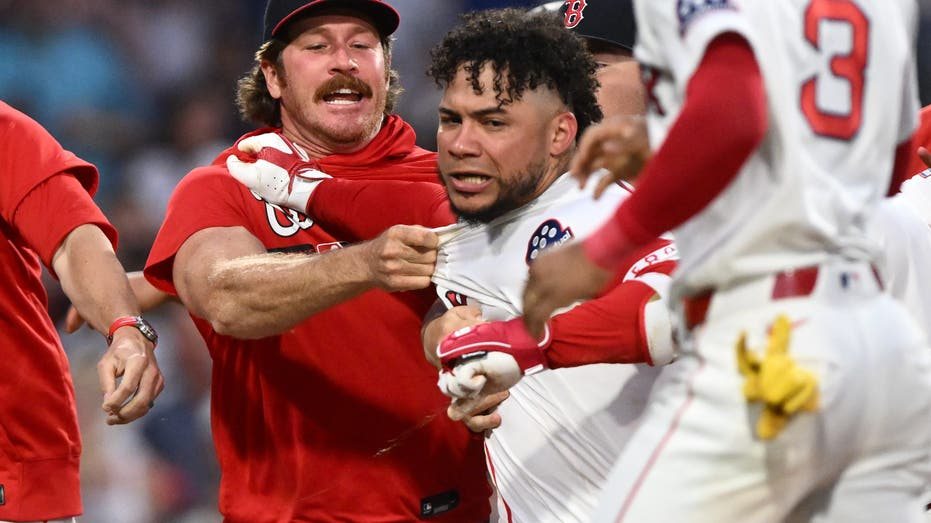
Washington Nationals pitcher Cade Cavalli issued a public apology Thursday after a benches-clearing incident with Boston Red Sox catcher Willson Contreras, who threw his helmet at Cavalli following a strikeout. The apology came amid accusations that Cavalli's remark to Contreras carried racial overtones, a claim that has divided opinion across the sports world.
The confrontation occurred Wednesday during a game between the Nationals and the Red Sox. After striking out Contreras looking in the fourth inning, Cavalli shouted, «Sit down, boy,» as Contreras walked away from the plate. Contreras immediately turned back toward the mound, and the exchange escalated quickly, with both benches and bullpens emptying onto the field. Contreras then hurled his helmet in Cavalli's direction before teammates and coaches intervened to separate the players.
Although Cavalli remained in the game, Contreras, along with Nationals pitcher Miles Mikolas, Red Sox outfielder Nate Eaton, and Boston interim manager Chad Tracy, were ejected from the contest. Major League Baseball later announced seven-game suspensions for both Cavalli and Contreras, along with undisclosed fines. Mikolas received a five-game suspension, while Eaton was suspended for three games. Both Cavalli and Contreras were permitted to appeal their suspensions.
The use of the word «boy» by Cavalli drew immediate scrutiny, with some commentators and media outlets noting that the term has historically been used as a racial slur toward Black men. Contreras, who is Venezuelan, did not directly accuse Cavalli of racism but told reporters after the game that he did not know whether the remark was intended in a racist way and said he would let MLB handle the matter.
In his apology, Cavalli expressed regret for the perception of his words. «I'm extremely torn up about the way that things were perceived,» Cavalli said. «Obviously, there was no ill intention behind that. It hurt my heart, knowing that, if there's a 13-year-old Black kid in D.C. that sees that — that looked up to me and thinks that he perceived it in a way that wasn't intended the way that it came out, and then he's not looking up to me anymore. That hurts my heart.»
The incident has reignited debate about the use of the word «boy» in sports. Critics of the apology argue that the term has been used by athletes of all races for decades without controversy and that Cavalli's comment was a routine piece of competitive trash talk. They point to instances where Black athletes, including LeBron James, Jimmy Butler, and Kevin Durant, have used the word «boy» in reference to white players without facing similar backlash or disciplinary action from their respective leagues.
James, for example, said on his podcast that Los Angeles Lakers guard Austin Reaves does not «play like a white boy.» Golden State Warriors guard Jimmy Butler was captured on video yelling, «White boy! White boy! Every time! Shut up! Shut the f*ck up!» to Brooklyn Nets forward Danny Wolf after an and-one play in 2025. Houston Rockets forward Kevin Durant told an Oklahoma City fan last season, «I know where you live, white boy.» None of those incidents resulted in suspensions, fines, or public apologies.
Supporters of the apology, however, maintain that the historical context of the word «boy» when directed at a person of color cannot be ignored, regardless of the speaker's intent. They argue that Cavalli's acknowledgment of that context and his expression of regret were appropriate and necessary to avoid further misunderstanding.
MLB's decision to suspend Cavalli for seven games, the same length as Contreras's suspension, has also drawn criticism. Many observers note that Contreras was the one who escalated the physical confrontation by throwing his helmet, while Cavalli's role was limited to verbal taunting. The league, however, determined that both players played major roles in escalating the confrontation and warranted equal punishment.
The incident has become a flashpoint in broader discussions about the culture of professional sports, with some arguing that leagues have become overly sensitive to perceived slights and that traditional forms of competitive banter are being unfairly policed. Others contend that increased awareness of racial dynamics in sports is a positive development that helps create a more inclusive environment for players and fans alike.
As the appeals process unfolds, both Cavalli and Contreras are expected to continue playing while their cases are reviewed. The Nationals and Red Sox are scheduled to meet again later this season, setting the stage for a potentially tense rematch between the two teams.

85