5 minSports
Folarin Balogun says red-card reversal created «outside noise» for USMNT before World Cup loss
Folarin Balogun admitted that the controversy surrounding his red-card reversal created distractions for the U.S. men's national team before their 4-1 World Cup loss to Belgium, despite initial celebrations.
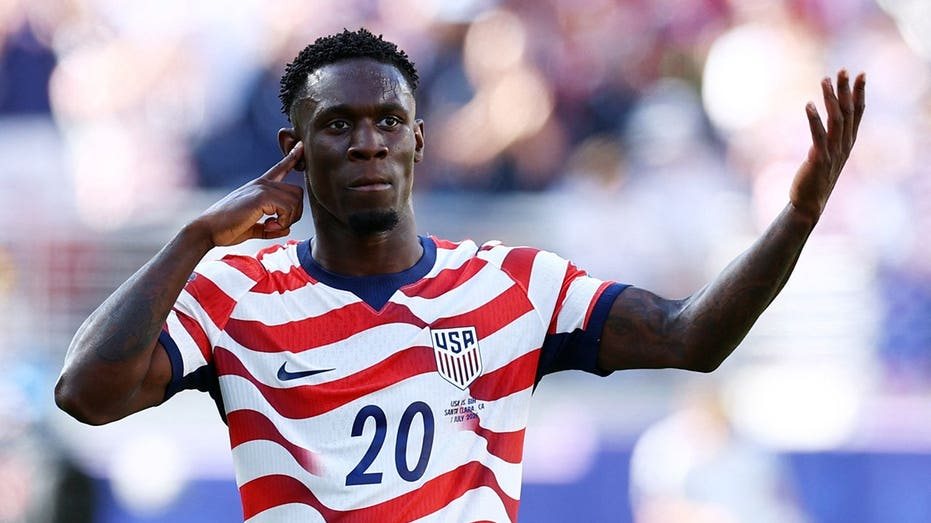
The United States men's national team forward Folarin Balogun acknowledged that the controversy surrounding his red-card reversal created significant distractions for his teammates ahead of their Round of 16 loss to Belgium at the World Cup. Balogun, who was initially suspended after receiving a red card in the previous match, was reinstated by FIFA just one day before the crucial knockout game, sparking a wave of debate and criticism.
Speaking to CBS on Tuesday, Balogun reflected on the emotional rollercoaster that followed the decision. «My initial reaction was I was happy to be back in the team, but when I kind of started to reflect, I knew it was going to cause a lot of controversy, and I could almost see within my teammates a bit of nerves, because it is something that is so unique,» he said. «The closer we got to the game, I tried to just focus as best as I could, but it was difficult. A lot of outside noise and that's hard to avoid.»
The controversy began when Balogun was shown a red card during the Round of 32 match, a decision that many, including U.S. President Donald Trump, argued was unjust. Trump revealed that he personally called FIFA President Gianni Infantino to request a review of the incident. «All I did was, I asked for a review, because I didn't think it was a foul,» Trump said. «I thought it was two great athletes who crashed into each other and got entangled. That was not a guy punching somebody in the face or anything, that would be different.»
FIFA's decision to overturn the red card came just hours before the team was set to face Belgium, adding to the chaos. Balogun described the moment the team learned of the reversal while on the bus to practice. «Everybody was screaming and shouting,» he recalled. However, the initial excitement quickly gave way to the reality of the situation, as the team struggled to block out the intense media scrutiny and public debate surrounding the ruling.
Belgium, a perennial powerhouse in international soccer, capitalized on any potential distraction, delivering a dominant 4-1 victory that ended the U.S. team's World Cup run. Balogun admitted that the whirlwind of emotions may have contributed to the team's performance, though he insisted that the players remained professional. «It's more just being able to separate the emotion from the job at hand,» he said. «We're all professionals, so it's not something I think was too difficult to be able to separate once we got over the initial announcement. You saw it was a difficult game against Belgium and that can kind of overshadow whether we were focused or not.»
The loss marked a disappointing end to what had been a promising tournament for the U.S. team, which had advanced to the knockout stage for the first time in over a decade. Balogun, who has been one of the team's standout players, acknowledged that the controversy surrounding his reinstatement added an unnecessary layer of pressure. «From me being inside the camp and inside the setup, I know we had full concentration going into the game,» he said, though he conceded that the «outside noise» was hard to ignore.
Belgium's victory set up a quarterfinal clash with Spain, which they ultimately lost, ending their own World Cup campaign. Spain will now face France in the semifinals, a match scheduled to take place in Atlanta. For the U.S. team, the focus now shifts to rebuilding and preparing for future competitions, with Balogun's experience serving as a reminder of the challenges that come with high-stakes international soccer.
The incident has also sparked broader discussions about the role of external influences in sports governance. Trump's direct appeal to Infantino raised questions about the intersection of politics and sports, though the president maintained that he was simply advocating for fairness. «I didn't tell him what to do,» Trump said. «I don't believe he made the decision. I think it was a committee that made the decision, and they made the right decision because, No. 1, it wasn't a foul, and you want to see a game with your best players.»
As the U.S. team looks ahead, Balogun's candid remarks offer insight into the psychological toll that such controversies can take on players. While the team's World Cup journey ended earlier than hoped, the lessons learned from this experience may prove valuable in future tournaments.

77