5 minSports
Five Most Disappointing Preseason Top-10 College Football Teams Since 2000
A look at five college football teams that entered the season ranked in the top 10 but failed to meet expectations, including Oregon State (2001), USC (2012), Texas A&M (2022), and Florida State (2023).
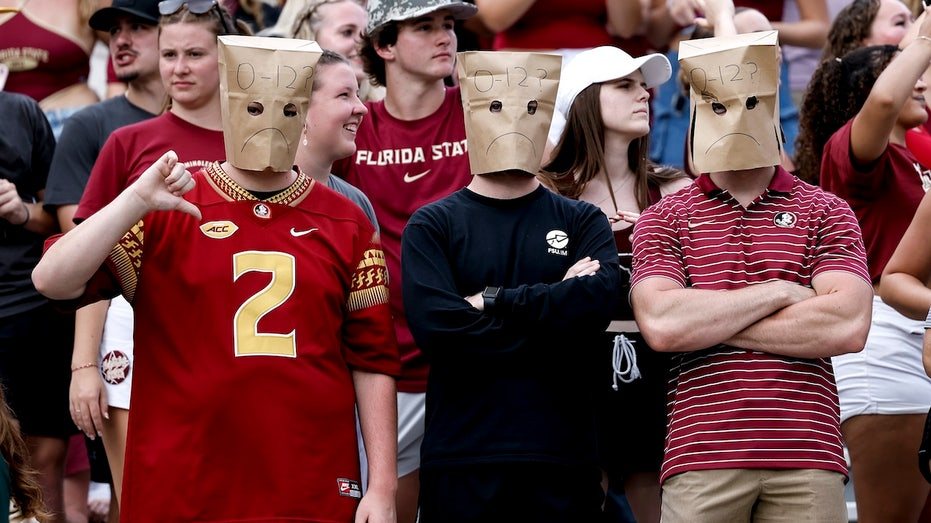
Preseason rankings in college football have become a staple of summer debate, but history shows that a high preseason ranking can sometimes be a curse rather than a blessing. The combination of sky-high expectations and overlooked roster flaws has led to spectacular collapses for several teams that entered the season in the top 10. Here are five of the most disappointing preseason top-10 teams of the 21st century, based on the gap between their August hype and their November reality.
The 2001 Oregon State Beavers entered the season with enormous promise after an 11-win campaign in 2000, capped by a Fiesta Bowl blowout of Notre Dame. Head coach Dennis Erickson had built a budding powerhouse in Corvallis, and the Beavers were ranked in the top 10 to start the year. But the season unraveled almost immediately. Oregon State lost its opener to Fresno State and dropped three of its first four games. A 38-7 defeat at UCLA knocked the Beavers out of the top 25 for good. They limped to a 5-6 record, missing a bowl game entirely. While they did beat a top-10 Washington team late in the season, the year was widely seen as a wasted opportunity. Erickson left for the NFL the following season, and the program never fully recaptured that momentum.
The 2012 USC Trojans were perhaps the most hyped team of the decade. After finishing 2011 in the top 10, the Trojans were finally eligible for postseason play following a two-year NCAA ban. They returned a wealth of talent, including quarterback Matt Barkley, who was projected as the No. 1 overall NFL draft pick, along with 1,000-yard receivers Marquise Lee and Robert Woods, 1,000-yard rusher Curtis McNeal, and Penn State transfer Silas Redd. USC was voted the preseason No. 1 team in the country. Despite an early loss to eventual Pac-12 champion Stanford, the Trojans remained in the top 10 through late October. Then disaster struck: they lost five of their last six games, finishing the season unranked. They became the first preseason No. 1 team to end the season outside the AP Top 25 since Ole Miss in 1964. Head coach Lane Kiffin was fired the following season, and USC has finished in the top 10 of the AP poll only once since 2011.
The 2022 Texas A&M Aggies entered the season ranked sixth in the nation, buoyed by what was then the highest-rated recruiting class in college football history. Head coach Jimbo Fisher had assembled a roster that many believed could challenge for a College Football Playoff spot. But the season went off the rails in just the second game, when Appalachian State stunned the Aggies 17-14 at Kyle Field. Texas A&M did manage to beat two top-15 teams — Miami and Arkansas — but then lost six consecutive games, failing to qualify for a bowl game. The team finished 5-7, a stunning collapse for a program that had signed the No. 1 recruiting class just eight months earlier. The season was marked by inconsistency: the Aggies had two wins over top-10 opponents but also losses to unranked teams. Fisher was fired the following year, and the program has struggled to regain its footing.
The 2023 Florida State Seminoles narrowly avoided making this list in 2017, when a preseason top-five team barely reached a bowl game. But the 2023 season was a different kind of heartbreak. Florida State entered the year ranked in the top 10 and looked like a legitimate College Football Playoff contender. The Seminoles won their first 11 games, climbing to No. 4 in the rankings. But in the final regular-season game against Florida, star quarterback Jordan Travis suffered a devastating leg injury. Without Travis, Florida State lost its next game to Louisville and was controversially left out of the playoff, becoming the first undefeated Power Five conference champion to be excluded from the four-team field. The team finished 13-1 but outside the playoff, a bitter end to a season that had promised so much.
These five teams illustrate the peril of preseason hype. Whether due to injuries, roster flaws, or simply bad luck, each of these squads fell far short of expectations. Their stories serve as a reminder that rankings in August are no guarantee of success in December.
82