5 minSports
Fever coach Stephanie White sidesteps question on GOP letter about Caitlin Clark's treatment
Indiana Fever head coach Stephanie White declined to directly address a letter from Republican lawmakers expressing concern over the physical treatment of Caitlin Clark, instead referring to the team's statement on player safety.
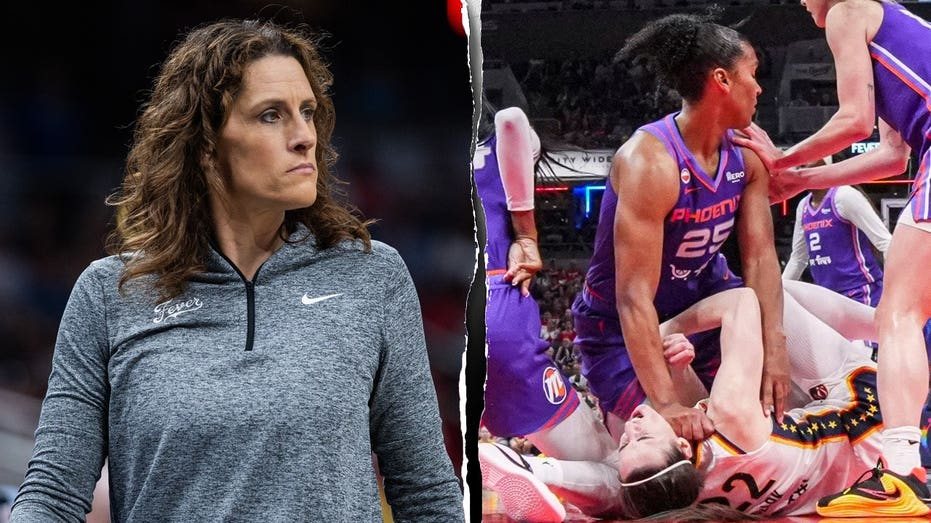
Indiana Fever head coach Stephanie White deflected a question about a letter sent by 11 Republican members of Congress to WNBA Commissioner Cathy Engelbert, which raised concerns about the physical treatment of star guard Caitlin Clark. When asked by OutKick before Thursday night's game against the Phoenix Mercury how she reacted to the letter, White said, «Our team made a statement yesterday so you can find that statement.»
The letter, signed by Republican lawmakers, expressed worry about what they described as «physical hostility» and «violence» directed at Clark, suggesting it might be «racially motivated.» White was pressed further on how she handles the situation when a player is mentioned in a congressional letter to the league commissioner. She responded, «Again, that's not something we can control,» before echoing language from the team's statement: «We're not affiliated with those groups. We try to keep the main thing the main thing and focus on the things we can control.»
The Fever released a statement on Wednesday saying, «Our organization nor Caitlin has had any interaction with anyone in this congressional group and we were unaware of their letter.» The statement added, «We have been clear in our public comments and in our ongoing dialogue with the League about the priority of player safety. Our players and our fans know where we stand on those issues, and we will continue to stick up for our team and a standard of excellence across the league.» Neither White nor the Fever directly addressed whether race plays a role in how Clark is treated on the court.
Clark, widely regarded as the league's biggest star, has been the subject of intense scrutiny and physical play this season. The congressional letter cited specific incidents, including Clark being «hip-checked, poked in the eye, and struck in the throat during games.» It argued that these «go beyond routine physical play» and that the WNBA and its officiating «have too often failed to address these unacceptable incidents and hold players accountable.»
The Fever ruled Clark out for Thursday night's game against the Mercury, despite her playing 16 minutes the previous night against the Los Angeles Sparks and saying afterward that her «body feels great.» White did not explain whether the decision to sit Clark was related to the opponent, the Mercury. She had said before Wednesday's game that Clark and Aliyah Boston would split the back-to-back, with Clark active against Los Angeles and Boston active against Phoenix.
The decision to rest Clark came amid heightened attention to her physical treatment. The last time the Fever faced the Mercury, on June 24, Phoenix forward Alyssa Thomas drove her fist into Clark's throat area during a scramble for a loose ball. No foul was called during the game, but the WNBA announced the following day that Thomas had received a Flagrant Foul 2 penalty and a one-game suspension after a postgame review. White had previously described that incident as one of «two cheap shots» delivered to Clark by the Mercury.
Many fans had anticipated a rematch between the two teams, especially after their June 22 meeting produced a widely circulated meme involving Mercury guard Sophie Cunningham. While Cunningham played on Thursday night, Clark did not. The Fever's decision to hold out Clark against a team that White herself said delivered cheap shots has led some observers to suggest the team is taking player safety seriously. However, the broader issue of physical play against Clark continues to generate debate across the league.
The letter from Republican lawmakers has added a political dimension to the ongoing discussion about player safety in the WNBA. The lawmakers called on Engelbert to ensure that Clark receives equal protection under league rules. The WNBA has not publicly responded to the letter. Meanwhile, the Fever have maintained that their focus remains on the game and on protecting all their players, without engaging directly with the congressional group.
Clark's rookie season has been marked by record-breaking viewership and attendance, but also by frequent hard fouls and physical confrontations. The league has faced criticism from fans and commentators for inconsistent officiating, particularly regarding star players. The Fever's cautious approach to Clark's playing time, including sitting her against a team with a recent history of physical play, suggests the organization is prioritizing her long-term health over short-term competitive considerations.

95