5 minSports
FBI and Atlanta Police Seize Drones Near World Cup Venues in Security Crackdown
The FBI and Atlanta Police Department have confiscated over 600 drones nationwide, including 86 in Atlanta, as part of a security operation ahead of the World Cup semifinals, enforcing flight restrictions and using drone surveillance to protect venues and crowds.
The FBI and Atlanta Police Department are conducting a large-scale security operation ahead of the World Cup semifinals between England and Argentina at Atlanta Stadium, targeting unauthorized drones that enter restricted airspace near the venue. Federal and local authorities have confiscated more than 600 drones nationwide since the tournament began, with 86 of those seized in Atlanta alone, according to Special Agent in Charge of the FBI Atlanta Field Office Marlo Graham. The enforcement effort is focused on ensuring that no drone disrupts the matches or poses a threat to the tens of thousands of fans expected to attend.
The FBI is enforcing Temporary Flight Restrictions imposed by the Federal Aviation Administration around the stadium, which extend one mile on non-match days and three miles on game days. Graham explained that the bureau uses a specialized mechanism to detect unauthorized drones in the restricted zone, allowing agents to identify and neutralize potential risks. “We’ve been able to safely land drones that have been unauthorized in the flight restricted area,” Graham said. The FBI treats every unauthorized drone as a potential threat, but the level of concern increases with the drone’s size and proximity to the stadium. “Obviously, the closer to the venue, the larger the crowd. We are fortunate here in Atlanta that we have a closed dome stadium,” Graham added. “We don’t want the game to be impacted because a hobbyist couldn’t control their drone, and it lands right when one of our star players was getting ready to score a goal.”
The Atlanta Police Department’s Drone Unit has been working alongside the FBI to track down individuals suspected of flying drones in restricted zones. Sgt. Kindu Franklin noted that most of those caught are hobbyists with no malicious intent, often seeking dramatic aerial footage for social media. “In some cases, they just recently bought a drone just for FIFA to get some of the cool footage that they want to put up on their social media,” Franklin said. However, he emphasized the potential for drones to be weaponized, which drives the proactive approach. “There are different ways that you can weaponize these drones. So, we’re operating in a proactive manner,” Franklin said. The police drone mission focuses on surveillance, scanning for potential threats, traffic issues, and individuals the FBI suspects of illegal drone operations.
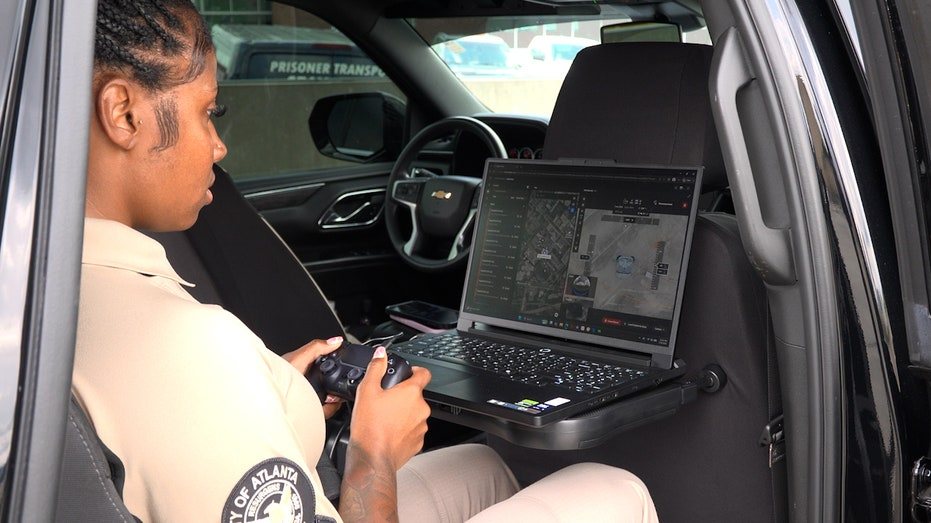
Officers in the Drone Unit use advanced technology to maintain a constant aerial view of the city and stadium surroundings. Sgt. James Cunningham explained that drones can be launched remotely from handheld controllers or from docking stations placed strategically across Atlanta. Some drones are controlled from inside an SUV using a computer and a PlayStation-style controller, giving operators a real-time view of police body cameras and vehicle locations. “So, what we want to do is give our command staff a view that they can’t get from the ground,” Cunningham said. The docking stations are used year-round to provide aerial perspectives during emergencies, but for the World Cup, they allow the department to respond faster. “It’s going to cut down time. We’re going to get there quick. And then you’re going to get an aerial perspective of what you can’t see on the ground,” Cunningham added.
The drone unit has been exceptionally active during the tournament, completing more than 1,400 flights and logging over 550 flight hours since the beginning of June. Cunningham noted that this level of activity surpasses what many drone units achieve over years of operation. “Some people haven’t even done that in years or haven’t even reached those numbers in the life of their drone unit,” he said. Anais Paredes, an APD drone pilot, highlighted the importance of local knowledge in the operation. “We train for the environment. We live here, so we know what to expect,” Paredes said. The FBI is urging hobbyist drone pilots to check Temporary Flight Restrictions before flying near World Cup venues, reminding them that violations can lead to confiscation of equipment and potential legal consequences. The security measures reflect the high stakes of hosting a global sporting event, where even a single errant drone could cause delays or safety concerns.

67