5 minSports
Egyptian players and coach allege «rigged game» after controversial World Cup loss to Argentina
Egyptian players and coach Hossam Hassan accused referees of bias after a 3-2 loss to Argentina in the 2026 FIFA World Cup, citing a disallowed goal and missed penalty calls as evidence of unfair treatment.
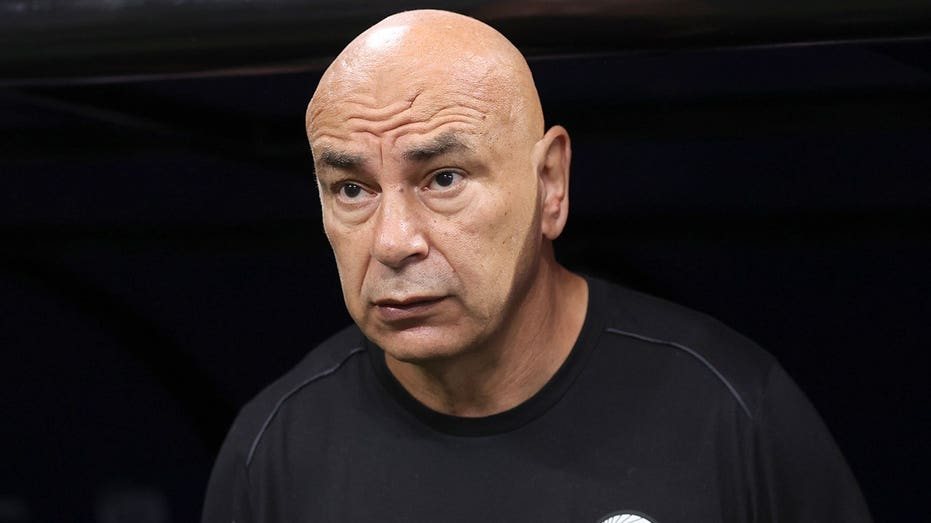
Egyptian players and coaches have leveled serious accusations against match officials following their dramatic 3-2 loss to Argentina in the 2026 FIFA World Cup round of 16 on Tuesday, with some describing the game as «rigged» and alleging that external factors influenced the outcome. The defeat, which saw Lionel Messi and Argentina rally from a two-goal deficit to win in the second half, has sparked a firestorm of controversy over several key officiating decisions that went against the Egyptian side.
Egypt coach Hossam Hassan did not mince words in his post-match press conference, expressing deep frustration with the refereeing. «We haven't seen respect or fair play,» Hassan said. «A penalty was ruled out, and a second incident that should have been checked for a penalty for us was not even checked by the VAR. A second goal was remarkably, for whatever reason, disallowed.» Hassan added, «I want to put it in beautiful words and say, 'Hard luck,' but we have been treated unfairly, and it has been an injustice.»
The match unfolded with Egypt taking an early lead and appearing to extend it to 2-0, only for the second goal to be disallowed after a Video Assistant Referee (VAR) review determined that a foul had occurred approximately 20 seconds earlier on the opposite side of the pitch. Egypt did manage to score again, but the disallowed goal meant the scoreline remained 1-0 for a longer period, and the team ultimately could not hold off Argentina's comeback. Argentina scored three goals in a span of about 25 minutes to secure the victory, with Messi playing a central role in the turnaround.
Hassan suggested that the officiating may have been influenced by a desire to keep the reigning world champions and their star player in the tournament. «We looked better than the reigning champions — better in everything — but the result was influenced by internal factors on the pitch and external factors off it,» he told reporters. «Perhaps they wanted to keep the world champion in the competition. Perhaps they wanted Messi to stay in the running. In football, there are sometimes external factors that go beyond the technical aspects. The world champion received support at every level.»
Egypt forward Mostafa Ziko echoed his coach's sentiments, directly accusing the referee of bias. «We were hard done by the referee today, and everyone saw that,» Ziko said. «I won't talk about something like this. We were winning 2-0. After the 2-0 result, everything went against us and worked against us. I don't even know why the second goal was disallowed, I don't see any reason for it.» Ziko went further, stating, «It was a rigged game. It wasn't our fault. That referee… it seems like this match was rigged. We were winning 2-0, and he kept coming at us. Congratulations to Argentina on another World Cup, it seems.»
The controversy adds to a growing list of officiating disputes during the tournament. Earlier in the World Cup, a red card shown to U.S. Men's National Team player Folarin Balogun was overturned after FIFA acknowledged a misapplication of VAR rules, and his one-game suspension was postponed, allowing him to play in the round of 16. That decision drew sharp criticism from European fans, commentators, and soccer federations. However, the allegations from Egypt are far more serious, directly questioning the integrity of the match.
While the VAR review that disallowed Egypt's second goal appeared questionable to many observers, some of the other contentious calls were borderline decisions that could have gone either way. The most significant factor in the outcome, however, was Argentina's ability to score three goals in a 25-minute span, a feat that Egypt's defense could not prevent. Despite the accusations, there is no evidence to support claims of a rigged game, and FIFA has not commented on the allegations.
The loss eliminates Egypt from the World Cup, while Argentina advances to the quarterfinals, keeping Messi's hopes of another title alive. The tournament has been widely praised for its organization, with visiting fans lauding the hospitality and venues across the United States. But the officiating controversies, particularly this latest incident, have cast a shadow over what has otherwise been a successful event. Hassan's comments reflect a deep sense of injustice that may linger long after the final whistle, as Egyptian players and fans grapple with what they see as a stolen opportunity.

85