5 minSports
Caitlin Clark Left Off 19 WNBA MVP Ballots Despite Record Season
A'ja Wilson won her record fifth MVP award, but Caitlin Clark's omission from 19 of 74 ballots has sparked debate over how voters evaluate historic offensive production.
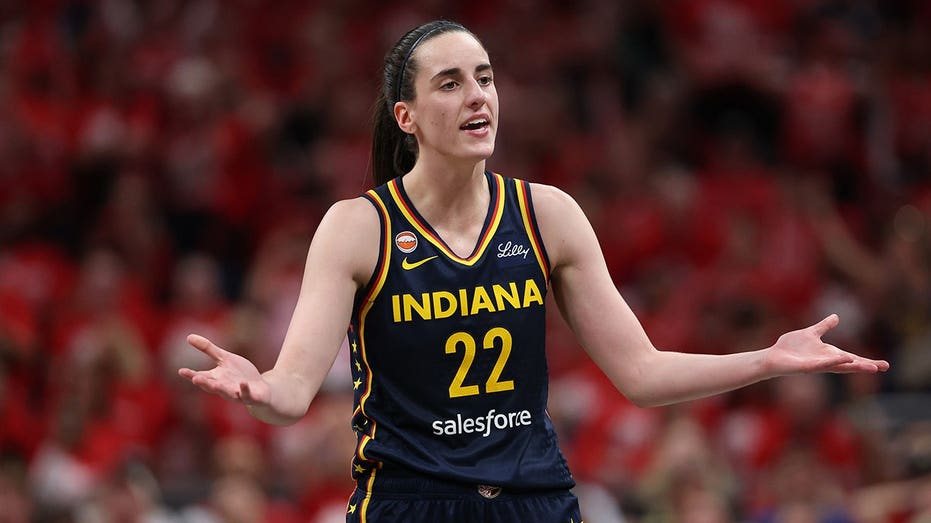
Caitlin Clark produced a season unlike any in WNBA history, yet 19 of the 74 voters tasked with selecting the league's Most Valuable Player left her off their ballots entirely. The WNBA announced Thursday that A'ja Wilson of the Las Vegas Aces won her record fifth MVP award, receiving 65 first-place votes. Minnesota rookie Olivia Miles finished second with 442 points, followed by Indiana's Kelsey Mitchell with 287 and Clark with 212.
Clark appeared on 55 ballots, earning one first-place vote, six second-place votes, 20 third-place votes, 16 fourth-place votes and 12 fifth-place votes. The gap between her production and her finish is the crux of a growing debate about how voters weigh statistical dominance against other factors.
Her statistical case is difficult to overstate. Clark averaged 22.3 points and 8.3 assists per game, becoming the first WNBA player to finish a season averaging at least 20 points and eight assists. When combining her own scoring with points created from her assists, she generated an average of 41.2 points per game, the highest average in league history according to the WNBA's own end-of-season review.
She recorded five games with at least 30 points and 10 assists. Every other player in WNBA history combined has four such games. Her best performance came against Seattle on July 17, when she scored 45 points and added 10 assists, the first 40-point, 10-assist game the league had ever seen. She finished the season with 891 points and 333 assists, becoming the first player to reach 800 points and 300 assists in a single season.
Clark also recorded 13 games with at least 20 points and 10 assists, nearly one-third of her 40 appearances. Indiana averaged a league-record 96 points per game, a team success that Clark's scoring and playmaking helped make possible.
The ballot results raise questions about how voters assessed Clark's value relative to her teammate Kelsey Mitchell, who finished third. Mitchell scored a league-record 1,086 points, but her production has risen sharply since Clark arrived. In her six seasons with Indiana before Clark joined the Fever, Mitchell averaged 16.4 points per game. In the three seasons since, she has averaged 21.4 points, including a career-high 24.7 this season. That trajectory suggests Mitchell benefited significantly from the defensive attention Clark draws and the opportunities Clark creates.
Wilson's victory is not in dispute. She averaged 26.2 points and 9.4 rebounds, led the league in points and blocks per game, and helped Las Vegas win 31 games. Her two-way dominance gave voters ample reason to place her first, and she likely deserved the award. But choosing Wilson and leaving Clark outside the top five are separate judgments, and the latter has drawn scrutiny.
The award was decided by a panel of sportswriters and broadcasters, a group whose coverage of Clark has at times focused on her popularity rather than her basketball. In May, commentator Cari Champion said of Clark, «I don't like you. I don't like the way you behave on the court.» By September, Champion called Clark an «avatar for people who want to spread hate.» In July, columnist Nancy Armour argued that Clark's reactions to officiating endangered Black and queer players, invoking Emmett Till. This week, Charlotte Wilder said she wanted «something a little more forceful» from Clark about the alleged treatment of Black WNBA players, despite acknowledging Clark had already spoken out.
Those examples do not identify which voters omitted Clark, but they illustrate why fans might question the media's judgment. The same panel gave Wilson only four Defensive Player of the Year votes while Angel Reese received 46 and won in a landslide, a result that also raised questions about consistency in how voters evaluate players.
Clark's popularity does not entitle her to an MVP award, and Wilson's season was exceptional by any measure. But the standard should be consistent: evaluate what players actually did on the court and be prepared to defend the result. By that standard, leaving the league's most productive offensive player off more than a quarter of MVP ballots is a decision that demands explanation.

5