4 minSports
Caitlin Clark faces hostility for refusing to embrace WNBA activism, analyst argues
A Fox News analyst argues that Caitlin Clark faces resentment from WNBA players and media not just because of her race, but because she refuses to adopt the league's activist stance, unlike other White players who have publicly acknowledged their privilege.
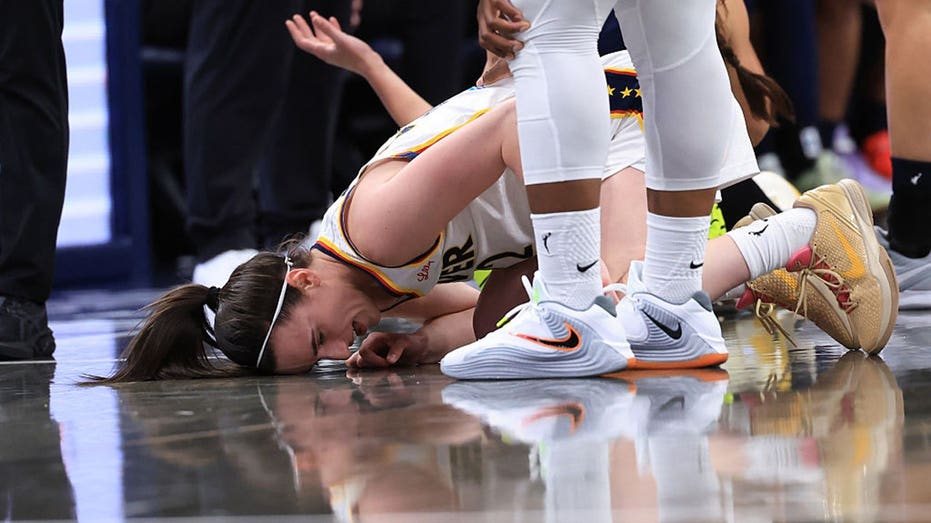
A Fox News analyst has offered a provocative explanation for the persistent hostility directed at Indiana Fever guard Caitlin Clark by many WNBA players and media figures, arguing that the resentment stems not merely from her identity as a straight White woman but from her refusal to embrace the league's activist culture.
In a column published Friday, Bobby Burack contends that Clark's unwillingness to use her platform for racial or sexual activism — a role that other White players in the league have willingly adopted — has made her a target. The piece cites a recent CNN panel where former ESPN host Cari Champion dismissed suggestions that race plays a role in the treatment of Clark, calling such claims disrespectful to the Black women who built the league.
Burack argues that the WNBA establishment has embraced other White players who have publicly acknowledged their privilege and expressed support for social justice causes. He points to Cameron Brink, drafted one pick after Clark in 2024, who before playing a single WNBA game stated: «I will acknowledge there's a privilege for the younger White players of the league.» Brink later reiterated that sentiment, saying she is bothered by players who «consistently putting up crazy stat lines and not being rewarded by brands.»
Similarly, UConn star Paige Bueckers, often presented as Clark's counterpart, has expressed concern about the racial makeup of WNBA coaching staffs, stating that the league «was built on a lot of Black women» and that they deserve «the same equal opportunity as everybody else.» Bueckers' remarks were widely celebrated on social media, according to the column.
Clark, by contrast, has consistently defined herself simply as a basketball player. She has not volunteered statements about privilege or activism, nor has she used press conferences to validate racial activists or apologize for her success. Burack describes this as «normal» behavior, adding that Clark «doesn't feel an obligation to tell the world she isn't a racist or a homophobe.»
The analyst draws a parallel to the concept of «anti-racism» popularized in 2020 by authors Robin DiAngelo and Ibram X. Kendi, who argued that being «not racist» was insufficient and that White people must actively fight against racism. Burack suggests that this framework has created an environment where White players must prove they are not biased, and that Clark's refusal to do so has made her a target.
Burack also notes that Clark is the first White American sports superstar to emerge in the post-George Floyd era, which he argues makes her villainous status even harder to shed. He cites former ESPN host Jemele Hill, who told the Los Angeles Times in 2024 that «race and her sexuality played a role in her popularity.» Such statements, Burack argues, help explain why a player can physically attack Clark and reporters instinctively defend the aggressor rather than the victim.
The column concludes by suggesting that unless Clark eventually adopts the activist role expected of her, the hostility from Black players and media figures is unlikely to subside. «They have shown they'd rather excuse the most egregious behavior,» Burack writes.
The debate over Clark's treatment has intensified as the rookie sensation has drawn record crowds and television ratings to the WNBA, while also facing increasingly physical play and public criticism from some players and commentators. Clark has repeatedly declined to engage in the controversy, focusing instead on her performance on the court.

75