6 minSports
Caitlin Clark and Paige Bueckers: Two White WNBA Stars With Divergent Public Perceptions
A look at how Caitlin Clark and Paige Bueckers, both white and dominant in women's basketball, have developed vastly different cultural reputations, shaped by their upbringings, activism, and career trajectories.
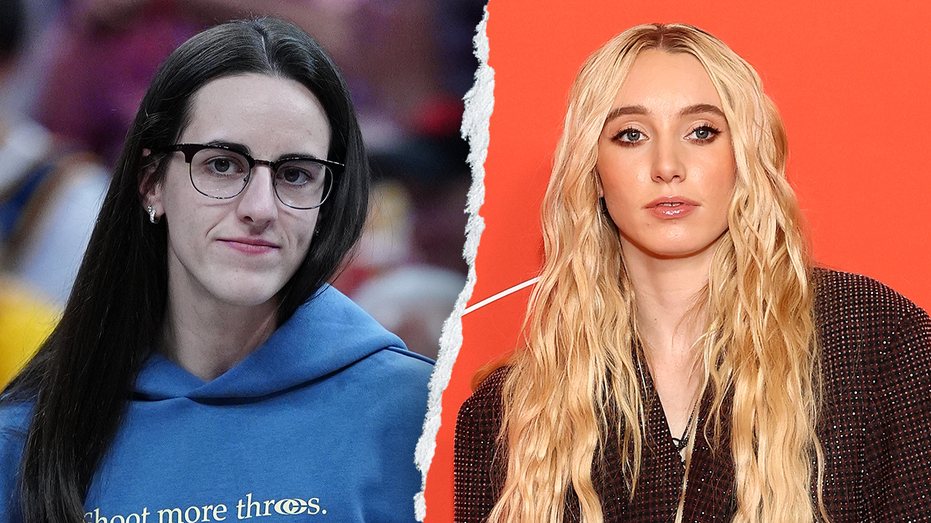
The contrasting public perceptions of WNBA stars Caitlin Clark and Paige Bueckers have sparked renewed debate after former NFL wide receiver Harry Douglas claimed on ESPN that Bueckers has become everything Clark was expected to be in the league. Both players are white, dominant on the court, and emerged from the American Midwest, yet they occupy vastly different spaces in the cultural conversation surrounding women's basketball. Clark is often at the center of heated discussions about race, privilege, and media attention, while Bueckers has largely avoided the same level of scrutiny, despite sharing a similar racial background.
Their upbringings offer some clues to the divergence. Clark grew up in a traditional nuclear family in Des Moines, Iowa, with a strong sports lineage. Her grandfather was a locally famous high school football coach, and she spent her childhood competing with two older brothers in the backyard. Her father coached her early on and famously refused to let her shoot three-pointers until her shooting form was structurally sound. This family-first, disciplined background resonated with many fans who idolized her humble Midwestern roots.
Bueckers, by contrast, was raised in a more complex family structure in Minnesota. Her parents divorced when she was three, and she was primarily raised by her father while navigating a split-household dynamic after her mother remarried and moved to Montana. She grew up in a blended family with three half-siblings, including a younger brother, Drew, who is biracial and partially Black. Since elementary school, Bueckers was close friends with future NBA lottery pick Jalen Suggs, and the two navigated the Minneapolis-St. Paul youth basketball scene together.
These differing backgrounds became more pronounced in the wake of George Floyd's death in summer 2020. As an incoming freshman at UConn, Bueckers participated in Black Lives Matter protests in her home community, citing her love for her brother Drew as motivation. She told the Associated Press at the time, “It sucks having to have those conversations with your little brother on how he should act because of his skin color. I’m scared for him. I’m scared for myself because that’s my little brother. He’s my best friend, really. I’m really close with him. Just having that fear of one wrong judgment and his life could be on the line is super scary and it’s something I want to change.” Clark, also an incoming freshman at Iowa that year, has no public record of making similar statements or engaging in activism after Floyd's death.
The cultural divide widened at the 2021 ESPYs, where Bueckers accepted the Best Female College Athlete award. In her speech, she said, “As a White woman who leads a black lead sport and celebrated here I want to show a light on black women, they don't get the media coverage that they deserve. They've given so much to this sport. Everyone who voted thank you but I think we should use this power together to also celebrate black women.” The speech became a polarizing flashpoint in the ongoing culture wars within women's basketball. Clark, meanwhile, spent that summer representing the United States at the FIBA U19 Women's World Cup in Hungary, where she started all seven games, averaged 14.3 points, 5.3 rebounds, and 5.6 assists per game, and was named Tournament MVP.
In 2022, Bueckers appeared to be the undisputed future of women's basketball. She overcame an early knee injury to lead UConn to the National Championship game against South Carolina. Though the Huskies lost, she was widely seen as the biggest star in college hoops. Then, in August 2022, she tore her ACL during a pickup game, sidelining her for the entire 2022-2023 season. While Bueckers watched from the bench, Clark completely took over the sport. Unburdened by injuries, Clark swept every major National Player of the Year award during her junior year at Iowa, pulling in unprecedented television ratings and becoming a national phenomenon.
Clark's rise was not without controversy. During the 2023 Elite Eight, she hit a three-pointer against Louisville and celebrated with John Cena's famous “You Can’t See Me” hand gesture. Pundits praised her competitive fire, and Cena himself tweeted his congratulations. But quietly, detractors emerged both on and off the court. When Iowa faced LSU and Angel Reese in the National Championship game, the dynamic between Clark and Reese became a flashpoint for debates about race, sportsmanship, and media double standards. Bueckers, by contrast, has largely remained outside these debates, even as she returned to the court and continued to perform at an elite level.
The differing trajectories of Clark and Bueckers highlight how personal background, activism, and timing can shape public perception, even for athletes who share similar racial identities and levels of talent. Clark's meteoric rise and the cultural backlash that accompanied it have made her a lightning rod, while Bueckers' more nuanced personal story and early advocacy have allowed her to navigate the spotlight with less friction. As both players continue their WNBA careers, their divergent paths offer a case study in how race, class, and personal history intersect in the world of professional sports.

86