5 minSociety
Reparations Activists Challenge Blue States Over Broader Eligibility
The U.S. Freedmen Project argues that state reparations programs in New Jersey and New York improperly extend remedies to immigrants and other groups, diluting lineage-based claims.
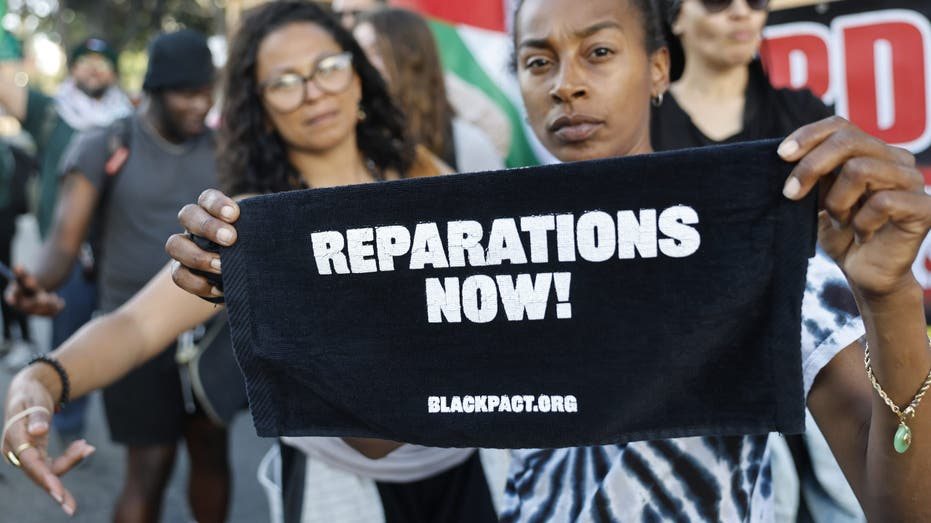
Grassroots reparations activists are pressing Democratic-led states to narrow the scope of reparations programs, arguing that recent immigrants and non-descendant Black Americans should not be included in remedies meant for the direct descendants of enslaved people in the United States.
The U.S. Freedmen Project, a group of self-identified «Foundational Black Americans,» has become a vocal presence at public hearings across the country. Its members contend that state and municipal reparations initiatives are improperly broadening eligibility to include immigrants, people of color, and other marginalized groups, thereby diluting the specific historical claim of slavery's descendants.
«You don't give out remedies to people who haven't experienced the harm,» Annette Wilcox, a spokesperson for the group, said. She pointed to city agencies such as the Commission on Racial Equity and the Mayor's Office on Equity and Justice, which she said frequently invoke slavery, Jim Crow, redlining, and convict leasing — harms that fell on a specific group — only to distribute resources to a much wider population. «You're using one group of people's history to then give remedies to a wider group,» Wilcox said.
The dispute has surfaced most sharply in New Jersey, where Democratic lawmakers are advancing the Truth, Reconciliation, and Repair Act. Spearheaded by Assemblywoman Verlina Reynolds-Jackson and state Sen. Angela McKnight, the bill would establish a state-level framework for reparative policies addressing wealth disparities rooted in slavery and systemic discrimination. It is informed by research from the New Jersey Reparations Council.
U.S. Freedmen Project president Devine Prince said lawmakers and some advocates are «conflating reparations with racial justice and social justice.» He argued that the three are similar but not the same, and that bundling them together risks undermining the legal durability of any reparations program. For such policies to survive inevitable court challenges, Prince said, eligibility must be tied strictly to lineage rather than race.
«What the Democratic Party loves to do is push them all together to create 'people of color' coalitions,» Prince said. «These policies are largely being pushed in blue states, which is also where these issues are happening.» He added that political entities have a responsibility to address constituents specifically, because «that's how true coalitions are built, not by cobbling people together and pretending they all have the same plight and political priorities.»
Similar tensions flared at a public hearing in New York, where residents testified before the New York State Community Commission on Reparations Remedies at Hempstead High School on Long Island. One supporter, Aubrey Muhammad, accused politicians of misallocating resources away from historic Black communities amid demographic change. «Hempstead, since the '90s, has been flooded with immigrants. That's taking the resources, putting them towards others,» Muhammad said.
Census data reflect significant shifts in the Village of Hempstead over three decades. The community of roughly 59,000 is now nearly evenly split between Black residents at 43.2% and Hispanic or Latino residents at 45.3%. In 1990, the Hispanic population made up about 14% of the village.
Wilcox said that broadening the scope of remedies helps explain why «descendants of slavery in the United States are at the bottom of just about every socioeconomic parameter.» Prince argued that broader social challenges deserve their own dedicated solutions rather than being packaged under the umbrella of reparations, citing examples such as discrimination in taxi service or disputes over immigration policy.
The debate is unfolding as a wave of state and municipal governments explore reparative frameworks. In Illinois, the Chicago suburb of Evanston became the first city to distribute government-funded reparations to Black residents to remedy historic housing discrimination. That program now faces a high-profile class-action lawsuit filed by Judicial Watch and the Trump administration, alleging that its race-based eligibility criteria violate the Equal Protection Clause.
For the U.S. Freedmen Project, the Evanston litigation underscores its central warning: programs that define eligibility by race rather than lineage invite legal jeopardy and political backlash. The group says it will continue to appear at hearings around the country to press for what it calls true, lineage-based reparations.
10