6 minSociety
HBO's 'Lanterns' draws criticism for reframing John Stewart's origin around racial themes
HBO's new superhero series 'Lanterns' faces backlash from some viewers who say the show replaced the traditional Green Lantern origin story with modern racial discourse and privilege themes.
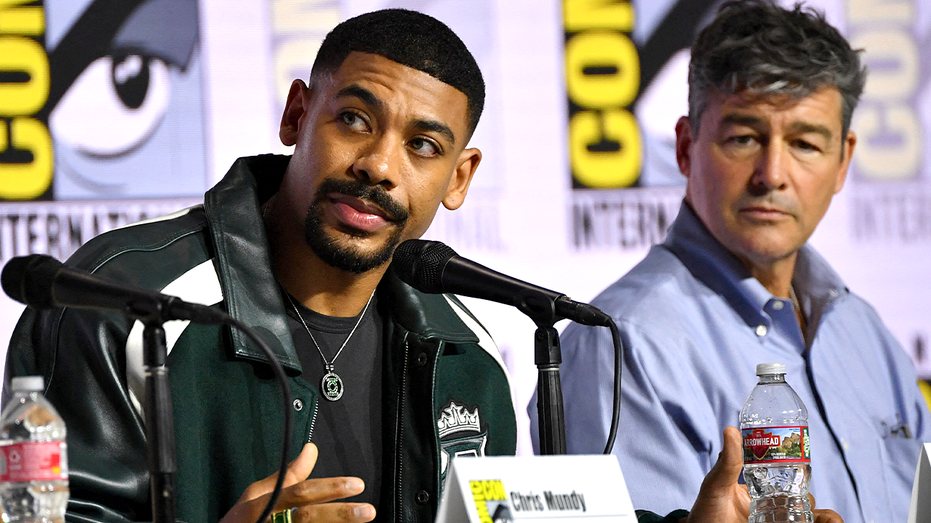
HBO's new superhero series "Lanterns" is drawing criticism from some viewers who accuse the studio of reworking a beloved character's origin story to focus on modern racial discourse and privilege. Episode 3, titled "OutKast," reframes the franchise's traditional emphasis on "fearlessness" through the experience of a Black man in America, prompting some critics to say the show is sacrificing classic comic book lore for social justice commentary.
In DC Comics lore, Green Lanterns are intergalactic peacekeepers chosen by alien power rings that seek out individuals with the innate ability to overcome fear. In "Lanterns," that standard is reframed as an unfair burden when applied to John Stewart, one of DC's first Black superheroes, who debuted in 1971 as a civil rights advocate challenging authorities in Detroit.
In the show, Stewart's mother, Bernadette, questions an alien Guardian of the Universe who has taken the form of an older White woman. "Do you know the differences in race on Earth?" she asks. "Do you understand how unfair it is to ask a Black man in America if he's afraid?" She adds, "We are terrified daily of persecution and still show up, sometimes better than everyone around us. Even in space, y'all don't consider us."
Rather than being chosen as an adult for his ability to overcome fear, Stewart is conditioned by his parents from infancy in "Lanterns" to wield the ring through hyper-precise perfection. Some viewers have accused the show of replacing the hero's traditional emphasis on individual willpower with a lesson on racial privilege.
"Lanterns" co-creator Damon Lindelof also created HBO's 2019 superhero series "Watchmen," which similarly drew criticism over its focus on American racial politics. But not everyone online objected to the changes. Filmmaker and comic book writer Steven DeKnight, who previously worked on "Daredevil," wrote on X: "Lanterns is fantastic. And for those inevitably crying that they ruined GL by going 'woke,' you obviously never read O'Neil & Adams' Green Lantern/Green Arrow run."
"Lanterns" writer and co-executive producer Vanessa Baden Kelly addressed the character's comic origins and accusations that the show had gone "woke" in an interview with TheWrap. She said she found old panels of John Stewart from the 1970s in online comments, including him calling people "Whitey" and opposing wars. "I'm like, 'Oh my God.' I read a bunch, but I couldn't read all of it, and you're just like, that's right, just keep it in the front of your mind — that this is who John Stewart's always been," she said.
J. Alphonse Nicholson, who plays the hero's father, John Stewart Sr., in flashbacks, discussed the show's portrayal of racial dynamics. "I'm just grateful that the writing room put this into the script," Nicholson told TheWrap. "How can you expect this African American man in this world … to be fearless? It really raises a lot of questions on who has the privilege to move through life without thinking about those things, even in the fictional world."
Nicholson also tied the show to the 2024 presidential election during an appearance on a podcast, arguing that the country is experiencing the consequences of "not trusting a Black woman." He said, "Could you imagine where we would be right now if Kamala got up in there, dog? Could you imagine how we would've been? It'd be a lot different, right? So we're experiencing the consequences of not trusting a Black woman." He added, "And now we have this show in a way that can tell you how great it could be. How great of a superhero we can create and have if you trust a Black woman."
Entertainment critic Christian Toto argued that the creative choices in "Lanterns" reflect a broader trend in modern entertainment. "Today's Hollywood screenwriters care little about canon or fidelity to the source material," Toto told Fox News Digital. "They love injecting modern culture war battles into storylines, even when they don't mesh with the material or present themselves as awkward and unnecessary."
Toto argued that the show's dialogue risks alienating audiences despite what he described as strong ratings. "This is overtly woke in nature. The scribes are jamming social justice arguments into the dialogue in ways that feel inauthentic to the time period in question," Toto said. "The pushback was inevitable. Audiences sense this kind of clunky woke storytelling a mile away. And many are exhausted by it. Yet the series is getting strong ratings to date, so general audiences are so interested in the comic book characters they'll often look past the woke detours. At least for now."
74