4 minPolitics
Trump's SAVE America Act stalls as Senate Republican maneuvers complicated by McConnell absence
The Safeguard American Voter Eligibility Act faces Senate hurdles as Mitch McConnell's extended absence delays the Rules Committee work needed to craft a reconciliation-compatible version, while leadership focuses on avoiding a government shutdown.
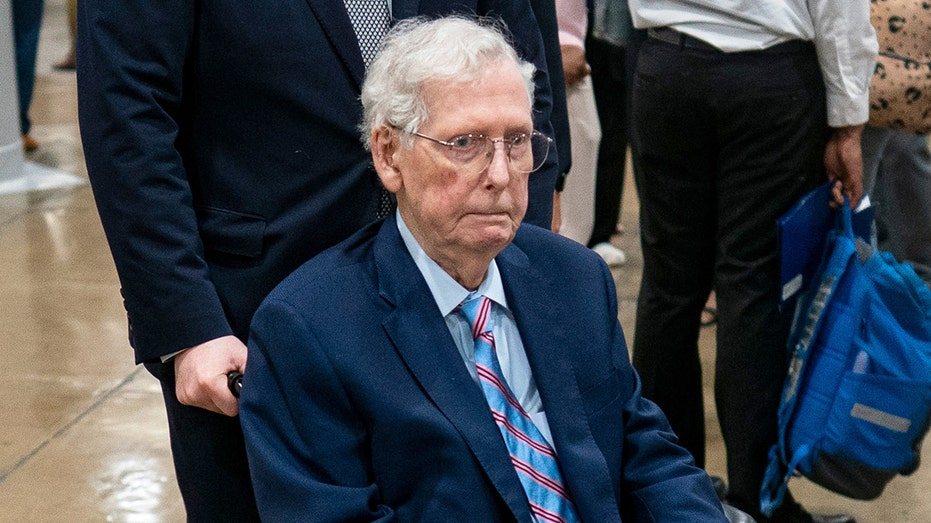
President Donald Trump's priority election integrity legislation, the Safeguard American Voter Eligibility Act, is encountering significant obstacles in the Senate as the extended absence of Senator Mitch McConnell and the recent death of Senator Lindsey Graham disrupt the legislative process. Republicans are struggling to find a path forward for the bill, which would require 60 votes without the protections of budget reconciliation, a procedural route that Senate Majority Leader John Thune has signaled may not be immediately available.
McConnell, the Kentucky Republican who chairs the Senate Rules Committee, has been absent from Washington with no confirmed return date. His committee would be responsible for drafting the version of the SAVE Act that could pass under reconciliation rules, which allow passage with a simple majority. Senator Ron Johnson of Wisconsin, who now chairs the Budget Committee following Graham's death, acknowledged the uncertainty, telling Fox News Digital that McConnell's absence "could be an issue." Johnson noted that the reconciliation language for the SAVE Act would fall under the Budget Committee's jurisdiction, but he emphasized that the process remains in early stages and depends on direction from the conference and Leader Thune.
Thune has prioritized preventing a government shutdown over advancing the SAVE Act, and he has indicated that the House budget framework must be resolved before reconciliation moves forward. He reiterated to Fox News Digital that Republicans lack the votes to pass the SAVE Act under regular order and that the current version does not comply with the Senate's strict Byrd Rule, which governs what can be included in reconciliation bills. Thune suggested that the legislation could potentially work if it is "very carefully structured based upon incentive, mostly grant money" for states, but he acknowledged that the math has not changed: the bill is still a 60-vote exercise even if pursued through a budget resolution.
Trump has demanded that Republicans pass their own budget resolution before leaving Washington until after Labor Day, and he called on Congress to fund defense, agriculture and "as much of the SAVE AMERICA ACT as possible." He posted on Truth Social that voters would be "extremely happy" with such progress. However, Thune has faced criticism from some Republicans for holding up the reconciliation process in favor of shutdown-avoidance talks. Senator John Kennedy of Louisiana told Fox News Digital that the only viable path for the SAVE Act is through reconciliation, and he has been working on his own proposal that he believes could survive the Byrd test. "I consider it to be a credible argument," Kennedy said, though he estimated the chances at "at least a 50/50 shot."
The complications reflect deeper divisions within the Republican conference over legislative strategy. McConnell's absence — and the lack of a clear timetable for his return — adds further uncertainty to the Rules Committee's role. Meanwhile, the death of Graham, who quarterbacked previous reconciliation efforts for the One Big Beautiful Bill Act, has shifted responsibilities to Johnson. The combination of a tight Senate margin, a looming government funding deadline, and the procedural hurdles surrounding voter eligibility legislation make the SAVE Act's prospects uncertain in the near term. Kennedy stressed that without reconciliation, the bill cannot pass, and he urged colleagues and the Senate parliamentarian to accept his proposed framework. Thune, for his part, has not committed to a timeline, saying the party will do everything it can to move the bill forward but that the fundamental math has not changed.
77