6 minPolitics
Trump Intensifies ‘Godless Communists’ Attacks on Democrats Ahead of Midterms
President Donald Trump is increasingly branding Democrats as communists, using the rhetoric at rallies and speeches to sharpen ideological contrasts ahead of the November midterm elections, while Democrats remain divided over how to respond.
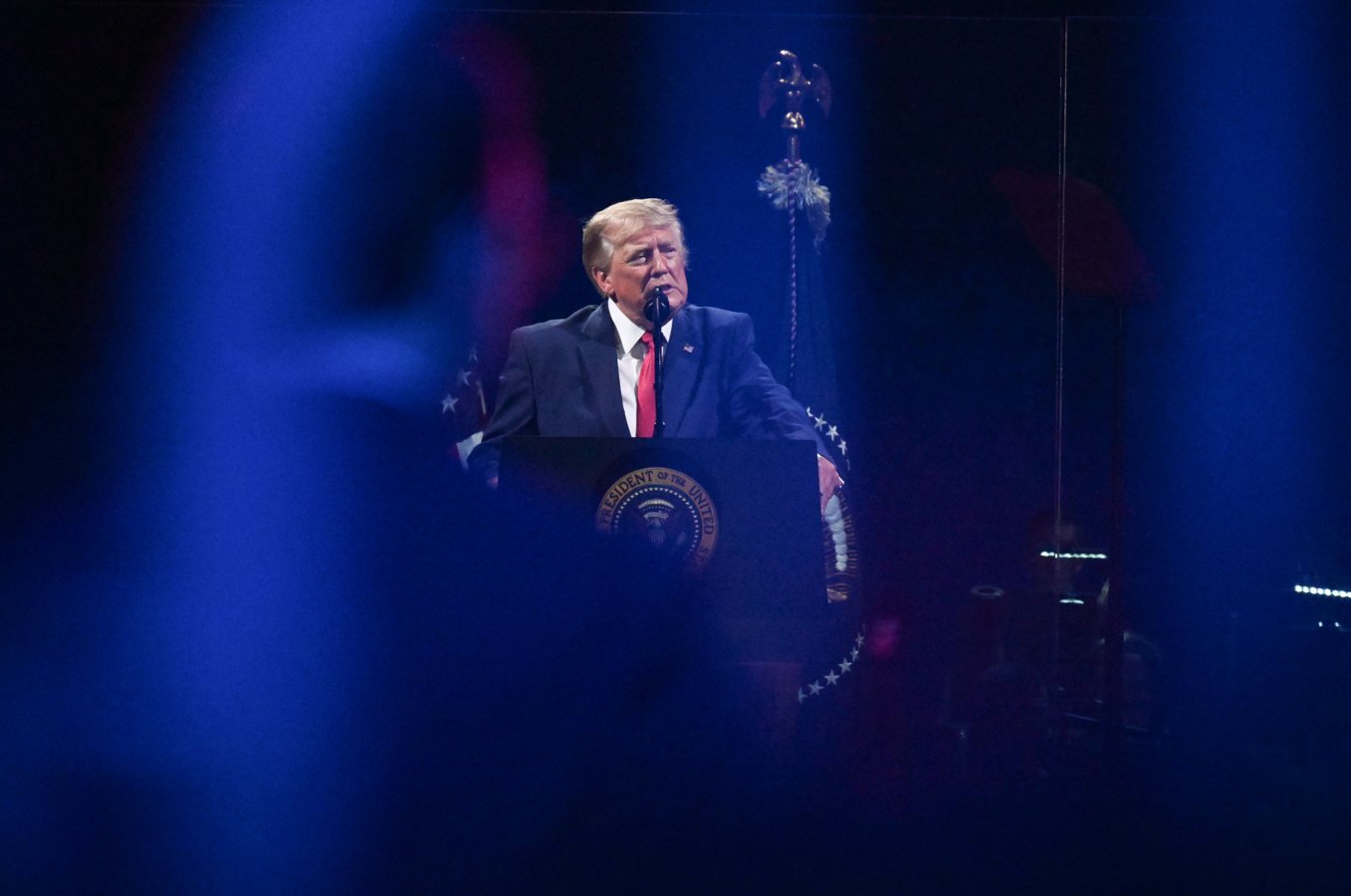
President Donald Trump has escalated his portrayal of Democrats as communists, invoking the term 94 times in public remarks and social media posts since June 25, according to a TIME analysis. The attacks, which include labeling some Democratic candidates as “hardcore, godless communists,” have become a central theme of Trump’s political message as the November midterm elections approach. Trump has used the rhetoric at campaign-style rallies, the NATO summit, his Fourth of July address on the National Mall, and in remarks to religious conservatives, arguing that communism poses a greater threat to the United States than major historical attacks and wars.
“You can be a communist, or you can be a patriot,” Trump said in his Independence Day speech. “You cannot be both.” The barrage follows a string of high-profile Democratic primary victories in New York in late June by candidates backed by the democratic socialist movement. Republicans see these wins as an opportunity to shift the national conversation away from voters’ top concerns—the economy and the cost of living—and toward a broader ideological debate. Progressive candidates have argued that addressing affordability requires expanding government-funded programs, raising taxes on wealthy Americans, and strengthening labor protections, positions that Republicans increasingly characterize as evidence that the party is embracing socialism or even communism.
Democrats are divided over how much attention to give Trump’s attacks. Some centrist Democrats worry that the “communist” charges will resonate with enough voters to cost them competitive races. Matt Bennett, a co-founder of the centrist Democratic organization Third Way, said, “I would hope that Democratic primary voters pick more mainstream candidates, because every time they pick a radical, it makes it harder for people elsewhere to run and win.” Others argue that trying to distance the party from its left flank only reinforces Trump’s framing and distracts from the economic message that propelled many of those candidates to victory. “If running on that agenda invites attacks, I think we should lean into it,” said Joseph Geevarghese, executive director of Our Revolution, a liberal group founded by Senator Bernie Sanders. “The electorate wants candidates who are fighting to challenge the status quo.”
Trump’s critics have highlighted the irony of his accusations, noting that during his second term, he has committed billions in taxpayer funds to transform the federal government into a direct corporate shareholder, commanding minority equity positions and governance rights in companies like Intel, MP Materials, and U.S. Steel. This approach, they argue, contradicts his anti-communist stance. Trump’s attacks echo the anti-communist politics of the Cold War and the Red Scare, when accusations of communist sympathies could end political careers. Trump came of age during that period and was mentored by Roy Cohn, who served as chief counsel to Senator Joseph McCarthy during the infamous anti-communist hearings of the 1950s.
To be clear, the Democratic Party has not been taken over by communists. The democratic socialists who have won high-profile primaries this year generally support expanding government programs while still operating within a market-based economy. There are no members of Congress who openly identify as members of the Communist Party, and no Communist Party candidate has won state or federal office in modern American history. Trump and other Republican leaders largely dismiss such distinctions as they center attacks around Democrats aligned with the democratic socialist movement, most notably New York City Mayor Zohran Mamdani. “We WILL NOT let MINI MAMDANIs take over the greatest nation in the history of the world,” Republican House Speaker Mike Johnson posted on social media last week, accompanied by a political cartoon depicting New York City awash in communist signifiers including a sickle.
Republicans employed a similar strategy in the aftermath of the George Floyd protests in 2020, after some Democrats backed the slogan “defund the police.” Democratic leaders spent years distancing themselves from that movement. Bennett argues that, while Trump’s rhetoric is characteristically exaggerated, Republicans have been handed openings by a few prominent candidates with past statements expressing admiration for communist thinkers or flirting with communist labels. Darializa Avila Chevalier, a democratic socialist congressional candidate in New York who defeated Representative Adriano Espaillat in last month’s Democratic primary, had a social media account that she has since deleted, featuring posts in which she appeared sympathetic to communism. “He is not making this up out of whole cloth,” Bennett said of Trump’s attacks. “It’s much harder to push back when there’s a grain of truth.”
As the midterm elections draw closer, the debate over how to counter Trump’s framing is likely to intensify within the Democratic Party. While some strategists advocate for a focus on economic issues, others warn that ignoring the attacks could allow them to take hold among undecided voters. The outcome may hinge on whether Democrats can present a unified message that resonates with an electorate still primarily concerned with pocketbook issues.
77