5 minPolitics
Trump demands Senate stay in session until SAVE America Act passes
President Donald Trump has called on Senate Majority Leader John Thune to keep the chamber in session through the August break until the SAVE America Act, his flagship election security bill, is passed. Trump also renewed his push to eliminate the filibuster to speed passage, but the legislation faces significant hurdles in the Senate.
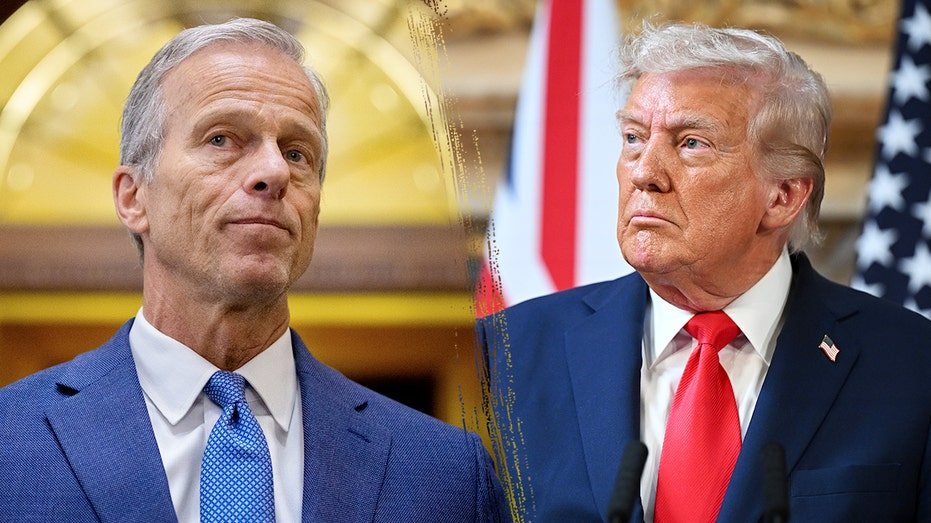
President Donald Trump is pressing Senate Majority Leader John Thune to keep the upper chamber in session until the SAVE America Act, his flagship election security measure, becomes law. With less than two weeks before the Senate’s scheduled August recess, Trump took to Truth Social to demand action, warning that failure to pass the bill would have political consequences for Republicans.
«John Thune should not allow the United States Senate to ‘leave town’ until it passes The Save America Act or, far better still, TERMINATES THE FILIBUSTER, where Republicans can then quickly pass everything they ever dreamed of, including a full and deep-throated SAVE AMERICA ACT, the Budget, and the ever looming Debt Ceiling disaster, 1929,» Trump wrote. He added that Democrats would seize the opportunity if Republicans did not act, saying, «The Dumocrats will do it on day one and can’t believe how lucky they got with this Senate leadership.»
The president’s demand comes as tensions between the White House and Thune escalate. Last week, White House press secretary Karoline Leavitt warned that Trump’s patience was «running out» with the Senate majority leader over the stalled bill. Thune fired back, urging the White House to focus its energy on winning over the Republicans and Democrats needed to reach the 60-vote threshold required for passage in the Senate.
The SAVE America Act, a central piece of Trump’s legislative agenda, would tighten voter identification requirements and enhance election security measures. However, it faces bipartisan resistance. Senate Democrats oppose the bill as overly restrictive, and a number of Republicans have expressed concerns about its provisions or the lack of a clear budgetary impact, which complicates efforts to pass it through budget reconciliation — a process that requires only a simple majority.
Thune has made clear that the bill does not currently have the votes needed to pass. «It’s still likely to be a 60-vote exercise, even if it’s done with a budget resolution,» Thune told Fox News Digital. «Unless it’s done with, you know, structured to allow grants to states that’s incentive-based, and principally budgetary, not policy.» The majority leader is also focused on averting a government shutdown, encouraging bipartisan negotiations on a spending deal before the recess.
Trump is not alone in pushing Thune to cancel the August break. Senators Mike Lee of Utah, Rick Scott of Florida, and Ashley Moody of Florida have all announced their intent to object to the Senate going into recess without passing the SAVE America Act. Lee posted on X, «I hereby object to any effort to put the Senate into recess in August — at least until such time as the Senate has passed the SAVE America Act — and hereby request a roll call vote. Do not assume you have my consent. You do not.» Under Senate rules, a single senator can force a roll-call vote to block a recess, meaning the chamber could be tied up in procedural battles.
The standoff comes at a critical time for Republicans. The August recess is typically used by incumbents to campaign and connect with voters ahead of the 2026 midterm elections. Republicans are eager to sell their agenda, including last year’s tax cuts and the «one big, beautiful bill» Trump signed, but they face headwinds from the war in Iran and affordability concerns. Several Senate GOP seats — in Maine, Alaska, and Ohio — are considered vulnerable, and any prolonged session could limit campaign time.
Trump has repeatedly called for eliminating the filibuster to advance his priorities, but such a move lacks the necessary votes in the Senate. Even within his own party, many Republicans remain wary of changing the chamber’s rules. The president warned that ignoring the SAVE America Act would lead to «LOSING & DEATH» at the ballot box, though he did not elaborate.
Senate leaders are now weighing how to balance Trump’s demands with the legislative calendar. Thune has suggested that a version of the election security bill could be incorporated into a budget reconciliation package, but that approach remains uncertain given the policy-heavy nature of the current proposal. For now, the Senate floor is expected to be consumed by confirmation votes and a Russia sanctions package, leaving little room for a lengthy fight over election security.