15 minPolitics
The 2028 Race Starts After the Midterms
JD Vance has the clearest route to the Republican nomination, but the full path to the White House is far less settled. The 2026 midterms could elevate Buttigieg, Newsom, Ossoff or Shapiro — and expose the difference between winning a primary and winning America.
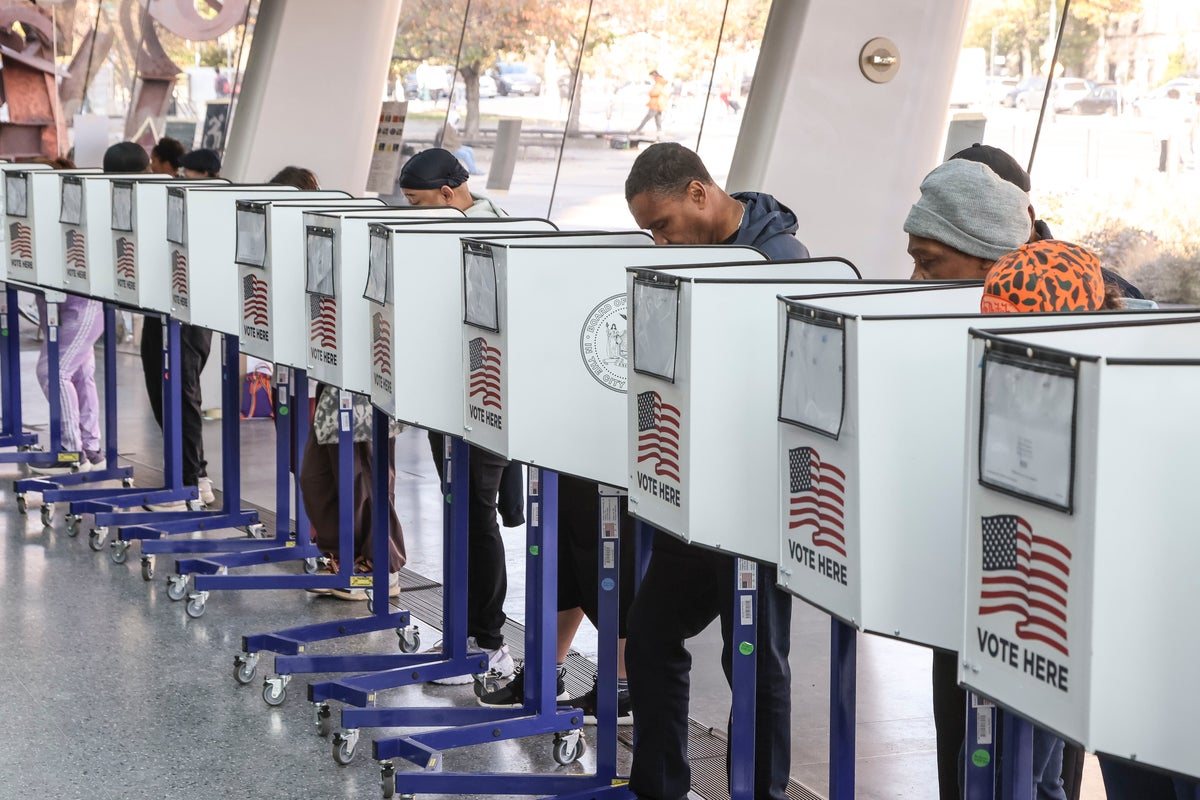
The most consequential election of 2026 will not put a president on the ballot. It may still decide who is taken seriously for the presidency two years later.
On November 3, Americans will elect every member of the House of Representatives and the 35 senators in Class II. Republicans enter the election controlling both chambers of Congress and the White House. That makes the midterms a referendum on governing power, but also something else: the first national stress test for the people who may inherit the two parties in 2028.
Donald Trump is not a conventional lame duck in political influence, but the constitutional arithmetic is clear. The Twenty-Second Amendment says no person may be elected president more than twice. Under the Constitution as it stands, the 2028 Republican nomination is therefore an open succession contest.
The Democratic side is even less orderly. There is no sitting vice president waiting to inherit the nomination, no uncontested ideological center, and no single politician who simultaneously dominates party polling, early-state organization and general-election tests.
That produces a useful way to read 2028: not as one race, but as two gates. The first gate is winning a party nomination. The second is winning a national election. The candidate who looks strongest at one gate is not necessarily strongest at the other.
The midterms are setting the conditions
The national environment currently favors Democrats more than Republicans, but not by enough to treat November as settled. Pew Research Center’s July survey gave a generic Democratic congressional candidate a six-point edge among registered voters, 43% to 37%. Emerson College Polling’s August survey of likely voters put the Democratic advantage at eight points, 51% to 43%.
The more important signal is why. Pew found that 42% of registered voters viewed their congressional vote as a vote against Trump, compared with 22% who saw it as a vote for him. The economy was the leading issue voters wanted congressional candidates to address, and only 24% of Americans rated national economic conditions excellent or good.
Those numbers create different tests for different 2028 contenders. Republican aspirants have to show they can preserve the Trump coalition when Trump himself is not on the ballot. Democrats have to show that anti-Trump energy can be converted into durable support for a person, not merely opposition to a president.
Modern midterms have repeatedly broken unified government. Republicans lost the House during Trump’s first presidency in 2018. Democrats lost it under Barack Obama in 2010. Republicans lost congressional control under George W. Bush in 2006. The precise size of any 2026 swing is unknowable in August, but the political consequence is already visible: November will generate winners with fresh claims to electability and losers carrying fresh doubts.
JD Vance has the clearest nomination path
If the question is simply, “Who is most likely to become the Republican nominee?”, Vice President JD Vance is the strongest answer today.
The RealClearPolling national average has Vance at 40.4% among potential Republican primary voters, well ahead of Secretary of State Marco Rubio at 22.6%. No other tested Republican is close. Vance also holds the institutional advantages of the vice presidency, proximity to Trump and a political identity that fits the younger, more populist wing of the current Republican coalition.
But Vance’s lead is less secure than the average alone suggests. Emerson’s polling showed how quickly Rubio can close the gap: Vance led Rubio 52% to 20% in February, but by May the two were effectively tied at 36% and 35%. In July, Emerson had them at 39% and 38%.
Later polling widened Vance’s national edge again, which matters. It suggests that Rubio’s surge has not yet become a durable takeover. Still, the episode established Rubio as a real alternative rather than a theoretical one.
The 2026 result matters to Vance because he will be judged as an heir to the administration’s political machine. If Republicans hold the House, protect their Senate majority and outperform a difficult national environment, Vance can claim that Trumpism transfers beyond Trump. If Republicans suffer a substantial defeat, the party will have a reason to ask whether continuity is enough.
Rubio’s problem is the primary; his opportunity is November 2028
Rubio currently has the reverse profile: a harder path to the nomination, but evidence of broader general-election reach in some matchups.
In Emerson’s August national test, Vance lost to Pete Buttigieg, Gavin Newsom, Jon Ossoff and Kamala Harris. Rubio also lost to Buttigieg, Newsom and Ossoff, but his margins were narrower against Newsom and Ossoff. Most strikingly, Rubio beat Harris 48% to 43%, while Vance lost to her 49% to 45%. Rubio also beat Alexandria Ocasio-Cortez by five points; Vance led her by two.
One poll nearly two years before Election Day cannot forecast the outcome. It can, however, identify a strategic argument. Rubio can tell Republican primary voters that he offers much of the administration’s agenda with a different coalition profile and a more traditional foreign-policy identity. AP has already documented the contrasting approaches Vance and Rubio have taken inside the administration.
That makes Rubio the most important Republican challenger to watch after November. He does not need the midterms to defeat Vance directly. He needs them to create demand inside the party for a candidate who can expand rather than merely reproduce the existing coalition.
Democrats have no equivalent of Vance
The Democratic polling field looks contradictory because it is measuring different kinds of strength.
The RealClearPolling national average gives former Vice President Kamala Harris a substantial lead at 27.6%, ahead of Newsom at 16.4% and Buttigieg at 11.6%. Harris has the national name recognition, donor relationships and residual party infrastructure that come from serving as vice president and running a national campaign.
But early-state evidence tells another story. In New Hampshire, the RealClearPolling average has Buttigieg at 22% and Harris at 5.3%. Emerson’s July national poll, which included a broader emerging field, put Buttigieg first at 19%, Newsom at 17%, Ossoff and Ocasio-Cortez at 13% each, and Harris at 8%.
That is not a contradiction to be solved. It is the central fact of the Democratic race: different electorates currently imagine different nominees.
Harris therefore belongs in the top tier for nomination strength, but not as an inevitable nominee. Her weakest current signal is electability against Rubio in Emerson’s August test. Her strongest is that no Democrat has yet displaced her across the national polling average.
Buttigieg may have the cleanest early electability case
Pete Buttigieg is not leading the national Democratic average, but his current profile is unusually balanced.
He leads the New Hampshire average, and in Emerson’s August general-election tests he was the only Democrat tested who led both Vance and Rubio by the same five-point margin, 49% to 44%.
He is also doing the slow work that national polling can miss. AP reported this week that Buttigieg returned to South Carolina as he weighs another presidential campaign, revisiting a state where his 2020 bid collapsed because he failed to build sufficient support among Black voters. He has not declared a 2028 campaign. The travel matters because it targets a known weakness rather than a friendly audience.
If Buttigieg can broaden his coalition while retaining his current strength with college-educated and moderate voters, he has a plausible path through both gates. His problem is that several Democrats can make versions of the same electability argument.
Newsom enters 2027 with freedom and a national platform
Gavin Newsom has something most governors seeking the presidency do not: an unavoidable exit from state office. California bars a governor from serving more than two terms, and the state is electing his successor this November.
That removes one potential obstacle after the midterms. Newsom will be free to travel, raise money and build a national organization without simultaneously asking Californians for another term.
His polling is also substantial. He is second in the national Democratic average, and Emerson’s August test had him beating Vance by five points and Rubio by two.
Newsom’s challenge is geographic and cultural. California gives him a giant fundraising base and the ability to wage high-profile fights with the Trump administration, but Republicans will try to turn the state itself into an argument against him. His 2028 viability depends on whether he can make his record legible to voters in Pennsylvania, Michigan, Georgia and Arizona rather than simply dominant within Democratic media politics.
Ossoff and Shapiro have the highest midterm upside
Two Democrats can change their 2028 standing more dramatically on November 3 than almost anyone else.
Jon Ossoff is seeking reelection to the Senate in Georgia, a state competitive enough to function as a real national test. An InsiderAdvantage survey conducted August 16-17 put him at 50% to Republican Mike Collins’s 43%. Emerson’s national 2028 matchups then showed Ossoff leading Vance by five points and Rubio by three.
A clear Ossoff victory would give Democrats a simple story: a relatively young senator won twice in a battleground state and can compete with the leading Republican successors. A loss would largely end that argument before the presidential campaign begins.
Josh Shapiro has an even more direct opportunity in Pennsylvania. A new Inquirer/New York Times/Siena University poll released August 25 puts him ahead of Republican Stacy Garrity 55% to 39% among likely voters. Pennsylvania is not merely a large state; it is one of the states presidential nominees build Electoral College strategies around.
Shapiro is still low in the national Democratic primary average, at 6.6%. That is why his upside is so large. A convincing reelection would not make him the front-runner overnight, but it would give donors, party officials and primary voters a fresh piece of evidence that cannot be manufactured by national television exposure: he can win a major battleground decisively.
Ocasio-Cortez has enthusiasm, but the general-election question is real
Alexandria Ocasio-Cortez occupies a different lane. She has strong activist recognition and is already competitive in several early 2028 measures. Her appeal is generational, ideological and media-driven, and that can be powerful in a crowded primary.
The August Emerson general-election tests, however, put her behind both Republican alternatives: Vance by two points and Rubio by five. Again, that is one early poll, not destiny. But it marks the question she would have to answer in a presidential campaign: can a coalition built to energize the Democratic left also recover enough swing and irregular voters to win the Electoral College?
The field after November
As of August 25, Vance is the single candidate with the clearest route to a major-party nomination. That alone makes him the most plausible individual to reach the 2028 general election.
But the strongest route to a nomination is not the same as the strongest route through a general election. On current evidence, the next group is crowded: Newsom and Buttigieg combine meaningful Democratic primary support with positive national matchup tests; Rubio has a weaker primary position than Vance but a potentially broader general-election argument; Harris retains the strongest national Democratic polling base but faces sharper electability doubts; Ossoff and Shapiro can improve their standing more than anyone if they win convincingly in Georgia and Pennsylvania.
The right way to read the 2028 race today is therefore as a hierarchy of paths, not a prediction of the final ballot. Vance begins first because his party’s succession structure is clearer. The Democratic field begins as a tournament in which 2026 performance can outweigh 2026 fame.
On the morning after the midterms, the first question will be who controls Congress. The second will be which politicians can claim that voters chose them in places the next president will need. That is when the 2028 campaign stops being a collection of names and starts becoming a race.
133