5 minPolitics
Supreme Court Rejects Trump-Backed Missouri Congressional Map for Third Time
The Supreme Court has blocked a Republican-friendly Missouri congressional map from taking effect for the 2026 midterm elections, leaving the state's 2022 boundaries in place. The unsigned order drew no noted dissents and marks the third time the high court has rejected the map.
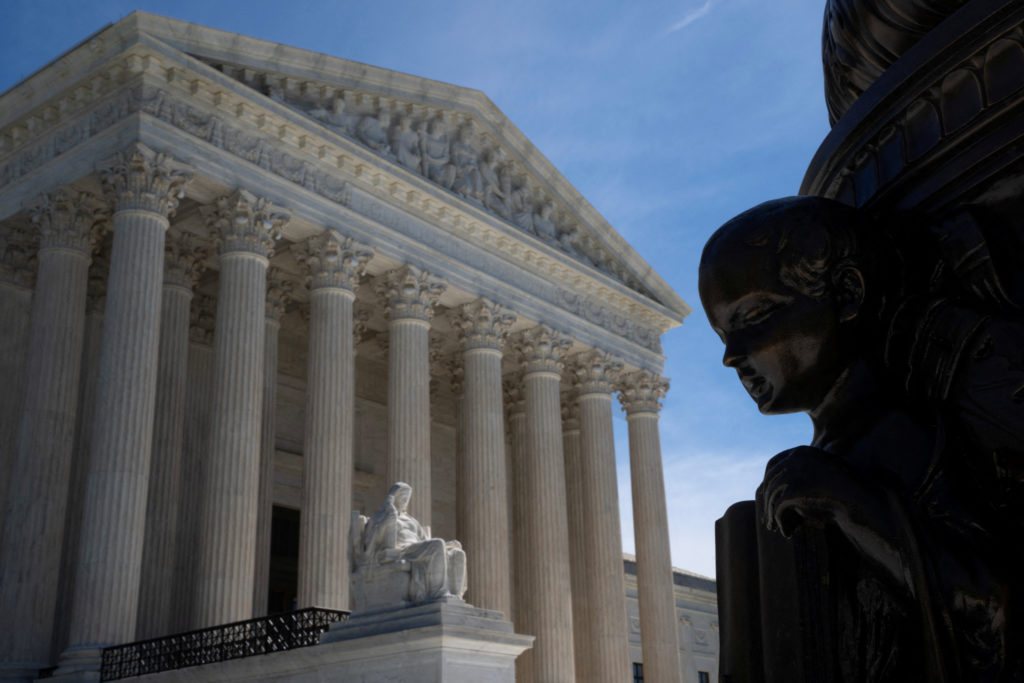
The Supreme Court on Friday rejected a Trump-backed Missouri congressional map for the third time, ordering the state to use its 2022 boundaries for the 2026 midterm elections. The unsigned order halted a federal appeals court ruling that would have revived the Republican-friendly map, which could have shifted the balance of power in the closely divided House of Representatives.
The justices made clear that lower courts should neither prohibit the use of Missouri's 2022 map nor require the state to adopt the newer 2025 version. «The District Court and Court of Appeals should not enjoin or otherwise prohibit the use of the 2022 map in the 2026 congressional election in Missouri,» the order states. «And the District Court and Court of Appeals should not order or otherwise require Missouri to use the 2025 map in the 2026 congressional election in Missouri.» No dissents were noted.
The decision effectively ends the immediate legal wrangling over which map Missouri will use for the upcoming midterms, leaving the older boundaries in place. The 2022 map maintains six of the state's eight congressional districts as Republican-leaning, while the proposed 2025 map would have redrawn a Kansas City-area district that had elected a Black Democrat, potentially giving the GOP an additional advantage.
The legal battle over Missouri's congressional lines has been closely watched as Republicans and Democrats fight for control of Congress. The 2026 midterm elections will determine the majority in the House, where Republicans currently hold a narrow edge. The Supreme Court's order removes a key source of uncertainty for voters and election officials in Missouri, who can now proceed with the 2022 boundaries.
The high court's action marks the third time it has rejected the Trump-backed map, underscoring the persistent legal challenges to redistricting efforts in the state. The unsigned order signals that the justices saw no urgent need to alter the status quo while litigation continues, and it leaves open the possibility that the 2025 map could be used in future election cycles if legal circumstances change.
Missouri's redistricting process had become a tangled affair, with lower courts issuing conflicting rulings that threatened to leave the state without a clear map as the election season approached. The Supreme Court's intervention provides a temporary resolution, but the underlying dispute over the map's legality may continue in lower courts. For now, the 2022 districts will govern the 2026 congressional races in Missouri.
The decision drew immediate attention from election analysts, who noted that the 2022 map already favors Republicans in six of eight districts. The proposed 2025 map would have made that advantage even more pronounced, particularly by altering the Kansas City district. With the Supreme Court's order, that district will remain as it was drawn in 2022, preserving its current demographic and political composition.
Election officials in Missouri now face the task of preparing for the midterms under the 2022 boundaries, which have been in use since the last redistricting cycle. The Supreme Court's order explicitly bars lower courts from interfering with the use of that map, providing a measure of stability as the state moves closer to the election. The ruling does not address the merits of the redistricting dispute, leaving the door open for further legal action.
The case highlights the broader national battle over redistricting, where both parties have sought to gain advantages through new maps. Missouri's situation is one of several across the country where courts have been asked to intervene. The Supreme Court's decision to reject the Trump-backed map for a third time suggests the justices are wary of allowing last-minute changes to election boundaries.
As the 2026 elections approach, the focus will shift to how the 2022 map performs in practice. Republicans will defend their current seats, while Democrats will look for opportunities to flip districts. The Supreme Court's order ensures that the playing field is set, at least for now, and that Missouri voters will cast their ballots under the boundaries established after the 2020 census.
7