4 minPolitics
Supreme Court Again Blocks Republican-Backed Missouri Voting Map
The Supreme Court has once more refused to allow Missouri to use a Republican-drawn congressional map, leaving a lower court's ruling in place and dealing another setback to GOP hopes of gaining an extra House seat.
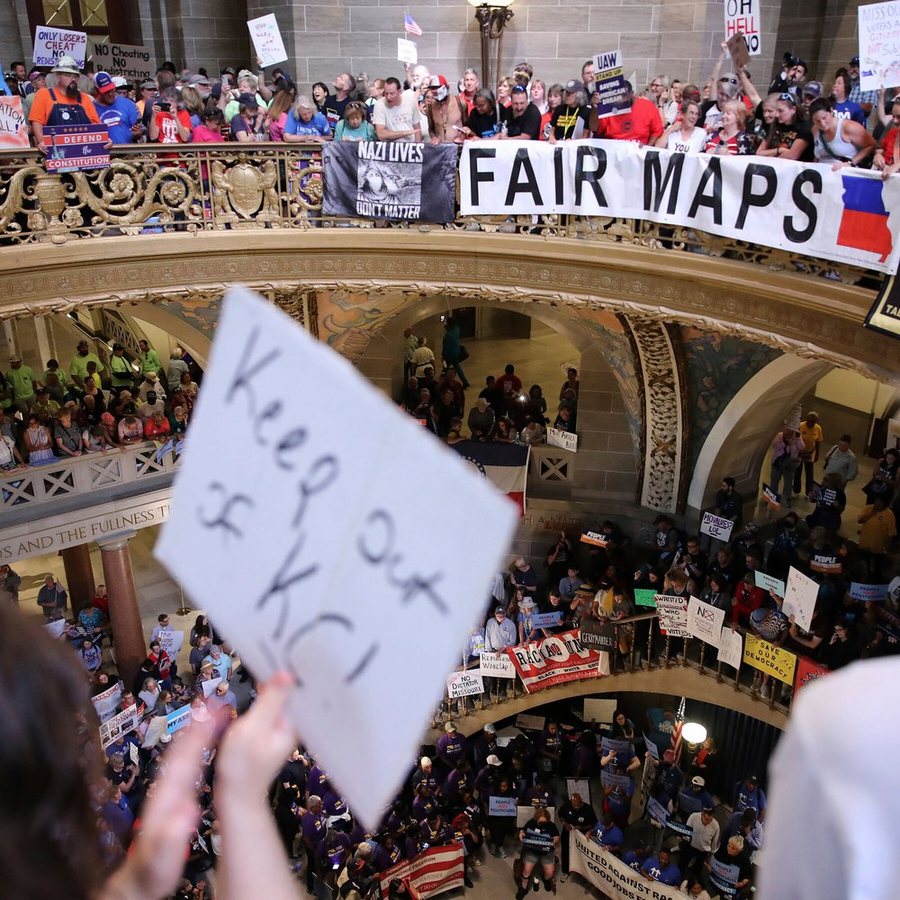
The Supreme Court has again declined to let Missouri use a Republican-backed congressional map, leaving in place a lower court ruling that blocked the plan and handing another setback to GOP efforts to gain an additional U.S. House seat. The order, issued without a published opinion, means the disputed map cannot be used while litigation continues.
The case centers on a redistricting plan that Republicans in Missouri advanced after the 2020 census. A state court had earlier found the map violated the state constitution, and the Supreme Court's action leaves that decision standing for now. The practical effect is that Missouri's congressional boundaries remain as they were, rather than shifting toward a configuration that Republicans hoped would yield an extra seat.
The dispute is part of a broader national fight over redistricting that has unfolded in state capitals and courthouses since the last census. Both parties have pursued maps that could tilt the balance of power in the narrowly divided House, and courts have become the central arena for resolving those conflicts. Missouri's plan drew particular attention because it was designed to convert a competitive district into one more favorable to Republicans.
In declining to intervene, the Supreme Court did not rule on the merits of the map. The justices simply rejected the request to allow the plan to take effect while the legal challenge proceeds. That leaves the state's existing boundaries in place and preserves the status quo for voters and candidates preparing for the next election cycle.
The decision follows earlier Supreme Court action in the same dispute, when the justices also refused to let the map take effect. The repeated refusals suggest the Court is not inclined to disturb the lower court's findings at this stage, though further appeals remain possible.
Republicans had hoped the map would help them capture an additional congressional seat in a state that has trended reliably red in recent elections. The party holds a slim majority in the House, making every seat significant. Democrats, meanwhile, have challenged the map as an improper partisan gerrymander that dilutes their voters' influence.
The legal battle in Missouri is one of several redistricting fights that could shape the next Congress. Similar disputes are playing out in other states, with courts weighing claims that maps were drawn to entrench one party's advantage. The outcomes could affect which party controls the House after the next election.
For now, Missouri will proceed under its existing congressional lines. Election officials had been preparing for the possibility of new boundaries, but the Supreme Court's action removes that uncertainty for the immediate future. The litigation is expected to continue in lower courts, where the merits of the challenge will be examined more fully.
The Supreme Court's order is unsigned and does not explain the justices' reasoning, which is typical for emergency applications. It takes the votes of at least five justices to grant such a request, and the absence of a public dissent or explanation leaves the Court's internal divisions unclear. The practical result, however, is unambiguous: the Republican-backed map cannot be used while the case proceeds.
The dispute has drawn attention from voting rights groups and national party committees alike, underscoring how redistricting fights have become a proxy for control of Congress. Missouri's experience mirrors that of other states where maps have been challenged and courts have stepped in to block or modify them. The Supreme Court's latest action ensures that Missouri remains among those states where the final map is still unsettled.
59